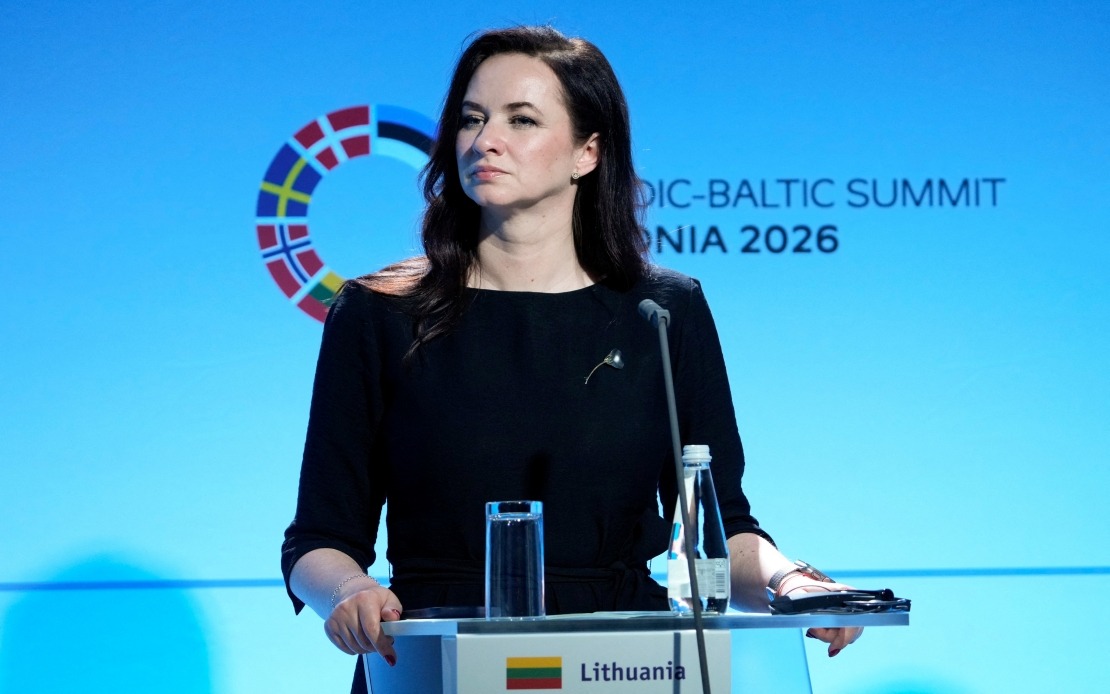
Lithuania faces another transition in political leadership as Prime Minister Inga Ruginiene announced the resignation of her government on Tuesday, June 23, initiating the formal process for establishing a new administration. The move reflects ongoing turbulence within the ruling coalition that has characterised Lithuanian politics following parliamentary elections late last year, raising questions about governmental stability in the Baltic nation and its implications for the broader European Union and NATO alliance.
The resignation triggers a constitutionally defined sequence of events that will unfold over the coming weeks. President Gitanas Nauseda has been granted a 15-day window to nominate a successor for the prime ministerial post. Once nominated, the candidate must secure approval from the Seimas, Lithuania's unicameral parliament, before proceeding to form a new Cabinet. This procedural framework, while routine in parliamentary democracies, underscores the formal separation of powers in the Lithuanian system and ensures legislative oversight of executive formation.
Mindaugas Sinkevicius, chairman of the ruling Lithuanian Social Democratic Party, is widely anticipated to receive the presidential nomination and subsequently secure parliamentary confirmation. Should this expectation materialise, Sinkevicius will assume responsibility for assembling a functioning government within 15 days of his appointment. He will then have an additional 15-day period to compile and present the complete ministerial lineup for parliamentary scrutiny and approval, a process that allows for negotiation among coalition partners regarding portfolio allocation and policy commitments.
The incoming government will represent the third governing coalition formed by the Social Democrats since the parliamentary elections held in late 2024. This pattern of successive coalition formations within a compressed timeframe reflects the fragmented nature of Lithuania's legislative landscape and the challenges inherent in maintaining stable governing arrangements. The frequency of coalitional shifts raises legitimate concerns about the coherence and continuity of policy implementation across critical governmental functions.
The immediate predecessor to the current administration, which took office in August 2023, emerged following the resignation of former Prime Minister Gintautas Paluckas. That government's relatively brief tenure illustrates the precarious nature of coalition stability in contemporary Lithuanian politics. The rapid succession of administrations potentially complicates long-term strategic planning and the execution of complex policy initiatives requiring sustained governmental commitment and institutional memory.
President Nauseda has formally accepted Ruginiene's resignation and instructed the outgoing Cabinet to continue operating in a caretaker capacity pending the establishment of a successor government. This arrangement ensures administrative continuity and prevents any vacuum in executive functions during the transition period. Such interregnum protocols are essential safeguards in parliamentary systems, preventing operational paralysis while new coalitional arrangements are negotiated and formalised.
The outgoing Cabinet convened for its final formal session on Tuesday, during which ministers unanimously approved the resignation resolution. Ruginiene, addressing the assembled Cabinet, acknowledged the government's accomplishments despite the numerous obstacles it had confronted throughout its tenure. This closing assessment reflects the customary diplomatic acknowledgment of effort and achievement, even as the administration's inability to maintain coalition cohesion necessitated its dissolution.
For Malaysian and Southeast Asian observers, Lithuania's governmental instability offers instructive parallels regarding the challenges of maintaining viable coalitions in proportional or mixed electoral systems. The Baltic nation's experience demonstrates how fragmented parliaments, while promoting representativeness, can generate governance fragility when coalition mathematics become unstable. This consideration remains relevant for Southeast Asian democracies navigating similar tensions between inclusive representation and governmental effectiveness.
Lithuania's recurring coalitional reorganisations also carry implications for NATO and European Union decision-making processes. As a frontline NATO member facing Russian security threats, governmental continuity and policy predictability are strategically significant. The frequency of administrative transitions may complicate the consistent articulation and implementation of defence and foreign policy positions within these multilateral frameworks, potentially affecting coordination on critical security and economic matters.
The broader European context compounds these domestic challenges. Lithuania, like other Baltic states, operates within the demanding geopolitical environment of Eastern Europe whilst maintaining EU membership obligations. Governmental instability during periods of heightened international tension, including Russia's ongoing military aggression in Ukraine, creates additional pressure for coalitional persistence and policy coherence. The successive coalitions emerging from 2024 elections must navigate these competing domestic and international imperatives.
The constitutional framework governing Lithuania's transition process provides structural predictability and prevents potential extra-legal complications. The defined timelines for nomination, approval, and Cabinet formation establish clear expectations and accountability mechanisms. However, the underlying pattern of coalitional instability suggests deeper structural challenges within the party system or perhaps shifts in voter preferences that produce persistently fragmented legislatures resistant to stable governing arrangements.