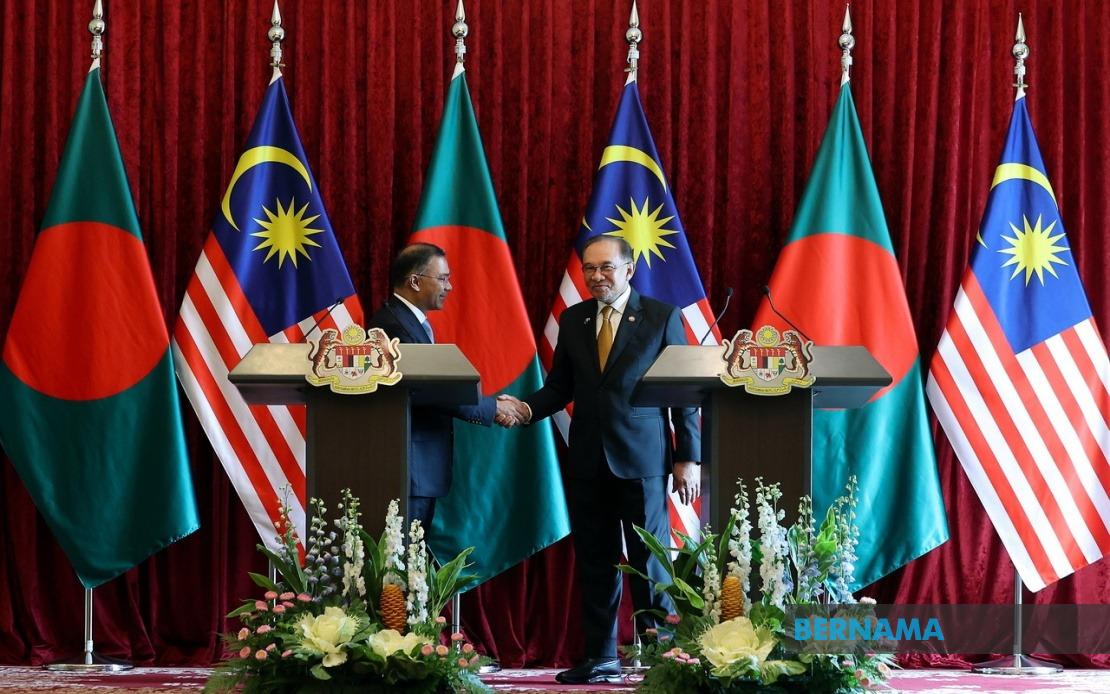
Malaysia and Bangladesh have committed to stamping out the exploitation and mistreatment of migrant workers, with Prime Minister Datuk Seri Anwar Ibrahim calling for systemic reforms to ensure transparency and fairness in recruitment processes. Speaking at a joint press conference in Putrajaya on June 22 alongside Bangladesh Prime Minister Tarique Rahman, Anwar underscored that while foreign labour remains indispensable to Malaysia's economy, both countries bear a responsibility to safeguard the dignity and security of these workers and their families back home.
The bilateral meeting highlighted growing recognition within the region that migrant worker exploitation—a perennial challenge in Southeast Asian labour markets—demands coordinated action between source and destination countries. Anwar's remarks reflected frustration with what he termed "excesses" within current recruitment frameworks, acknowledging that labour cooperation, though economically critical, has consistently generated scandal and humanitarian concern. The Prime Minister emphasised that Malaysia and Bangladesh must jointly lead efforts to eliminate such abuses rather than allow them to persist as an accepted cost of economic growth.
The commitment to transparency signals potential structural changes to how workers are recruited, placed, and monitored across Malaysia's key employment sectors. Anwar stressed that any reformed system must meet the requirements and standards of both nations, suggesting that Bangladesh will play a more assertive role in vetting Malaysian employers and employment conditions. This bilateral approach contrasts with traditional models where individual workers navigate recruitment largely through private agents, often with limited government oversight or protection mechanisms.
For Malaysia, where an estimated 2 million foreign workers constitute roughly 6 per cent of the workforce, this renewed focus on worker welfare carries both practical and reputational implications. The country has faced persistent international criticism over labour conditions, including underpayment, document confiscation, workplace injuries, and restricted freedom of movement. Manufacturing, construction, agriculture, and domestic work sectors have been particular flashpoints, with investigative reports regularly documenting abuse in low-wage sectors dependent on migrant labour. Bangladesh, which supplies one of Malaysia's largest worker populations, has growing leverage in negotiations given the domestic demand for overseas remittances and the political sensitivity of worker treatment in source countries.
Tarique's request for Malaysia to expand Bangladeshi worker recruitment and reopen labour market access underscores the economic incentive driving both nations' engagement on this issue. Bangladesh benefits substantially from remittances sent home by its citizens working abroad; Malaysia depends on continuing labour inflows to sustain growth in sectors where local workers are unavailable or unwilling to work. The tension between these mutual interests and the need for genuine protection standards presents both countries with a practical challenge: designing recruitment and employment frameworks that are simultaneously attractive to employers, protective of workers, and politically defensible domestically.
The emphasis on family protection extends the scope of worker welfare beyond individual employment contracts to encompass broader social security. Many migrant workers send substantial portions of earnings home to dependents, yet remain vulnerable to wage theft, sudden job loss, or injury without adequate insurance or support mechanisms. Bangladesh has struggled to monitor worker conditions after placement in Malaysia, while Malaysian authorities have limited capacity to enforce compliance across millions of informal and formal employment relationships. A more transparent system could include mechanisms for regular welfare checks, grievance resolution, and emergency support for workers and their families.
The timing of this commitment reflects wider regional scrutiny of labour practices. Recent years have seen intensified focus from international organisations, advocacy groups, and media outlets on worker exploitation throughout Southeast Asia. Thailand, Singapore, and other labour-importing nations have similarly faced pressure to reform recruitment and employment standards. Malaysia's willingness to engage Bangladesh directly on these issues suggests awareness that maintaining access to quality migrant labour may increasingly depend on demonstrable improvements to worker protection.
Practical implementation will determine whether this commitment translates into tangible change. Previous agreements on migrant worker protection have sometimes remained aspirational, with gaps between stated policy and enforcement persisting across borders. Both governments will need to establish clear mechanisms for monitoring compliance, addressing grievances, and penalising violations. Training for labour inspectors, transparent channels for worker complaints, and coordination between Malaysian and Bangladeshi authorities will be essential. Without adequate funding and political will, the framework risks becoming another well-intentioned but underenforced protocol.
The bilateral statement also carries implications for Malaysia's broader position within Southeast Asia's labour market hierarchy. As a middle-income destination country, Malaysia occupies a transitional position between lower-income labour sources like Bangladesh and higher-income destinations like Singapore. How Malaysia manages worker protection and recruitment standards may influence its attractiveness to other source countries and its standing in regional labour governance discussions. Competitors seeking to position themselves as more worker-friendly destinations may gain advantage if Malaysia fails to implement meaningful reforms.

