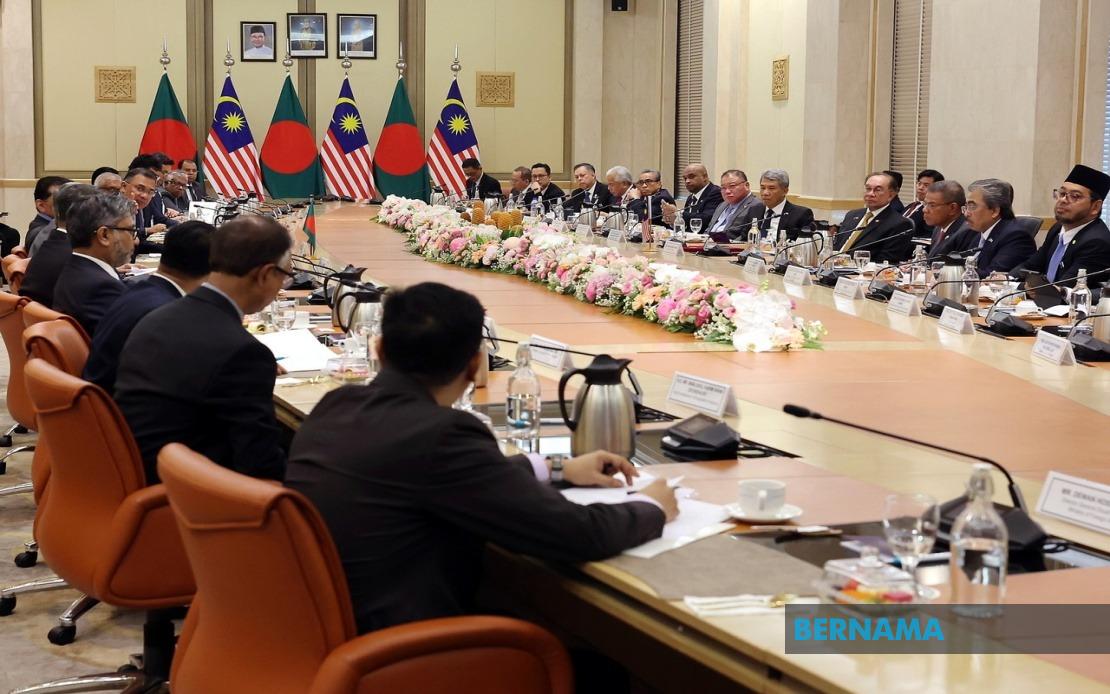
Prime Minister Datuk Seri Anwar Ibrahim has signalled a significant shift in Malaysia's strategic partnership with Bangladesh, calling for the two nations to jointly venture into high-technology domains that will shape economic competitiveness in the coming decades. Speaking during a joint press conference with visiting Bangladesh Prime Minister Tarique Rahman in Putrajaya on June 22, Anwar outlined an ambitious agenda to move past conventional trade relationships and tap into emerging opportunities in artificial intelligence, energy infrastructure, and semiconductor production.
The declaration comes at a moment when both Southeast Asia and South Asia are racing to position themselves as technology hubs within their respective regions. Bangladesh, with a population exceeding 170 million and a rapidly growing manufacturing base, represents a natural partner for Malaysia as it seeks to diversify its semiconductor supply chains and develop collaborative research initiatives. Malaysia's existing strengths in electronics manufacturing and its role as a regional semiconductor player create complementary advantages that both nations can leverage for mutual benefit.
Anwar emphasised that while traditional investment flows remain essential to bilateral relations, the future prosperity of Malaysia-Bangladesh ties depends on venturing into uncharted territory. He specifically mentioned artificial intelligence as a frontier requiring coordinated effort, recognising that neither nation can afford to fall behind in developing homegrown AI capabilities and workforce expertise. The challenge of harnessing artificial intelligence for economic development and social benefit will increasingly define which countries succeed or stagnate in the global economy over the next decade.
The semiconductor sector represents another critical area of convergence. Malaysia has long been a significant player in semiconductor assembly and testing, hosting major multinational operations and building indigenous expertise. Bangladesh, seeking to move beyond textiles and garments into higher-value manufacturing, sees semiconductors as a natural progression. A coordinated approach could involve technology transfer, joint ventures in manufacturing facilities, and shared investment in research infrastructure that neither nation might undertake independently.
Energy cooperation carries particular weight for both nations as they grapple with rising electricity demand and pressure to transition away from fossil fuel dependence. Malaysia's experience in renewable energy projects and its developing expertise in solar and hydroelectric generation could be shared with Bangladesh, which faces acute energy shortages and must serve a population consuming ever more electricity. Collaborative frameworks in clean energy research and implementation could benefit both economies whilst addressing climate change imperatives that increasingly influence investment decisions across Asia.
An important aspect of the expanding cooperation manifested in formal agreements signed during Rahman's two-day official visit. The exchange of a Memorandum of Understanding on Cultural Cooperation reflects recognition that enduring economic relationships rest on deeper people-to-people connections and mutual understanding of each nation's values and heritage. Such cultural frameworks often pave the way for more substantial technical and commercial partnerships by building trust and establishing communication channels that extend beyond government-to-government diplomacy.
The signing of two Exchanges of Notes covering Counter-Terrorism Research and Investment Promotion and Facilitation demonstrates that both governments view security and economic stability as intertwined objectives. Counter-terrorism research collaboration acknowledges regional security challenges that affect commerce and investor confidence. Investment promotion mechanisms, meanwhile, create institutional pathways that reduce friction and uncertainty for businesses from either nation seeking to establish operations in the other.
For Malaysian companies, expanded cooperation with Bangladesh opens markets and manufacturing possibilities that have long remained underdeveloped. Bangladeshi entrepreneurs and industrial capacity represent both competition and partnership opportunities, particularly in sectors where Malaysian firms possess technological edge but face rising costs domestically. The semiconductor and digital economy sectors specifically offer channels through which Malaysian expertise can be monetised through licensing, joint ventures, and technical consultancy arrangements that generate revenue without requiring massive capital deployment.
Regionally, the Malaysia-Bangladesh partnership deepens South Asian and Southeast Asian integration at a time when economic blocs are reshaping themselves around technology and supply chain resilience. As tensions persist in global semiconductor supply chains and nations seek to reduce reliance on distant suppliers, having reliable sources of components and manufacturing capacity within Asia becomes strategically valuable. A collaborative approach between Malaysia and Bangladesh contributes to building more robust, geographically distributed production networks that can withstand future disruptions.
The emphasis on digital economy and advanced manufacturing reflects both nations' recognition that labour-cost advantages alone no longer drive industrial success. Bangladesh's substantial wage advantage in manufacturing must combine with Malaysia's technological sophistication and capital access to create competitive offerings in global markets. This complementarity explains why cooperation in these specific sectors holds greater promise than traditional approaches focused primarily on agricultural trade, which remains important but cannot sustain the ambitious growth trajectories both nations seek.
Looking forward, operationalising these commitments will require establishing concrete institutional frameworks, research partnerships between universities and institutes, and commercial mechanisms that allow private sector engagement. The signing of agreements during Rahman's visit represents a beginning rather than an endpoint—successful implementation depends on consistent follow-through by both governments in creating environments where businesses and researchers can collaborate effectively across borders.
The timing of this expansion reflects Malaysia and Bangladesh's mutual interest in positioning themselves as indispensable partners in Asian economic development during a period of technological transition. As artificial intelligence reshapes manufacturing, energy systems face decarbonisation pressure, and semiconductor supply becomes increasingly critical to global security, having trusted partners with complementary capabilities and geographical positioning offers substantial competitive advantages neither nation possesses in isolation.