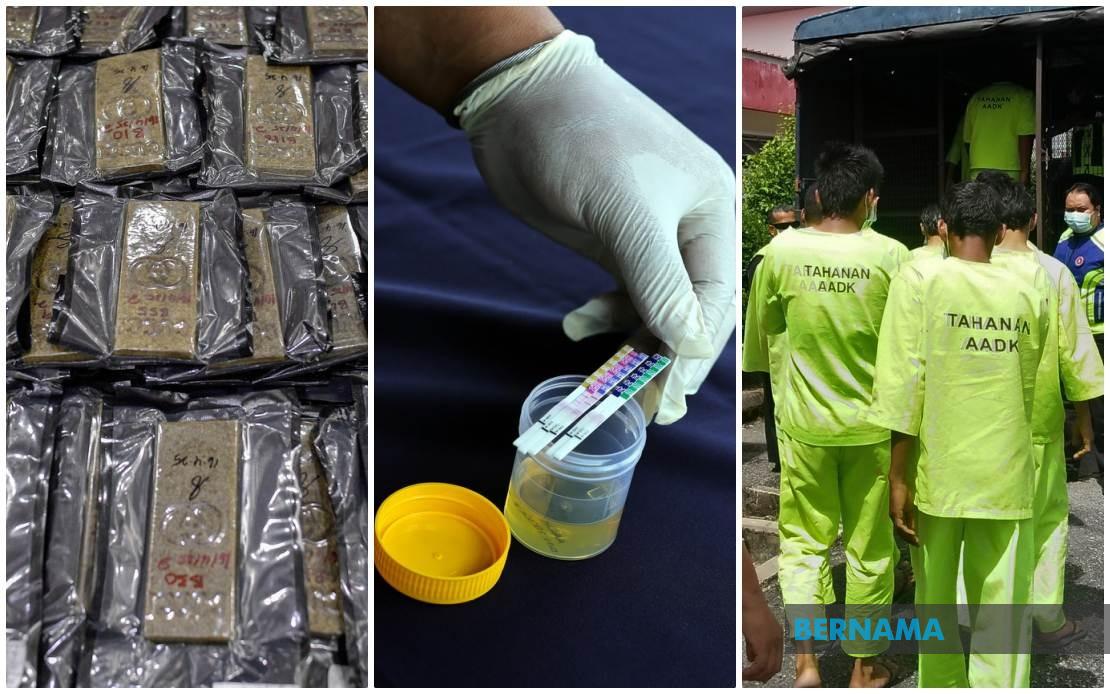
The synthetic drug epidemic continues to worsen across Malaysia, with Home Minister Datuk Seri Saifuddin Nasution Ismail revealing that 141,817 cases were documented in the latest reporting period, marking a persistent and troubling upward trajectory in substance abuse across the nation. The minister's disclosure during parliamentary proceedings underscores the scale of a public health crisis that has become increasingly difficult to contain, with synthetic substances now dominating the landscape of drug-related offences in ways that have fundamentally shifted law enforcement and rehabilitation priorities.
The trajectory of cases illustrates the accelerating nature of the problem. Following 145,526 recorded incidents in 2023, authorities documented a sharp spike to 192,852 cases in 2024, demonstrating that the issue has not stabilised but rather continues to deteriorate at an alarming pace. These figures collectively reveal a healthcare and social crisis affecting hundreds of thousands of individuals and their families, with ripple effects extending across communities, workplaces, and educational institutions throughout the country.
Synthetic drugs have decisively displaced traditional narcotics in Malaysia's drug abuse landscape, accounting for approximately 70 per cent of all documented cases. This shift represents a fundamental transformation in substance abuse patterns, with amphetamine-type stimulants, particularly methamphetamine locally known as syabu, now representing the primary challenge facing law enforcement and public health authorities. The dominance of these substances reflects changing supply chains, manufacturing methodologies, and user preferences that have evolved faster than regulatory and enforcement responses.
Geographic distribution of the crisis reveals a troubling concentration in eastern Malaysian states, where the problem has reached particularly severe proportions. The east coast corridor has emerged as a critical hotspot, with methamphetamine abuse essentially replacing the older narcotics that historically plagued these regions. This geographic concentration suggests specific vulnerabilities—whether related to port access, manufacturing proximity, supply chain routes, or socioeconomic conditions—that warrant targeted intervention strategies distinct from those applicable to other regions. Districts including Pendang, Kuala Krai, Bachok, Besut, and Mersing have recorded the highest incidence rates, indicating clusters of particularly acute vulnerability.
A newly identified threat is complicating the crisis further: fentanyl, an opioid exponentially more potent than morphine, has begun appearing in Malaysian drug markets, particularly discovered during police operations targeting adulterated vaping products. Though current prevalence remains limited compared with established synthetics, fentanyl's emergence represents a watershed moment in drug enforcement discourse, given its capacity to cause fatal overdoses in minute quantities. The government has already moved to classify fentanyl under controlled substance legislation, enabling legal enforcement action, yet the drug's infiltration signals an evolution towards more lethal compounds that could rapidly escalate the public health emergency if not quickly contained.
Young Malaysians bear a disproportionate burden of this crisis, with individuals aged 15 to 39 years comprising nearly 75 per cent of all recorded cases across 2024. This concentration among teenagers and young adults threatens to entrench addiction patterns during formative life stages, with profound implications for workforce participation, educational attainment, family stability, and social cohesion. The prevalence among this demographic suggests that prevention and early intervention programmes require substantial expansion and recalibration to effectively reach vulnerable populations before they develop dependencies.
The prison system reflects and amplifies the broader crisis. Approximately 70 per cent of all inmates are implicated in drug-related offences, whether convicted or remanded, while certain facilities like Machang Prison report that nearly all detainees are connected to such cases. This saturation indicates that criminal justice responses alone cannot resolve the underlying problem; rather, the system has become overwhelmed, with drug offences consuming enormous correctional resources while rehabilitation capacity remains inadequate. The concentration of drug-involved individuals in penal institutions paradoxically creates environments where substance use networks intensify, potentially worsening outcomes upon release.
Government agencies have implemented multifaceted response strategies combining prevention, education, and enforcement mechanisms. The National Anti-Drugs Agency coordinates community-based prevention initiatives, delivers educational programmes in schools and institutions, and manages family and workplace intervention projects in collaboration with police and customs authorities. These comprehensive approaches acknowledge that enforcement alone cannot address addiction's underlying drivers, including poverty, social disconnection, mental health vulnerabilities, and limited economic opportunities that make substance abuse appealing to disadvantaged populations.
Technological advancement has paradoxically complicated enforcement efforts, as online platforms have democratised drug purchasing and reduced barriers to access. Digital marketplaces operate with minimal regulatory oversight, enabling transactions that traditional law enforcement struggles to monitor or intercept. The anonymity and convenience of online drug markets present enforcement challenges fundamentally different from those posed by traditional street-level distribution, requiring innovative approaches to digital surveillance, platform regulation, and international cooperation that Malaysian authorities are only beginning to develop systematically.
The minister's acknowledgment that Malaysia has not yet become a major international transit hub, despite concerns, provides limited reassurance when domestic consumption has reached crisis proportions. Whether functioning primarily as a consumer market or as a transit nation, the fundamental challenge remains the same: enormous quantities of synthetic drugs are reaching Malaysian users, creating addiction, morbidity, mortality, and criminal justice consequences that strain institutional capacity and undermine public health. Regional coordination through ASEAN partners facing similar challenges could enhance intelligence sharing, supply chain interdiction, and best-practice exchange regarding prevention and treatment methodologies.
Looking forward, Malaysia faces a pivotal moment requiring escalated investment in drug treatment and rehabilitation infrastructure. Current Puspen facilities and Ministry of Health drug programmes appear inadequate given caseload volumes and the complexity of synthetic drug addiction. Expansion of medication-assisted treatment, residential rehabilitation capacity, and harm reduction services must accompany law enforcement intensification. Without substantially increased resource commitment across prevention, treatment, and social support domains, current trajectory suggests the synthetic drug crisis will continue deteriorating, with mounting human, economic, and institutional consequences across Malaysian society.

