The Ministry of Human Resources is moving to cushion the impact of ongoing global supply chain disruptions on Malaysia's workforce by deploying a comprehensive reskilling strategy. Datuk Seri R. Ramanan, the ministry's chief, announced that workers facing redundancy across the services, manufacturing, and construction sectors will gain access to Technical and Vocational Education and Training programmes designed to equip them with market-relevant skills. The initiative reflects growing recognition among policymakers that supply chain volatility—a persistent challenge since the pandemic—continues to create employment instability across multiple industries in the country.
Under the framework, affected workers will receive more than just training courses. The Social Security Organisation's MYFutureJobs platform will facilitate employment matching, ensuring that newly acquired skills translate into actual job placements rather than qualifications that gather dust. This dual approach of upskilling combined with active job placement represents a more holistic response than previous interventions, moving beyond the assumption that training alone solves unemployment. Ramanan stressed that placements would be carefully matched to individual circumstances, a crucial detail for workers seeking stability after disruption.
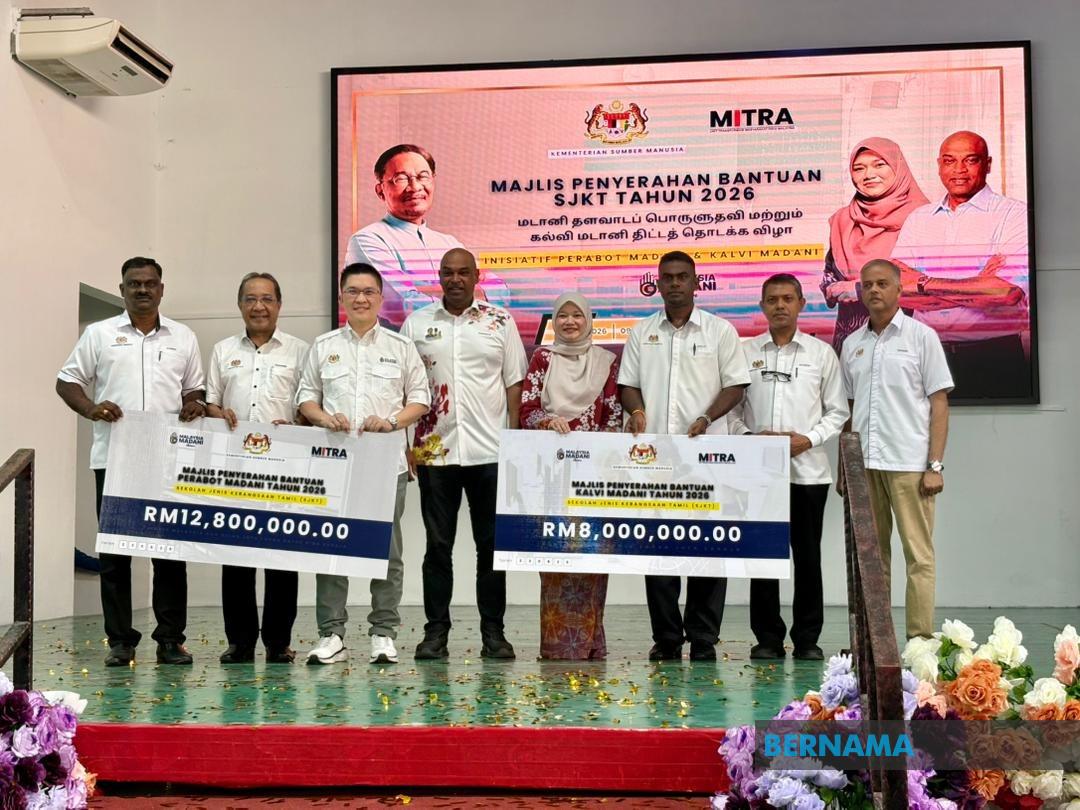
The announcement came during the launch of two complementary initiatives targeting vulnerable populations in Malaysia's education system. The MADANI Furniture Initiative will distribute RM12.8 million worth of classroom furniture and equipment across 361 government-aided Tamil vernacular schools, benefiting approximately 39,692 pupils and 5,290 teachers. This substantial investment recognises that infrastructure gaps in vernacular schools have long constrained educational quality, particularly in rural areas where Tamil-medium education remains an important pillar of community identity and literacy.
The furniture rollout, spanning from June through August, encompasses fourteen different types of items ranging from basic desks and chairs to storage cabinets and cooling fans. While seemingly utilitarian, such provisions directly impact learning environments; students sitting on broken furniture or studying without adequate ventilation struggle to concentrate, a reality that disproportionately affects schools serving lower-income communities. The phased distribution approach suggests careful logistical planning to ensure efficient delivery across geographically dispersed institutions.
Complementing the infrastructure boost, the KALVI MADANI Programme commits RM8 million to supporting nearly 10,410 Indian pupils across 315 selected Tamil vernacular schools. This targeted initiative addresses multiple dimensions of educational disadvantage simultaneously. Free tuition classes provide direct academic support that many families cannot otherwise afford, while nutritional programmes tackle food insecurity that impairs cognitive development. Learning kits and devices acknowledge the digital divide that widened during the pandemic, ensuring that students in these schools can access contemporary educational resources.
Teacher welfare components within the KALVI MADANI Programme deserve particular attention. Education quality ultimately depends on teacher capacity, motivation, and wellbeing. By investing in educator welfare alongside student support, the programme recognises an often-overlooked truth: underpaid, overworked teachers produce suboptimal outcomes regardless of infrastructure improvements. This holistic framing suggests policy maturation at KESUMA, moving beyond superficial interventions toward systemic support.
The convergence of these initiatives—worker reskilling amid supply chain turbulence and targeted education investment—reveals interconnected concerns within Malaysia's human capital strategy. The supply chain crisis that displaces workers often coincides with reduced government revenues, yet policymakers have maintained commitment to education and skills development. This balance reflects understanding that short-term workforce protection requires immediate reskilling, while long-term competitiveness demands investment in foundational education, particularly for disadvantaged communities whose opportunities would otherwise narrow.
The initiatives also carry significance for Malaysia's multicultural framework. Tamil vernacular schools, serving primarily Indian Malaysian communities, have historically received less policy attention and resource allocation than national schools. Explicit targeting through MADANI Furniture and KALVI MADANI programmes signals recognition of equity gaps and commitment to inclusive development. For a country navigating demographic change and ensuring social cohesion, such investments demonstrate that prosperity must reach across community lines.
From a regional perspective, Malaysia's approach to workforce reskilling during supply chain stress offers lessons for neighbouring Southeast Asian economies facing similar pressures. The integration of TVET with employment services through PERKESO, rather than treating them as separate functions, represents institutional coordination that many regional peers lack. As supply chain regionalisation accelerates—with manufacturers diversifying away from China and Southeast Asia attracting greater manufacturing activity—countries that rapidly upskill displaced workers gain competitive advantage in attracting new investment.
The supply chain crisis, while disruptive, has also exposed structural weaknesses in Malaysia's labour market that predated pandemic-era disruptions. Skills mismatches, inadequate vocational training uptake, and geographic disparities in opportunity have long constrained inclusive growth. Ramanan's initiatives suggest recognition that crisis moments create political space for interventions that might otherwise face resistance. Businesses and workers both feel pressure during disruption, sometimes creating unusual alignment for reform.
However, questions remain about implementation capacity and outcome measurement. TVET programme effectiveness depends heavily on curriculum relevance, instructor quality, and labour market partnerships. The announced initiatives specify funding and beneficiary numbers but provide limited detail on skill areas addressed or employer engagement mechanisms. Successful reskilling requires close collaboration with industry to anticipate emerging skill demands rather than training workers for yesterday's jobs.
Looking forward, the sustainability of these programmes depends on supply chain stabilisation and broader economic recovery. If global disruptions deepen, even well-designed reskilling cannot absorb all displaced workers—some industries simply contract during structural shifts. Additionally, the programmes' success will ultimately be measured not by training completion but by employment outcomes six to twelve months after course completion, a metric that will take time to evaluate.
The initiatives represent substantive commitment to managing workforce transitions during turbulent times, with particular emphasis on serving communities often overlooked in development planning. Whether these investments prove sufficient to navigate ongoing supply chain volatility while building sustainable human capital will emerge only through careful monitoring of implementation and labour market outcomes in coming months.