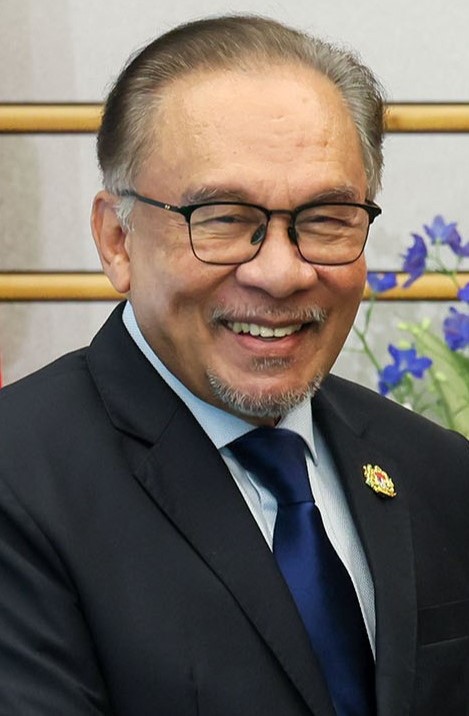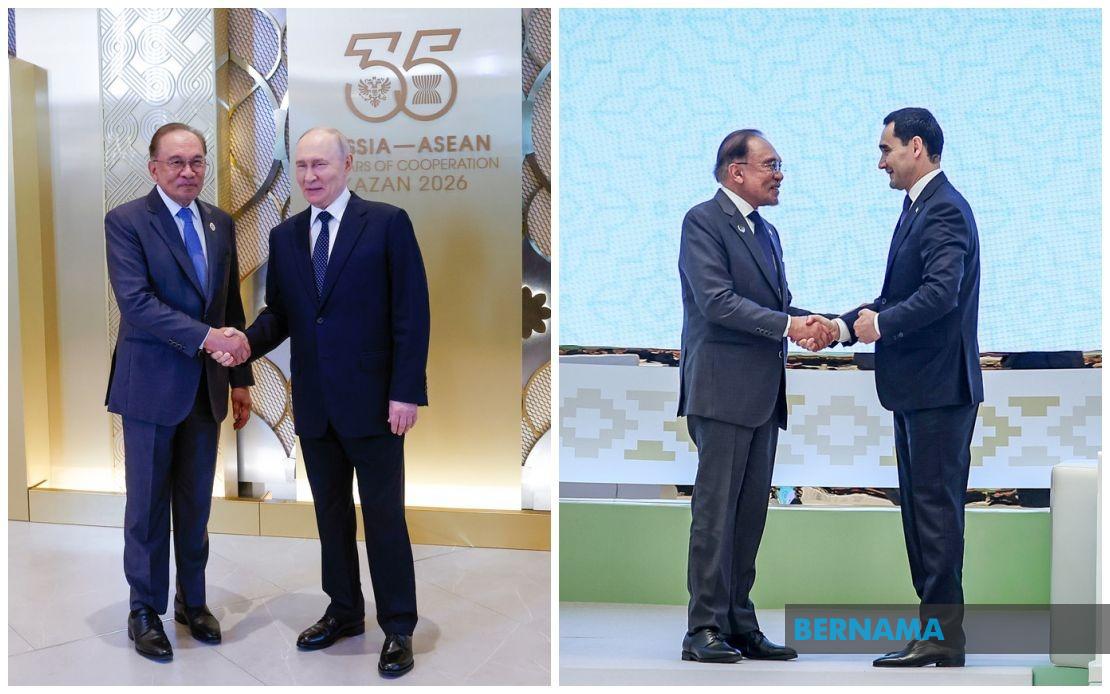
Prime Minister Datuk Seri Anwar Ibrahim's recent diplomatic missions to Russia and Turkmenistan have been positioned by government ministers as watershed moments in Malaysia's international engagement, opening doors to energy security arrangements that could reshape the country's economic trajectory over the coming two decades. The visits represent a calculated shift in Malaysia's foreign policy approach, moving beyond traditional partnerships to forge deeper relationships with energy-rich nations at a time when global supply chains remain fragile and resource security has become a cornerstone of national resilience.
Housing and Local Government Minister Nga Kor Ming emphasised that Russia's undertaking to supply crude oil to Malaysia across two decades stands as the most tangible outcome of Anwar's Kazan visit, a commitment that extends far beyond the typical annual or seasonal renewal cycles that have characterised previous agreements. This arrangement directly addresses one of the Malaysian government's central economic policy challenges: maintaining the subsidised RON95 petrol price at RM1.99 per litre while funding the BUDI MADANI programme, which targets lower-income households. By securing predictable, long-term supply contracts, the government gains greater budgetary certainty and reduces exposure to volatile spot market pricing that can wreak havoc on subsidy budgets, a perennial headache for finance ministers across the region.
The stabilisation of energy supplies carries implications that ripple far beyond petrol pumps. For Malaysian manufacturers and exporters, predictable fuel costs translate into more reliable production expenses and pricing strategies, enhancing competitiveness in regional supply chains. The manufacturing sector, which still accounts for roughly a quarter of Malaysia's gross domestic product, depends heavily on stable energy input costs. Small and medium enterprises, which form the backbone of Malaysia's business ecosystem, benefit disproportionately from this kind of certainty, as they typically lack the hedging mechanisms and financial instruments available to large corporations.
Equally significant is Petronas' appointment as operator of what government officials have characterised as one of the world's largest gas fields in Turkmenistan, a development that speaks to Malaysia's ambitions as a regional energy powerhouse. Human Resources Minister Datuk Seri R. Ramanan highlighted that this assignment validates Malaysian technical expertise and corporate capability on the global stage, suggesting that Petronas, currently ranked 139th on the Fortune Global 500 list, possesses the operational knowledge and financial resources to manage world-class projects. The ranking itself indicates substantial room for growth; executives quoted in ministerial statements suggest that successful execution of the Turkmenistan project could propel Petronas significantly higher in global petroleum rankings, potentially reaching the top 100 within a reasonable timeframe if management proves effective.
For Malaysian workers and the broader human capital development agenda, the Turkmenistan gas field project creates cascading opportunities. The assignment of Petronas as operator typically triggers demand for skilled workers in drilling, reservoir engineering, project management, and supply chain logistics. Training programmes and technology transfer agreements, which featured prominently in statements from Ramanan, could allow Malaysian universities and vocational institutions to develop expertise in advanced energy sector disciplines, building a knowledge base that strengthens the economy beyond any single project's lifespan. This aligns with government priorities outlined in Malaysia's 12th Five-Year Plan, which emphasises upgrading the workforce through higher-value skills development.
The geopolitical dimensions of these agreements warrant careful consideration for Southeast Asian observers. Malaysia's outreach to Russia and deepened ties with Turkmenistan reflect a deliberate strategy of maintaining multiple energy partnerships rather than concentrating supply relationships with any single bloc. This diversification approach mirrors broader regional trends, as countries including Indonesia, Vietnam, and Thailand have similarly pursued energy agreements with non-traditional partners in recent years. Such diversification insulates Malaysia from disruption caused by shifting international alliances or trade sanctions that might affect traditional suppliers.
Turkmenistan's decision to entrust Petronas with operator status on a flagship gas project carries particular weight given Turkmenistan's historical preference for Russian and Chinese partners in major energy ventures. This choice suggests international recognition of Petronas' technical competence and reliability, qualities that enhance Malaysia's diplomatic standing in Central Asia, a region of growing strategic importance as Western engagement recalibrates. For Malaysian policymakers, it demonstrates that technical excellence and professional execution can carve out space for Malaysian influence in regions traditionally dominated by larger powers.
The energy agreements also intersect with Malaysia's climate transition ambitions, though government statements have not explicitly foregrounded this angle. Securing long-term gas supplies from Turkmenistan, which possesses some of the world's largest natural gas reserves, provides Malaysia with a lower-carbon hydrocarbon option compared to crude oil. As the country gradually shifts its energy mix toward renewables, natural gas serves as a bridge fuel, allowing Malaysia to meet electricity demand while reducing coal dependence and associated emissions. The agreements thus permit Malaysia to pursue dual objectives: immediate energy security and medium-term climate considerations.
Ministerial comments suggest that the diplomatic missions have strengthened Malaysia's positioning in regional energy competitions. As Southeast Asian nations vie for energy resources and investment partnerships, appearing as a capable, stable destination for major energy projects matters considerably. Thailand's struggles with maintaining consistent energy policy, the Philippines' infrastructure constraints, and Vietnam's resource limitations mean that Malaysia, with Petronas as a globally recognised operator and a government perceived as relatively stable, possesses distinct advantages in attracting energy sector partnerships and investment.
The broader context involves Malaysia's evolving role within ASEAN and the wider Indo-Pacific. By securing these energy agreements and demonstrating that Malaysian companies can lead at the global level, the government strengthens its claim to a seat at tables where regional energy strategy is determined. This positions Anwar's government favourably ahead of upcoming ASEAN energy dialogues and multilateral discussions on supply chain resilience, areas where Malaysia's experience and Petronas' track record provide substantive contributions.
Economically, these arrangements serve the immediate goal of budget management for energy subsidies while creating long-term wealth generation through Petronas' operational profits. Unlike outright subsidies, which represent government expenditure without corresponding asset generation, Petronas' earnings from gas field operations translate into dividends that can fund infrastructure, education, and social programmes. Ministers have implicitly highlighted this distinction by emphasising that these projects generate returns for Malaysia rather than simply consuming fiscal resources.
Looking forward, successful execution of the Turkmenistan gas field project could establish a template for Malaysian involvement in similar ventures across Central Asia and beyond. Petronas has traditionally concentrated on Southeast Asian and Middle Eastern operations; expanding meaningfully into Central Asian energy infrastructure represents a strategic shift that could open doors for Malaysian engineering firms, equipment suppliers, and service providers in adjacent sectors. This multiplication effect—where a flagship project generates opportunities across the supply chain—amplifies the initial diplomatic gains.
The visits ultimately reflect Anwar Ibrahim's determination to position Malaysia as a serious player in global energy markets, moving beyond consumer status to encompassing operational and investment roles. In a region where energy security shapes economic destiny and geopolitical influence, these agreements represent meaningful progress toward that ambition, with implications that will unfold across decades of oil and gas flows feeding Malaysian factories, power plants, and automobiles.