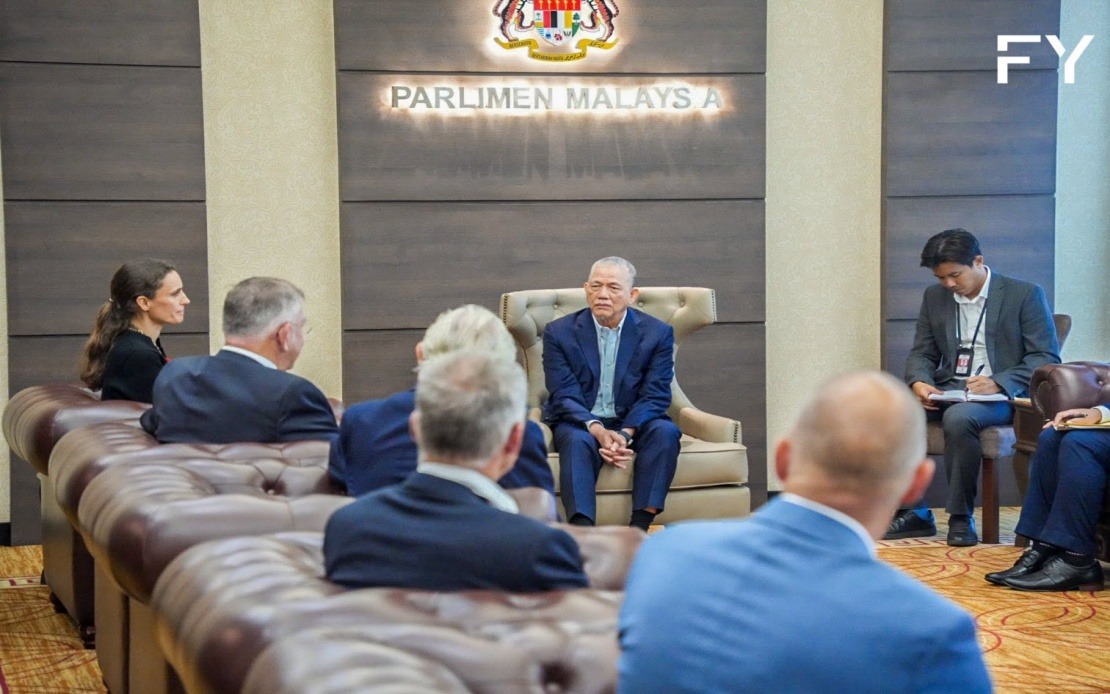
Malaysia's push to attract green technology investment from Germany's small and medium-sized business community took centre stage this week during a high-level diplomatic engagement at Parliament House. Deputy Prime Minister Datuk Seri Fadillah Yusof received German Ambassador to Malaysia Silke Riecken-Daerr and representatives from the German SME Business Association, signalling Kuala Lumpur's commitment to deepening economic ties with Berlin's entrepreneurial sector in priority growth areas.
Fadillah's remarks underscored Malaysia's strategic positioning of renewable energy, water management and treatment, and green technology as sectors aligned with national sustainable development objectives. By specifically targeting German SMEs rather than large multinational corporations, Malaysia is seeking to tap into specialised expertise and innovative solutions that smaller, nimble enterprises often bring to emerging market opportunities. This focus reflects a deliberate policy shift toward attracting quality investment that supports long-term environmental and economic goals rather than volume-based approaches.
The bilateral economic relationship between Malaysia and Germany already constitutes a substantial foundation. More than 800 German companies currently operate across the Malaysian economy in diverse industries, cementing Germany's status as a key trading partner alongside established strengths in mechanical engineering and manufacturing technology. This existing commercial footprint suggests familiarity with Malaysia's business environment and regulatory frameworks, potentially easing market entry for additional German investment.
Beyond direct foreign investment, the discussions highlighted a secondary but equally important avenue for Malaysia-Germany cooperation: human capital development. Fadillah placed particular emphasis on collaborating in Technical and Vocational Education and Training (TVET), recognising Germany's globally respected dual-education system. Germany's industrial apprenticeship model—which integrates classroom instruction with on-the-job training—has consistently produced workers with deep technical competencies across manufacturing, engineering, and emerging green sectors.
For Malaysia, this cooperation holds significant long-term value. As the country positions itself for transition toward a more knowledge-intensive, technology-driven economy, workforce capabilities in green technology installation, renewable energy maintenance, and water system engineering will prove critical. Importing German TVET standards and methodologies could accelerate Malaysia's ability to build domestic expertise in these fields, reducing dependency on expatriate specialists and strengthening competitiveness.
The timing of this diplomatic initiative aligns with global momentum toward energy transition. Southeast Asia faces mounting pressure to meet climate commitments while managing energy demands from rapidly industrialising economies. Malaysia, as a regional economic hub and a signatory to various environmental accords, must demonstrate tangible progress in renewable energy adoption and resource efficiency. German SMEs operating in these sectors possess tested technologies and operational know-how that could be adapted and scaled within Malaysian contexts.
Water management emerges as a particularly acute concern for Malaysia and the broader Southeast Asian region. Rapid urbanisation, climate variability, and increasing industrial demand strain freshwater resources. German companies specialising in water treatment technologies, recycling systems, and efficient distribution networks represent valuable partners for addressing these challenges. Such investments would simultaneously address national infrastructure needs and support Malaysia's environmental commitments.
Fadillah's characterisation of the meeting as part of a broader strategic cooperation framework suggests Malaysia views this engagement as foundational for sustained partnership rather than transactional. By framing benefits as mutual—emphasising advantages for both nations—Malaysian diplomacy positions itself as a reliable partner seeking genuine mutual development rather than extracting concessions. This approach typically encourages longer-term commitment from foreign investors concerned about policy stability and regulatory consistency.
The presence of the German SME Business Association delegation indicates institutional support from Berlin's business community. Trade associations typically accompany diplomatic missions when there is genuine interest and capacity among member enterprises to pursue market expansion. This suggests German SMEs view Malaysia as a viable destination for green technology deployment, likely reflecting combination of factors: regulatory openness to sustainability initiatives, sufficient market size, relative political and economic stability, and positioning within broader Southeast Asian networks.
For Malaysian policymakers, attracting German expertise in green sectors addresses multiple policy objectives simultaneously. Environmental compliance becomes more achievable when coupled with technology transfer and local workforce development. Foreign exchange inflows support Malaysia's balance of payments, while employment generation in technical fields distributes economic benefits beyond major urban centres. Knowledge spillovers from German firms benefit the broader Malaysian supplier ecosystem and competitive landscape.
However, realising these potential gains requires complementary domestic measures. Malaysia must ensure regulatory frameworks adequately protect intellectual property, facilitate efficient business registration and licensing, and offer competitive fiscal incentives for green technology investment. Infrastructure supporting industrial clusters—particularly in renewable energy and advanced manufacturing—should be prioritised. Equally important, TVET reforms must align with German standards while respecting Malaysia's distinct educational context and labour market needs.
The broader geopolitical context strengthens the appeal of Malaysia-Germany cooperation. As Western economies seek reliable partners beyond traditional blocs, Malaysia's non-aligned positioning and strong relations with Europe, China, and within ASEAN make it an attractive hub. German investment in Malaysian green technology sectors creates supply chain connections across Asia-Pacific, potentially positioning Malaysia as a regional centre for sustainable technology dissemination.
Successful translation of this diplomatic initiative into substantive investment flows will depend on follow-up implementation and sustained engagement. Trade missions, business matchmaking forums, and targeted incentive structures for green technology investors would consolidate current momentum. If Malaysia effectively positions itself as Southeast Asia's gateway for German industrial expertise—particularly in sustainability domains—the country could capture disproportionate benefits from global capital seeking emerging market opportunities aligned with environmental objectives.