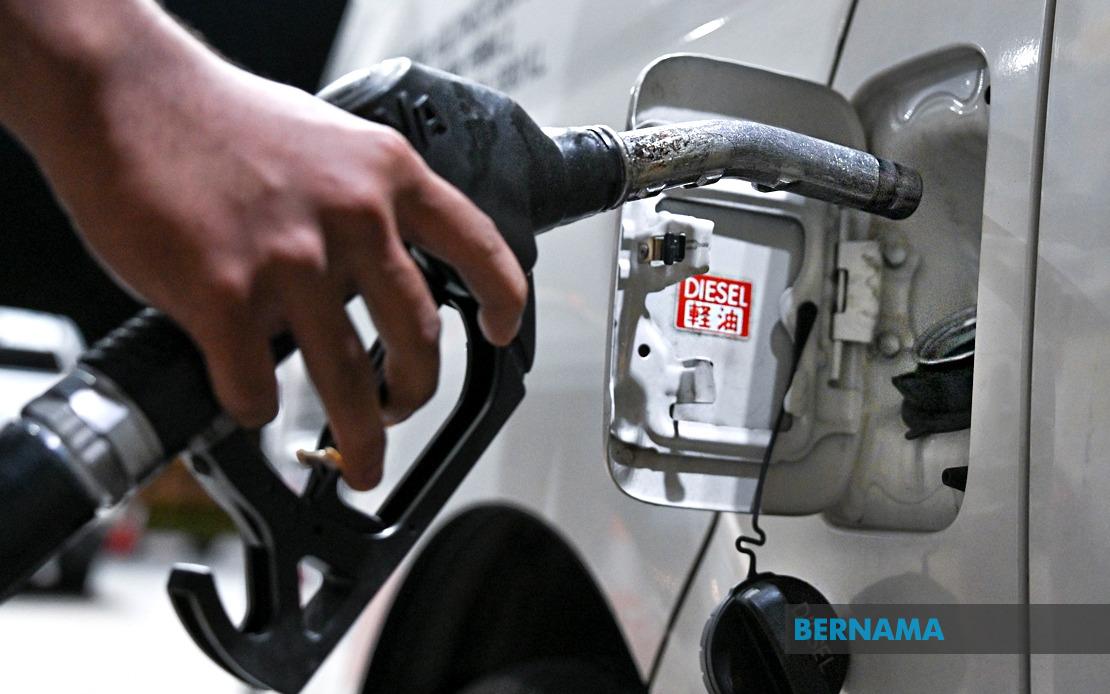
Malaysia's government is preparing to roll out its most ambitious fuel subsidy reform in years, introducing the BUDI MADANI Diesel programme that will restrict subsidised diesel access to verified Malaysian vehicle owners from July 2026. Second Finance Minister Datuk Seri Amir Hamzah Azizan announced the initiative will deliver RM2.10 per litre diesel for eligible consumers while generating up to RM2 billion in annual savings by stemming the extraordinary leakages that have plagued the nation's fuel subsidy system.
The programme represents a significant shift in how Kuala Lumpur manages its fuel support burden, moving away from blanket subsidies towards a means-tested model that mirrors the successful BUDI RON95 petrol initiative. By establishing a unified, transparent mechanism using MyKad verification at all petrol stations nationwide, authorities aim to eliminate the opaque channels through which unqualified parties have been accessing cheap fuel. This structural overhaul addresses long-standing concerns about subsidy abuse that have strained public finances and threatened the sustainability of domestic fuel supplies.
The scale of leakage losses previously revealed by the government underscores the urgency of this intervention. Monthly subsidy expenditure ballooned from approximately RM800 million to nearly RM4.9 billion by April, driven partly by abnormal consumption patterns that suggest systematic diversion of subsidised fuel. Most striking is the evidence from Peninsular Malaysia, Sabah, and Sarawak, where diesel consumption has nearly doubled actual requirements—reaching almost 1.2 billion litres monthly compared to historical norms, and approaching two billion litres annually in the eastern states against an estimated genuine need of one billion litres yearly.
Cross-border smuggling and unauthorized access to fuel subsidy schemes account for much of this drift. Businesses and individuals that should be purchasing unsubsidised diesel at prevailing market rates have instead obtained Government-supported supplies, creating artificial demand that inflates subsidy bills while simultaneously constraining legitimate fuel availability. Addressing these loopholes will improve financial stability and reduce risks of fuel shortages that could undermine economic activity across sectors dependent on diesel—from agriculture and transportation to manufacturing and energy.
The BUDI Diesel framework will initially extend to approximately 700,000 private diesel vehicle owners deemed eligible under the new criteria. Existing recipients of cash assistance under previous BUDI Diesel schemes will transition automatically to direct fuel subsidies through MyKad without requiring fresh applications, streamlining administration and reducing bureaucratic friction. Early access commences on June 27, 2026, for eligible owners in Peninsular Malaysia, enabling the system to stabilize before nationwide rollout on July 1.
For current beneficiaries receiving RM400 in monthly cash support, the switch to point-of-sale subsidies offers both advantages and trade-offs. Direct fuel price reductions at pumps may benefit regular users, though individuals with minimal driving needs or those requiring cash liquidity for other purposes might face adjustments. The government's strategy prioritizes containing subsidy costs while maintaining support for genuine vehicle operators, but implementation success hinges on whether MyKad verification adequately filters ineligible users without creating queues or operational friction at petrol station counters.
The RM2 billion projected annual saving, if achieved, would represent a material improvement in fiscal sustainability and could free resources for other development priorities. However, realizing these gains requires robust enforcement against alternative leakage routes—including grey-market fuel trading, document fraud, and cross-border trafficking mechanisms that may evolve in response to tighter controls. Regional authorities in Sabah and Sarawak, where consumption anomalies are most pronounced, will face particular scrutiny in preventing circumvention of the new system.
For Malaysian consumers, the permanent diesel price cap at RM2.10 per litre offers predictability and protection against volatile global oil markets, provided the programme remains financially tenable. This is especially significant for logistics operators, commercial farmers, and fishing communities in rural areas where diesel represents a major operational cost. Stabilized fuel pricing can enhance investment confidence and planning across these sectors, though the programme's success ultimately depends on whether savings materialize and whether the government maintains political commitment to the subsidy limit regardless of future petroleum price shocks.
The broader policy context reveals Kuala Lumpur's struggle to balance welfare objectives with fiscal prudence. Subsidies serve important social and economic functions, but untargeted generosity becomes unsustainable when leakage consumes resources intended for beneficiaries. By implementing technology-enabled verification, Malaysia joins a growing international trend of using digital identity systems to improve subsidy delivery efficiency. This approach has yielded results in neighbouring countries experimenting with similar mechanisms, though local implementation challenges—including technological infrastructure in remote areas and potential privacy concerns regarding MyKad data at petrol stations—require careful management.
Implementation timelines will be critical. The June 27 soft launch provides a two-week window to identify technical glitches, train petrol station staff, and gauge user compliance before the formal July 1 start date. Any delays or system failures could undermine public confidence and invite criticism from opposition parties. Conversely, smooth execution will strengthen the government's credibility on economic management ahead of future policy reforms affecting cost-of-living pressures.
For Malaysian businesses and households, the BUDI Diesel reform signals that subsidy restructuring remains on the government's agenda despite political sensitivities. Whether this programme becomes a template for broader fuel and utility subsidy rationalization—potentially extending to electricity, water, or other essential services—will depend on demonstrated success and public acceptance. The RM2 billion saving, while substantial, represents only a fraction of total government subsidies, suggesting that more ambitious reforms may follow if BUDI Diesel operates without major political backlash.