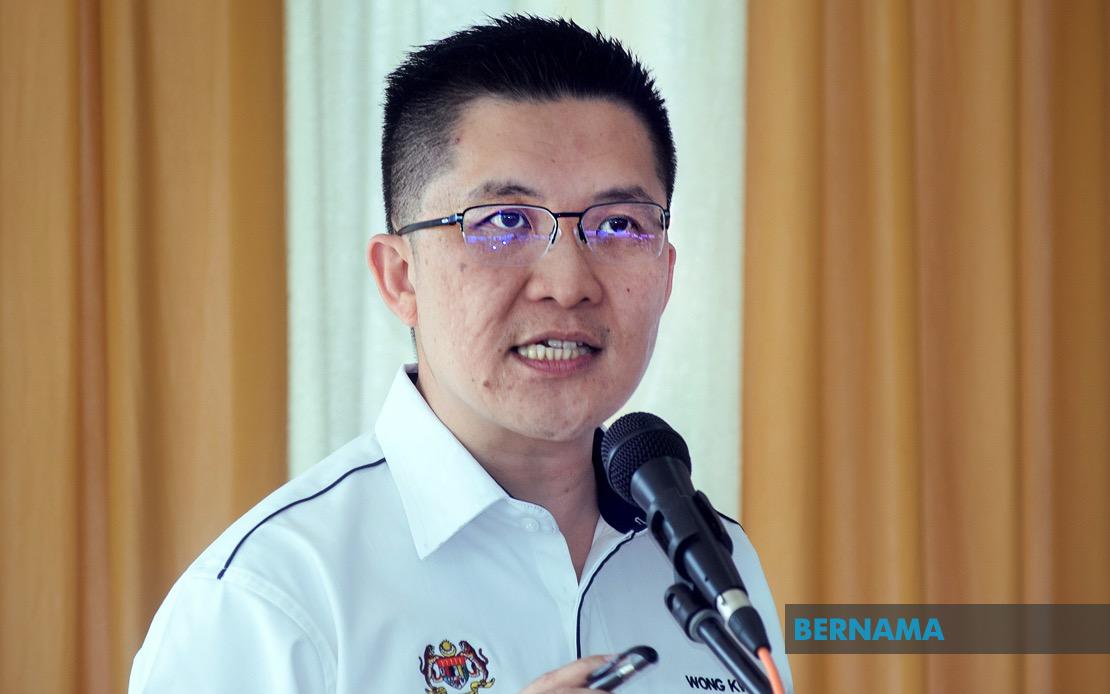
Malaysia's Tamil-medium education system continues to serve a significant student population, with 528 Tamil national-type schools (SJKT) operating across the country and accommodating 78,501 pupils as of late May 2026. Deputy Education Minister Wong Kah Woh disclosed these figures during parliamentary proceedings, underlining the government's sustained commitment to preserving and developing Tamil language education at both primary and secondary levels. The scale of this network demonstrates the enduring importance of mother-tongue instruction within Malaysia's multilingual education landscape, even as the system adapts to contemporary pedagogical and demographic challenges.
Enrolment trends in Tamil schools reveal a gradual decline that deserves careful scrutiny. The number of students sitting for Tamil language examination in the Sijil Pelajaran Malaysia (SPM) has contracted year on year: 8,023 candidates registered in 2023, dropping to 7,925 in 2024, 7,693 in 2025, and 7,494 in 2026. This downward trajectory, whilst modest in percentage terms, suggests potential structural shifts in how Tamil-speaking families are making educational choices. Whether this reflects demographic changes, migration patterns, or shifts towards schools offering other languages requires further investigation, though it indicates that sustaining enrolment in Tamil schools remains a pressing policy concern for education authorities.
The Ministry of Education has reaffirmed its commitment to the Tamil language curriculum by guaranteeing that Tamil will remain available as a language subject within the SPM framework. This assurance carries particular weight given global trends towards consolidation of languages in examination systems. Critically, the ministry has also clarified that students attending schools without Tamil language programmes retain the option to sit the SPM examination in Tamil, provided they meet standard registration requirements. This flexibility widens access and prevents geographical or school-type constraints from excluding students who wish to study Tamil at examination level, an important safeguard for maintaining options across Malaysia's diverse education ecosystem.
Johor serves as a useful case study for understanding regional variations in Tamil education provision. The state hosts 71 SJKTs with a combined enrolment of 12,906 pupils, representing approximately 16 percent of the national total. Within Johor Bahru district alone, fifteen institutions cater to 7,840 students, a concentration that reflects both the district's population density and its historical Tamil-speaking communities. Four schools in Johor Bahru have achieved notably high enrolments: SJKT Taman Tun Aminah leads with 1,529 pupils, followed by SJKT Ladang Rini with 1,055, SJKT Jalan Yahya Awal with 890, and SJKT Masai with 768. These figures demonstrate that several established Tamil schools have successfully maintained robust intake despite broader demographic pressures.
Capital allocation toward infrastructure development signals genuine investment in Tamil education's physical foundations. Two Johor schools—SJKT Ladang Rini and SJKT Kulai Besar—are each receiving RM4.3 million in construction funding to expand facilities and accommodate an additional 200 to 300 pupils per institution. These projects address both current space constraints and anticipated future demand, indicating that government planning extends beyond mere maintenance to include growth capacity. Such infrastructure commitments, though occasionally overlooked in broader education discussions, constitute essential enablers of quality teaching and learning environments, particularly in schools serving economically diverse communities.
The ministry confronts a structural challenge through under-enrolment in a subset of Tamil schools. Two Johor Bahru institutions—SJKT Ladang Sungai Plentong and SJKT Ladang Mados—each enrol fewer than 30 pupils, a situation that complicates resource allocation and potentially limits educational quality. Nationally, 135 under-enrolled SJKTs have implemented multi-grade teaching arrangements, where students from different year levels share classrooms with differentiated instruction. Additionally, 36 SJKTs have received approval for relocation to areas with higher demand or better accessibility. This pragmatic approach balances the preservation of Tamil education access with the fiscal and pedagogical realities of operating schools with thin enrolments.
Teacher recruitment and retention represent critical enablers of education quality. The system requires 1,334 Tamil language teachers at primary level, yet the current workforce has reached 1,733—a surplus of nearly 400 positions. Secondary schools face a less favourable ratio, with a requirement for 584 teachers against a current staffing of 648, providing a smaller buffer. These figures suggest that primary-level Tamil education has successfully recruited beyond minimum requirements, a positive indicator of system health. Secondary teacher availability, whilst adequate, leaves less margin for growth or unexpected attrition, warranting continued monitoring and proactive recruitment planning to sustain quality instruction as students progress to higher levels.
The upcoming 2027 School Curriculum represents a pivotal modernisation initiative for Tamil education. By integrating Tamil language instruction within an updated pedagogical framework, the ministry aims to refresh teaching methodologies, enhance student engagement, and strengthen Tamil literature education. This curricular reform signals movement beyond maintenance toward active revitalisation, embedding Tamil within contemporary educational approaches that emphasise competency development and cultural continuity. For Tamil-speaking communities and minority language advocates, such curricular investment provides reassurance that Tamil education remains integral to the nation's vision rather than a legacy programme awaiting gradual phase-out.
Examination fairness and transparency concerns occasionally surface in public discourse around grading systems. Wong addressed this directly by clarifying that SPM grades are not allocated through quota systems or predetermined percentage targets. Instead, examination boards comprising subject specialists, curriculum experts, and educational measurement professionals evaluate student performance against established standards, assessment objectives, and curriculum requirements. Grade boundaries are set through systematic analysis of cohort performance and examination instrument characteristics, mirroring practices in international examination systems. This methodology, whilst technically sound, requires sustained communication to maintain public confidence, particularly among communities whose representation in high-achieving grades may appear disproportionate to population share.
Grade boundary fluctuations annually reflect genuine variations in candidate cohort performance and examination paper quality rather than arbitrary administrative decisions. The ministry's willingness to explain this technical dimension of assessment demonstrates transparency regarding a process that profoundly affects students' futures and shapes perceptions of educational equity. For Malaysian students and parents, understanding that grading reflects actual mastery rather than bureaucratic targets carries psychological and motivational significance, reinforcing confidence in examination integrity across all language streams.
Tamil education's position within Malaysia's broader multilingual framework remains a matter of both cultural preservation and practical educational management. With nearly 80,000 pupils across the nation's Tamil schools, this constitutes a substantial minority-language education system that reflects Malaysia's constitutional commitment to cultural pluralism. Yet gradual enrolment declines and concentration of pupils in select high-performing schools indicate that maintaining this system requires sustained institutional effort and strategic adaptation. As Malaysia increasingly emphasises English proficiency and positioning itself as a global economic player, Tamil-medium education faces competition for family investment and attention, making targeted government support through curriculum innovation, teacher development, and infrastructure expansion all the more essential to ensure that Tamil language education remains vigorous and educationally effective for future generations.