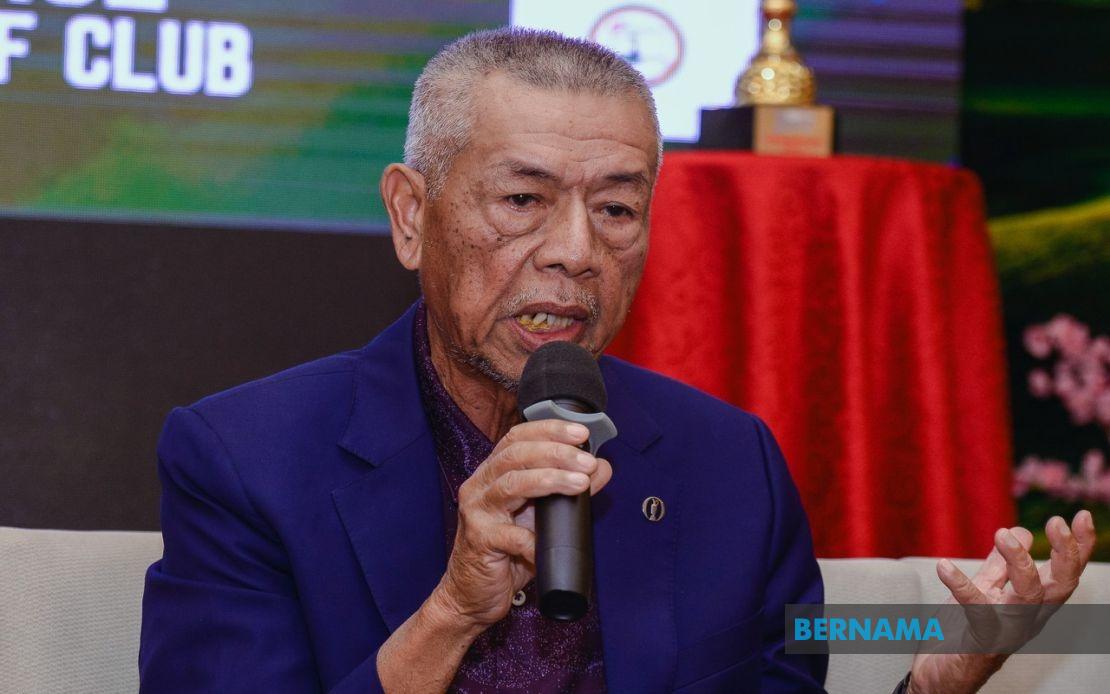
The Malaysian Golf Association has formally requested the Ministry of Youth and Sports to establish a permanent national coach position as part of its strategic push to elevate the national golf team's performance ahead of the 2027 SEA Games, which Malaysia will host. MGA president Tan Sri Mohd Anwar Mohd Nor disclosed this development during the launch of the 100PLUS MGA National Junior Development Programme Junior Series 2026 at The Mines Resort & Golf Club in Serdang, emphasizing that recruiting a high-calibre coaching mentor represents one of the association's most pressing requirements.
During a recent consultation with Ministry secretary-general Datuk Rahimi Ismail, MGA leadership outlined their vision for constructing a more systematic and comprehensive preparation framework for the national contingent. The absence of dedicated full-time coaching support has emerged as a critical bottleneck that the association believes undermines the consistency and depth of player development. By establishing this position, MGA contends that the national squad would benefit from continuous guidance, structured progression pathways, and specialised technical mentoring—elements that have become standard practice among competing nations across Southeast Asia.
Mohd Anwar articulated the broader collaborative framework that MGA envisions, extending beyond the coaching appointment to encompass multiple institutional partnerships. The association recognizes that strengthening the national golf programme requires coordinated engagement with both the Ministry of Youth and Sports and the National Sports Council, which can collectively unlock resources, infrastructure access, and administrative support essential for athlete development initiatives. This multi-stakeholder approach reflects a maturing understanding within Malaysian sports administration of how systemic improvements depend on institutional alignment rather than isolated efforts by individual organisations.
The coaching shortfall exists against a backdrop of intensifying regional competition in golf. Southeast Asian nations have increasingly invested in professional coaching infrastructure, creating disparities in training methodologies and athlete preparation standards. Malaysia's hosting of the 2027 Games presents both an opportunity and an imperative—success on home soil carries heightened significance for national pride, while the logistical and scheduling advantages of being the host nation can be leveraged to optimise preparation timelines. However, these benefits evaporate without adequate coaching expertise to translate preparation opportunities into competitive performance.
Beyond the coaching personnel question, MGA has formulated a broader preparatory agenda that reflects ambition across multiple dimensions. Training programmes are being conceptualised for implementation in Sarawak, demonstrating geographical diversification of development sites and potential collaboration with East Malaysian institutions. Tan Sri Mohd Anwar recently engaged with Sarawak's Minister of Youth, Sports and Entrepreneur Development, Datuk Seri Abdul Karim Rahman Hamzah, to explore how the state can contribute institutional and infrastructural support to the national programme. This outreach signals recognition that Malaysia's golf talent base is distributed nationwide, and effective talent identification and development cannot remain concentrated within peninsular contexts.
The timing of these initiatives aligns with the maturation trajectory of Malaysia's junior golf development ecosystem. The 100PLUS sponsorship of the National Junior Development Programme demonstrates sustained commercial backing for grassroots participation, suggesting that pipeline creation is functional at foundational levels. However, the conversion of junior talent into competitive senior performers—a notorious bottleneck in Malaysian sports—requires enhanced coaching oversight and structured progression frameworks. Without full-time coaching architecture bridging junior success and senior competition, promising young players frequently plateau or migrate to pursue opportunities elsewhere.
The SEA Games context amplifies both the urgency and the feasibility of MGA's request. The biennial competition serves as the primary regional qualifying and benchmarking event for Southeast Asian sports, and golf's inclusion provides Malaysia with a legitimate platform for medal pursuit. Other ASEAN nations have demonstrated that concentrated investment in coaching and athlete development yields measurable competitive returns. However, the 2027 timeframe offers only limited preparation window—roughly two and a half years from the association's current advocacy push to actual competition. This compressed timeline necessitates immediate action on coaching recruitment and institutional coordination.
The request for ministerial assistance also reflects evolving governance dynamics within Malaysian sports. Where historically sports associations operated with greater autonomy, contemporary best practice increasingly demands closer alignment with government institutions, particularly regarding athlete welfare, anti-doping compliance, and systematic development planning. MGA's approach of seeking collaborative solutions with KBS and NSC, rather than operating independently, signals institutional maturation and a willingness to embed golf development within broader national sports policy frameworks.
From a regional competitive perspective, Malaysia's golf strength has traditionally derived from individual excellence rather than systematic team dominance. Figures like Arjun Atwal's international success emerged largely from personal initiative and private sponsorship rather than state-level programme infrastructure. However, this ad-hoc model has proven insufficient for consistent regional team performance. Countries like Thailand and Vietnam have invested substantially in coaching infrastructure, creating predictable talent pipelines and raising competitive thresholds across Southeast Asia. Malaysia's recognition of this challenge, articulated through the formal coaching request, suggests the association understands that future competitiveness demands structural, not merely aspirational, commitment.
The broader ecosystem implications extend beyond 2027. Establishing permanent national coaching positions creates institutional foundations that benefit golf development across multiple cycles and competition windows. Junior golfers progressing through MGA's development programme would access consistent technical mentoring rather than episodic coaching contact. This continuity enhances skill acquisition, reduces performance plateau periods, and increases retention of talent within competitive pathways. Moreover, a dedicated national coach role serves as a professional springboard for aspiring golf mentors, potentially creating domestic expertise that reduces future dependence on imported coaching talent.
Ministry responses to MGA's request remain pending, but the formal submission establishes golf's claim within Malaysia's sports development priorities. With the SEA Games approaching and Malaysia's hosting status providing amplified visibility and expectations, the Ministry of Youth and Sports faces pressure to demonstrate tangible support for national competitiveness. Resource allocation decisions made in the coming months will largely determine whether Malaysia enters the 2027 Games with enhanced competitive capacity or faces the Games with preparation structures that remain structurally disadvantaged relative to regional peers.
The association's simultaneous focus on junior development programming and senior team preparation reflects understanding that sustainable competitiveness requires simultaneous investment across athlete career stages. The 100PLUS NJDP partnership ensures that junior participation remains commercially supported and widely accessible, while senior team preparations increasingly demand professional coaching guidance. Bridging these development stages seamlessly—from junior competition through senior elite preparation—requires the kind of institutional coordination and resource commitment that MGA is now actively seeking.