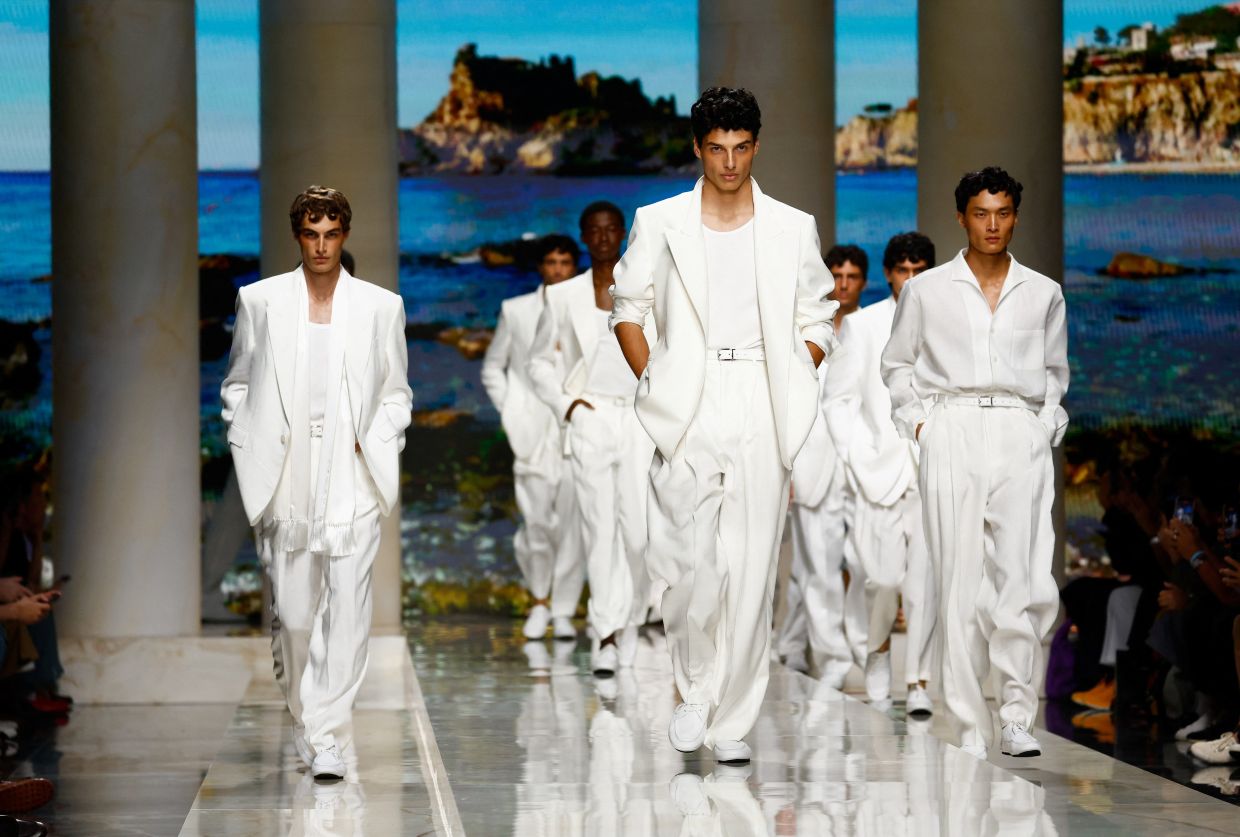
As Milan Fashion Week concluded on Monday, 22 June, the prevailing mood among the industry's creative minds became unmistakably clear: in an era marked by economic flux, geopolitical instability and oppressive summer heat, restraint has become the new statement. Rather than pursuing provocative designs, menswear's establishment figured the most compelling response lay in stripping away excess, both conceptually and materially. This philosophical shift represents a notable departure from recent seasons dominated by oversize silhouettes and theatrical proportions, signalling that contemporary luxury consumers may be seeking comfort alongside status.
Prada's presence as a bellwether for the collection season proved decisive once again. Under the joint creative stewardship of Miuccia Prada and Raf Simons, the storied Italian house articulated a vision centred on simplicity achieved through reimagined proportions and innovative fabrication techniques. Rather than designing entirely new garments, Prada recontextualised the wardrobe fundamentals that have anchored menswear for generations—particularly denim-inspired trousers—by reformulating their construction and silhouette. This approach suggests that luxury fashion's future may lie less in novelty than in the subtle refinement of established forms, a prospect that could reassure both designers and consumers concerned about sustainability and relevance.
Yet achieving a cooler aesthetic without compromising on material richness posed a genuine creative tension across Milan's presentations. Leather dominated the runways despite temperatures that would seemingly render such choices impractical, reflecting fashion's traditional indifference to meteorological reality. Prada's leather constructions drew conceptual inspiration from the universality of denim, translating that democratic garment's familiar five-pocket architecture into luxury materials, with slim-fitting trousers paired against cropped jackets that functioned as hybrid pieces. This strategy suggests that prestige menswear may increasingly operate through material elevation rather than silhouette disruption—a shift with implications for Southeast Asian markets, where premium fabrics command significant price premiums yet remain desirable among affluent consumers.
Other houses responded to the heat challenge through technical innovation rather than material substitution. Designers deployed woven and perforated techniques that maintain leather's aesthetic and tactile qualities while dramatically improving breathability. This represents a meaningful evolution in fabrication science, where luxury brands invest in engineering solutions that preserve traditional materials whilst adapting them to contemporary environmental realities. For Malaysian fashion retailers and consumers accustomed to tropical climates year-round, such developments carry immediate relevance, suggesting that premium menswear may finally be catching up to the practical demands of equatorial living.
The suit's enduring centrality to formal menswear emerged as perhaps the season's most significant consensus point. Rather than abandoning tailoring as outdated or impractical, Milan's designers instead reimagined how suits could function in warming conditions. This manifested through softened construction techniques that reduced structural rigidity, intentionally opened necklines that allowed greater circulation, and experimental approaches to traditional garment engineering. The resulting silhouettes maintained formality's essential architecture whilst permitting greater ventilation and comfort—a particularly sophisticated solution that acknowledges both the practical demands of contemporary life and the symbolic importance tailoring retains across cultures, including Malaysia's own business and formal occasions.
The treatment of shirts illustrated designers' creative problem-solving in nuanced detail. Many abandoned conventional buttoned shirts entirely, whilst others rendered them semi-transparent, creating layered visual effects that maintained formal appearance whilst reducing thermal burden. Some collections dispensed with shirts altogether, relying instead on structured outerwear pieces that could function independently. This range of solutions demonstrates fashion's capacity for innovation when faced with genuine constraints, transforming a climatic challenge into an aesthetic opportunity rather than an embarrassing limitation.
Trousers underwent their own subtle transformation throughout the season's collections. While extended hemlines remained dominant, there was consistent movement toward silhouettes that followed the body's contours more closely than the preceding decade's comfortable proportions. Dolce & Gabbana provoked considerable discussion by introducing microshorts that intentionally showcased leg musculature, whilst other designers experimented with strategic torso exposure achieved through unconventional neckline treatments and fabric transparency. These shifts suggest that menswear's relationship with the body is undergoing recalibration, with implications for how Malaysian menswear consumers might interpret formality and professionalism in warmer months.
Thom Browne's return to Milan—his first presence since 2008, now operating under Zegna ownership—brought fresh perspectives on construction and material play. The American designer's layered suiting drew extensively on summer-friendly seersucker and pleated construction techniques historically associated with warm-weather dressing. By anchoring innovative tailoring within proven summer fabrics, Browne demonstrated how established technical knowledge might be recovered and recontextualised for contemporary audiences, a particularly valuable lesson for heritage-conscious fashion houses operating across diverse climate zones.
Not every designer embraced restraint with equal enthusiasm. Philipp Plein presented crystal-encrusted denim compositions requiring days of meticulous handwork, unapologetically asserting that maximalism and conspicuous decoration retained their place within luxury menswear's spectrum. Dolce & Gabbana similarly leaned heavily into embellishment, with beaded accents evoking coral formations and oceanic imagery. This deliberate divergence from the season's dominant minimalism raises important questions about luxury fashion's future direction: whether restraint represents genuine philosophical evolution or merely cyclical preference destined for reversal. For Malaysian consumers accustomed to celebrating special occasions through ornamentation and detail, such collections may resonate more authentically than the season's more austere offerings.
Milan's comparatively lighter calendar created unusual opportunities for emerging designers to command attention alongside industry titans. Martin Quad made his Milan debut with unconventional tailoring approaches that had previously earned recognition in Copenhagen's design circles, whilst Domenico Orefice presented co-ed collections exploring leather and richly woven textiles' expressive possibilities. Japanese designer Shinya Kozuka's Shinyakozuka label perhaps captured the season's most poetic sensibility, with bare-chested models draped in billowing sheer coats rendered in teal, paired against baggy white trousers—an image that managed to feel simultaneously relaxed and artfully considered. These emerging voices suggest that Milan's menswear establishment continues absorbing international perspectives rather than operating as an insular club, potentially enriching the season's overall aesthetic coherence.
The collective message emanating from Milan's Spring/Summer 2027 presentations reflects fashion's adaptive capacity when confronted with genuine external pressures. The suit remains non-negotiable within formal menswear's grammar, yet its construction, fabrication, and presentation are undergoing meaningful evolution. For Southeast Asian fashion audiences observing these collections, the season's emphasis on breathable luxury, streamlined aesthetics, and technical innovation carries particular significance—suggesting that global menswear may finally be developing sustainable solutions for tropical and subtropical climates rather than imposing temperate-zone conventions through sheer commercial force.