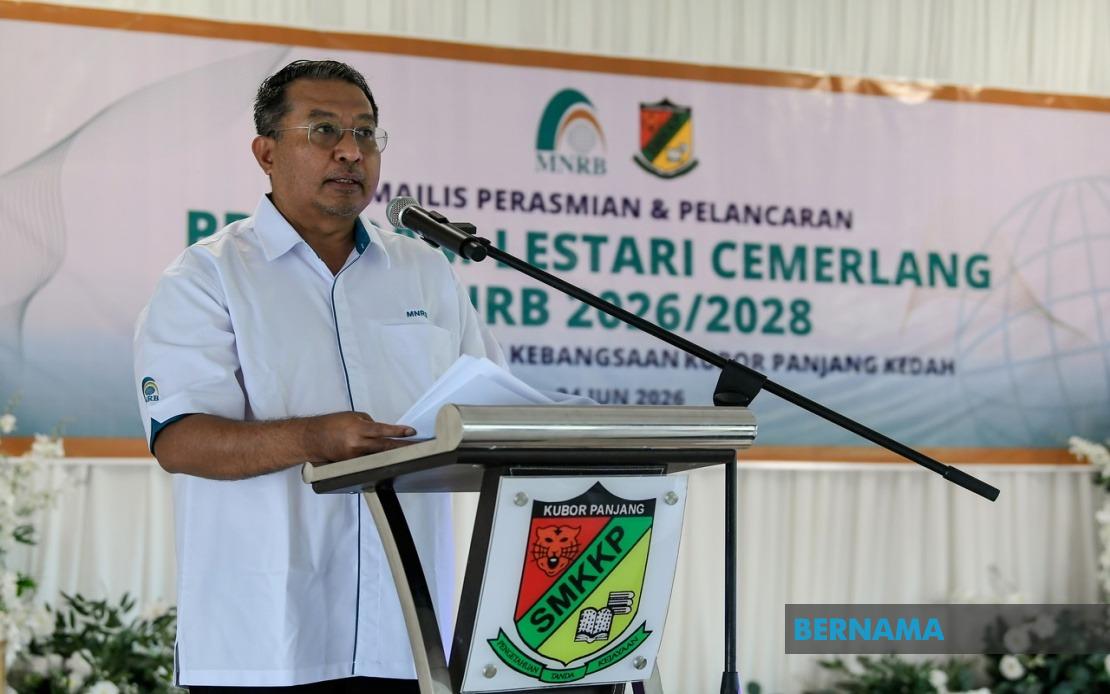
MNRB Holdings Berhad, a major investment holding company, has committed nearly RM600,000 towards educational development across six schools in Malaysia through its flagship Lestari Cemerlang Programme. The initiative was formally launched at Sekolah Menengah Kebangsaan Kubor Panjang in Pendang, Kedah, marking the sixth school to join the company's ongoing efforts to strengthen educational outcomes in both urban and underserved communities.
According to Datuk Rudy Rodzila Che Lamin, interim president and group chief executive officer of MNRB Holdings, the adopted school programme represents a cornerstone of the company's corporate social responsibility strategy, having operated since 2011 with consistent expansion. The initiative reflects a strategic commitment to fostering holistic student development rather than focusing narrowly on academic metrics alone. By targeting schools across different regions—including sites in Perak, Pahang, Negeri Sembilan, Melaka, and Selangor alongside the newly adopted institution in Kedah—the company aims to address educational disparities and create sustainable pathways for student advancement.
The Lestari Cemerlang Programme operates on a comprehensive model that integrates academic support with character building and institutional excellence. Rather than providing one-off financial assistance, MNRB has developed layered interventions designed to address multiple dimensions of school improvement. These initiatives span remedial and supplementary classes targeting Form Five students preparing for critical examinations, motivational camps intended to build resilience and aspiration, and broader student development programmes aimed at cultivating leadership and critical thinking skills. The company has also invested in physical infrastructure, upgrading learning facilities and supporting extracurricular activities through sponsorships of sports equipment and jerseys.
A particularly significant element of the programme involves the establishment of digital learning infrastructure through the MNRB Smart e-Learning Room. Equipped with smart television systems and reliable internet connectivity, these spaces address a pressing gap in many Malaysian schools, particularly those in less developed areas where access to technology remains constrained. The rooms serve as focal points for interactive, technology-enabled instruction that can enhance engagement and broaden exposure to contemporary learning methods. This dimension of the initiative reflects broader industry recognition that digital literacy and technological familiarity are essential competencies for students preparing to enter a rapidly evolving economy.
Beyond the school-level interventions, MNRB has established the Tabung Biasiswa MNRB scholarship initiative, which identifies and supports outstanding students from partner schools throughout their tertiary education. This complementary programme operates distinctly from the main Lestari Cemerlang initiative, as noted by Hazlina Hazani, MNRB Group chief people officer. Rather than providing general educational support, the scholarship programme specifically targets high-performing students pursuing qualifications in fields directly aligned with MNRB's business operations—particularly insurance, takaful, and finance sectors. This targeted approach creates a pipeline connecting talented secondary students to higher education opportunities while simultaneously addressing sectoral skills shortages.
The scholarship programme has demonstrable outcomes that justify its continuation and expansion. To date, fourteen students from the previously adopted schools have received sponsorship covering diploma, bachelor's, and master's level study. Critically, eight of these scholarship recipients have subsequently secured employment with MNRB Group upon graduation, suggesting the programme successfully cultivates both talent and institutional loyalty. For the five top-performing students from SMK Kubor Panjang now entering the scholarship cohort, this track record provides tangible evidence that educational investment can translate into career advancement and professional security.
The expansion to SMK Kubor Panjang reflects MNRB's intentional geographic diversification strategy. By extending operations to Kedah, the company addresses educational needs in a state that historically has received less corporate philanthropic attention compared to more economically developed regions. The ceremony was officiated by Ishak Awang, deputy director of the Kedah State Education Department, signalling meaningful coordination between the private sector initiative and state educational apparatus. This collaborative dimension enhances programme credibility and sustainability, embedding corporate contributions within official educational structures rather than operating as standalone charitable activities.
For Malaysian readers, particularly educators and parents in underserved regions, this initiative carries significance beyond its immediate financial allocation. The programme demonstrates that substantial educational improvement need not depend solely on government budget allocation—a particularly relevant consideration given the pressures facing Malaysia's education system. The comprehensive approach combining academic support, infrastructure investment, and career pathway development offers a replicable model that other corporations might consider adopting. The emphasis on rural areas addresses persistent inequities in resource distribution that have constrained opportunities for students in less densely populated regions.
The long-term implications extend to workforce development and regional economic vitality. By nurturing talent in secondary schools and creating pathways to tertiary qualification and professional employment, MNRB's dual-track approach addresses supply-side constraints in the financial services sector while simultaneously enhancing social mobility for participating students. For students from modest backgrounds in schools like SMK Kubor Panjang, access to motivational programming, learning resources, and scholarship support can fundamentally alter educational trajectories and career prospects. The fact that eight previous scholarship recipients have gained MNRB employment suggests the programme succeeds in its implicit objective of identifying capable individuals who might otherwise face barriers to professional advancement.
The corporate motivation underlying these initiatives deserves consideration alongside their social benefits. While the Lestari Cemerlang Programme clearly generates positive educational outcomes, MNRB simultaneously benefits through enhanced corporate reputation, workforce pipeline development, and demonstration of sector responsibility. This alignment of corporate and social interests need not be viewed cynically—indeed, sustainable philanthropic initiatives often require such alignment to ensure longevity and scale. However, it underscores that corporate educational initiatives function most effectively when they address genuine institutional gaps while creating measurable value for both communities and contributing companies.
Moving forward, the programme's expansion pathway raises questions about scalability and sustainability. With six schools now participating and twenty-two students having received scholarship support, the initiative has achieved meaningful scope without becoming unwieldy. The geographic spread across five states plus Kedah suggests MNRB has identified a replicable operational model applicable across diverse educational contexts. Continued expansion would require proportionate increase in financial and human resources, but the demonstrated success in earlier adoptee schools provides confidence that systematic growth remains feasible. For Malaysian education stakeholders, the Lestari Cemerlang Programme represents an instructive example of how private sector engagement, when structured thoughtfully and sustained consistently, can meaningfully enhance educational quality and student outcomes in targeted communities.