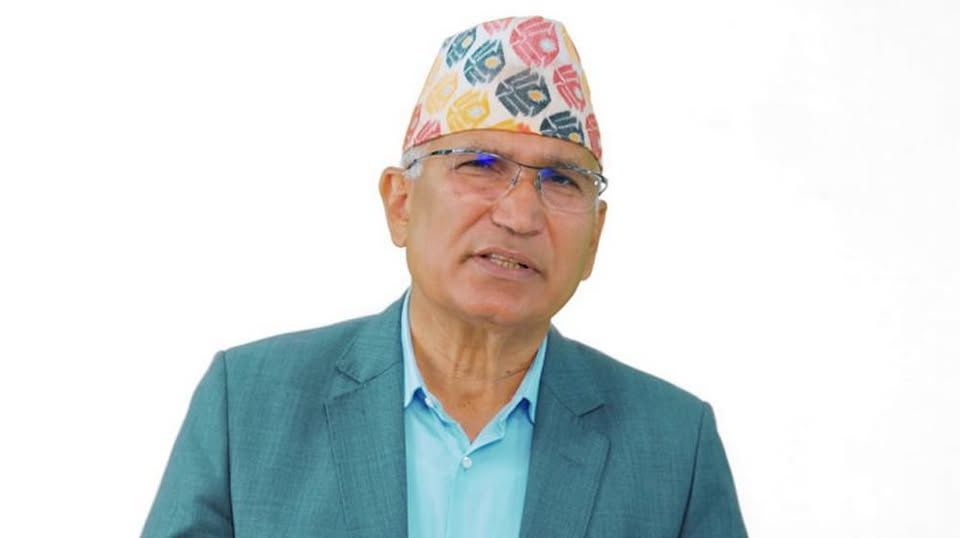
Nepal's police have detained Bishnu Paudel, a former finance minister and senior figure within the Communist CPN-UML party, on suspicion of involvement in money-laundering activities. The arrest on Monday comes amid an intensified crackdown on corruption that has become the defining feature of Prime Minister Balendra Shah's administration since it assumed office in March following months of civil unrest.
Paudel held a prominent position as vice-chair of the CPN-UML, the party led by ex-Prime Minister KP Sharma Oli, whose government fell during the tumultuous September uprising. His detention represents a significant moment in Nepal's post-protest political landscape, where accountability for alleged financial impropriety has become a central focus of the new administration's legitimacy and public support.
The money-laundering investigation was confirmed by Nepal Police spokesman Abhi Narayan Kafle, who indicated that investigators would examine the extent of Paudel's alleged involvement in illicit financial transactions. The specific details of the suspected laundering scheme remain under investigation, though the case forms part of a broader pattern of scrutiny directed at officials from the previous government.
Shah, who rose to prominence as a musician before entering politics, campaigned explicitly on anti-corruption grounds and secured his electoral mandate partly through promises to pursue accountability for wrongdoing during earlier administrations. His government's willingness to pursue high-ranking figures from the previous regime has signalled a genuine commitment to combating graft, though it has also drawn criticism from opposition parties.
The CPN-UML has characterised the arrest as politically motivated. Party publicity head Niraj Acharya claimed the government was employing selective prosecution and authoritarian tactics, asserting that while the party respects the rule of law, the current administration exhibits discriminatory behaviour in its enforcement. Such accusations reflect the polarised political environment in which these investigations are unfolding, with opposition figures viewing the anti-corruption drive as a tool for political advantage.
Oli himself has come under direct scrutiny from the new administration. In March, immediately after Shah took office, Oli and his former interior minister Ramesh Lekhak were arrested and questioned regarding their alleged roles in the violent suppression of the 2025 protests. Both men spent nearly two weeks in custody before being released without charges, and both have consistently denied any responsibility for the bloodshed. The fact that neither faced formal charges has fuelled opposition claims that the investigations lack substance.
The 2025 protests that precipitated the government's downfall began as demonstrations against a brief social media ban but rapidly evolved into a broader expression of public anger over endemic corruption and economic hardship. The security forces' response proved brutally disproportionate, resulting in at least 76 deaths and more than 2,500 injuries during two days of intense violence. This deadly toll transformed the protests into a watershed moment for Nepal's democracy, ultimately forcing the government's collapse.
Beyond the high-profile arrests of former ministers, Nepal's anti-corruption apparatus is pursuing multiple cases involving institutional wrongdoing. The Commission for Investigation of Abuse of Authority has filed charges against 16 individuals, including the chief of the passport department, in connection with an alleged embezzlement scheme worth approximately 66 million US dollars. According to commission spokesman Suresh Neupane, the investigation concerns unlawful enrichment during the procurement of electronic passport systems, highlighting systemic corruption that extends well into the bureaucratic machinery.
These concurrent investigations signal that Nepal's post-protest government is attempting to demonstrate substantive progress against corruption across multiple levels of governance. However, the selective nature of prosecutions—focusing heavily on the previous regime—has created space for legitimate questions about whether the anti-corruption campaign serves justice or political vengeance. For Malaysian and Southeast Asian observers, Nepal's experience offers instructive lessons about the challenges of transitioning from protest-driven regime change to institutional accountability.
The success of Shah's anti-corruption agenda will ultimately depend on whether investigations are pursued impartially and whether charges result in prosecutions based on evidence rather than political convenience. Should the campaign be perceived as settling scores rather than establishing genuine accountability mechanisms, it risks undermining public confidence in Nepal's judicial institutions at precisely the moment when rebuilding institutional legitimacy is essential for democratic consolidation.