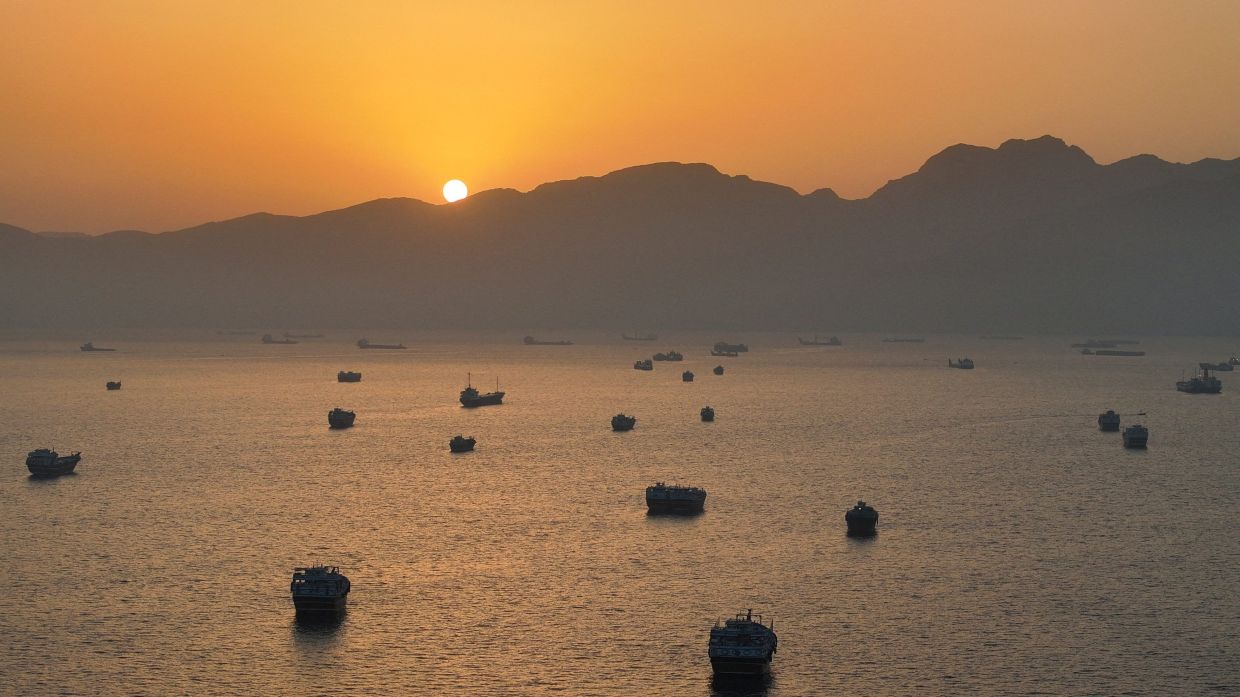
The gradual exodus of stranded tankers from the Persian Gulf is gaining momentum, with three major crude carriers moving through the Strait of Hormuz this week following breakthrough diplomatic negotiations between Iran and the United States. The departure of these vessels, collectively transporting 5 million barrels of crude bound for Asian refineries and regional ports, represents a tangible shift in the regional shipping crisis that has constrained global oil supplies for months. Shipping data tracked by LSEG and Kpler confirms the movement, suggesting that commercial pressure and political agreement are finally untangling one of the world's most critical maritime chokepoints.
The South Korean-flagged VL Breeze, a massive Very Large Crude Carrier with capacity for 2 million barrels, has cleared the strait carrying a blend of Qatari condensate and crude from Abu Dhabi destined for the refining hub of Daesan in South Korea. The vessel is being operated for Hyundai Oilbank, one of Asia's major crude processors, which has been seeking to replenish inventories depleted by the prolonged shipping delays. Meanwhile, the Liberian-registered VLCC Plata Carrier, chartered by Indian Oil Corporation, has begun its departure carrying 2 million barrels of Saudi crude. Running parallel to these larger vessels, the Suezmax tanker Prudent Warrior is charting a course toward the Omani port of Sohar with 1 million barrels of Iraqi Basrah crude, also flying the Liberian flag. Together, these three ships represent a substantial injection of crude into supply chains that service Asia's energy-hungry economies.
The breakthrough in tanker movements comes against the backdrop of a regional conflict that has disrupted maritime commerce for several months, trapping an enormous volume of oil in the Gulf awaiting safe passage. Industry analysts at Kpler and Vortexa estimated last week that approximately 90 million barrels of crude remained stranded within the Gulf, creating an artificial bottleneck that has simultaneously pressured global oil prices and generated uncertainty across energy markets. The diplomatic accord between Iran and the United States, while limited in scope and duration, has apparently provided sufficient confidence for shipping companies and tanker operators to resume movements through waters that many viewed as increasingly hazardous. South Korea's maritime ministry confirmed Wednesday that four vessels operated by South Korean shipping firms had successfully transited the strait, with one heading home and others proceeding to third-country destinations.
The scale of the remaining challenge remains substantial, however. Of the 26 vessels initially trapped since the Middle East conflict intensified, eighteen still remain within the Gulf, suggesting that the current pace of releases will take considerable time to fully clear the backlog. This prolonged situation reflects both the cautious approach many shipowners and operators are adopting and the genuine uncertainties that persist regarding sustained stability in the region. The diplomatic agreement, while welcome, is interim in nature and does not eliminate underlying geopolitical tensions that could potentially reignite shipping disruptions at any time.
Oman has emerged as a critical facilitator in enabling these vessel movements by establishing temporary maritime corridors designed specifically to route ships safely away from the primary shipping lane. The Sultanate's commitment to keeping the Strait of Hormuz open to commerce without imposing transit tolls, combined with the designation of two alternative routes running north and south of the conventional passage, demonstrates the kind of practical regional cooperation that shipping requires to function effectively. The International Maritime Organization has worked in partnership with Oman on these corridor arrangements, providing the institutional framework necessary to coordinate vessel movements and establish protocols that reduce perceived risks for merchant shipping.
Beyond crude oil, the return of liquefied natural gas operations signals another layer of normalisation within the region's energy infrastructure. Two empty LNG tankers, the Shandong Redwood and Milaha Qatar, have recently transited westbound through the strait to load cargoes from Qatari terminals. This movement is particularly significant because it represents the largest concentration of empty LNG ships positioning themselves for loading since the conflict began, indicating that energy companies and traders are rebuilding confidence in the viability of sustained LNG exports from the Gulf. Qatar's Prime Minister Sheikh Mohammed bin Abdulrahman al-Thani disclosed to the Financial Times that the Gulf nation expects to return to normal liquefied natural gas production rates within several weeks, suggesting that operational disruptions at export terminals may be approaching resolution.
The implications for Asian energy security are material and multifaceted. Asian refineries and power generation facilities have been operating with reduced access to competitively priced crude and gas supplies, placing upward pressure on energy costs across manufacturing sectors that depend on stable fuel inputs. The reopening of these supply channels promises to moderate energy prices that have been elevated by artificial scarcity, potentially easing cost pressures on chemical producers, steel mills, and petrochemical manufacturers throughout the region. For Malaysia specifically, which depends substantially on imported energy and functions as a significant regional petroleum trading and refining hub, the restoration of normal flows through the Strait of Hormuz carries direct relevance to competitiveness and industrial costs.
The broader market implication centres on price stabilisation. Global crude benchmarks have been supported at elevated levels by the shipping disruptions and supply constraints emanating from the Gulf. As tankers successfully clear the strait and resume normal discharge operations at destination refineries, the accumulated oil inventory will gradually transition from floating storage to land-based reserves or processed products, effectively expanding available global supply. This dynamic, if sustained over coming weeks and months, should contribute to moderating crude prices that have reflected risk premiums related to shipping uncertainty and geopolitical volatility.
However, the sustainability of these improvements remains contingent on political stability and the durability of the interim Iran-US understanding. If diplomatic progress stalls or if the underlying conflict dynamics shift, the fragile normalcy now reasserting itself in the Strait of Hormuz could quickly reverse. Shipping companies and energy traders are therefore likely to maintain elevated caution and may sustain risk premiums in their operations and pricing structures. The current movement of tankers should be understood not as a conclusive resolution to the shipping crisis but rather as a provisional easing of pressures that demonstrates what normalised commerce could look like if regional tensions continue to de-escalate.