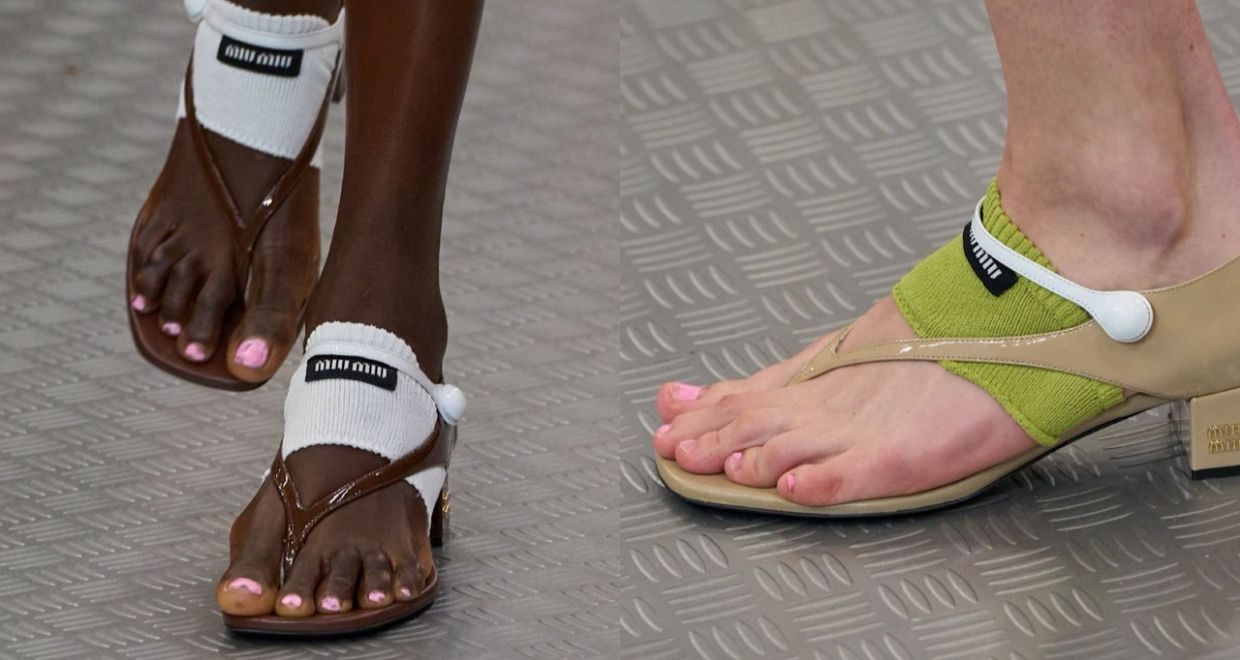
The perennial summer dilemma has found an unlikely solution in open-toe socks, a fashion hybrid gaining unexpected traction across retailers and online platforms. The design strips away the conventional sock entirely in the toe region, instead wrapping coverage around the arch and upper foot while leaving toes completely exposed. This unconventional approach is resonating with consumers who find themselves perpetually caught between the desire for barefoot simplicity and the practicality of actual foot covering.
The phenomenon has accelerated particularly sharply in South Korea, where an unusually early heat wave compressed the traditional seasonal calendar. According to online fashion retailer W Concept, the surge in demand for warm-weather footwear has been remarkable, with summer-appropriate shoes including mules, slides, and flip-flops recording an 80 percent sales increase when comparing the period from May 31 to June 7 against the same timeframe in the previous year. This acceleration has pulled forward accompanying accessories, including the open-toe sock category.
The numbers tracking the open-toe sock phenomenon specifically are striking. Ably, a style commerce platform operating across the region, documented a 1,664 percent increase in transaction value for socks designed to pair with flip-flops over the course of a single month spanning May 14 to June 14. Search interest climbed even more dramatically, jumping 3,227 percent during the identical period. These metrics indicate more than passing curiosity; they suggest a genuine shift in shopping behaviour among fashion-conscious consumers navigating the transition into warmer months.
The trend's origins trace to haute couture rather than streetwear innovation. The 2025 Spring/Summer collection from luxury fashion house Miu Miu introduced an unconventional sock silhouette that departed radically from conventional sock design by wrapping around only the arch area, leaving the toes and forefoot entirely exposed. This designer endorsement lent credibility to what might otherwise have appeared impractical, essentially giving permission for consumers to experiment with the format. The trend received additional momentum through celebrity adoption, with actor Cha Jung-won sharing social media images pairing sky-blue flip-flops with beige knit leg warmers, providing a tangible template for how the look translates to everyday styling.
What distinguishes contemporary open-toe socks from their winter counterparts is fundamental construction philosophy. Rather than prioritising warmth, today's versions emphasise breathability and visual interest through deployment of sheer, mesh, and loosely knitted fabrics. These materials facilitate air circulation while maintaining the practical and aesthetic benefits of partial foot coverage. The shift transforms open-toe socks from impractical novelty to genuine seasonal accessory, one that functions simultaneously as both practical foot covering and styling statement.
Retailers positioning this trend view it as a practical styling solution addressing a genuine seasonal challenge. According to an official from online platform 29CM, open-toe socks function as a form of shorthand communication within fashion vocabulary. They solve the aesthetic problem of plain flip-flops and sandals lacking visual interest while rejecting the notion that summer wardrobes require bare feet. The executive characterised the item as a "summer cheat code" for adding accent colour and layering to otherwise straightforward warm-weather shoes, transforming flip-flops, sandals, and ballerina flats through subtle textile addition.
Beyond aesthetics, the functional advantages carry genuine weight, particularly in climates with significant moisture or seasonal challenges. Because open-toe socks cover the upper foot and arch areas, they substantially reduce friction and the resulting chafing that commonly occurs where flip-flop straps contact skin during extended wear. In regions experiencing monsoon seasons, the format becomes even more practical, allowing wearers to combine socks with rain boots to create a barrier against skin irritation that prolonged moisture exposure generates. This practical dimension transforms what initially appears as purely aesthetic choice into garment with legitimate utility.
Styling guidance for consumers experimenting with open-toe socks emphasises restraint and complementary colour choices. Basic neutral shades including grey, black, and white provide optimal entry points for those attempting the trend for the first time. Grey socks coordinate effectively with black flip-flops or ballerina flats when paired with denim, Bermuda shorts, or satin skirts, creating balanced visual compositions. For consumers seeking more adventurous colour expression, vivid options including yellow, pink, or sky blue introduce dimension while maintaining the cohesiveness essential to successful styling. Deliberately mismatching sock and shoe colours in complementary or contrasting shades enhances the overall composition, signalling intentionality rather than accident.
The broader styling principle underpinning effective open-toe sock deployment emphasises balance and restraint in remaining garment selection. Since the socks and shoes already command visual attention through colour, pattern, or texture, strategic simplicity in upper-body and lower-body selections maintains equilibrium. Paired with straightforward t-shirts and shorts or classic shirt and skirt combinations, open-toe socks function as the deliberate focal point rather than competing with other print elements. Patterns including dots or florals pair particularly effectively with the format, as the visual interest in sock texture or design complements rather than overwhelms coordinating pieces.
Fashion professionals characterise this moment as a fundamental recalibration of how socks function within warm-weather dressing conventions. Rather than remaining hidden items to be concealed or entirely eliminated, socks are repositioning themselves as visible styling components deserving thoughtful selection and intentional deployment. The open-toe format essentially democratises sock visibility, allowing consumers to bare their toes while maintaining strategic foot coverage, to position socks between flip-flop straps, or to deploy them as deliberate styling accent. This liberation from conventional sock concealment represents a subtle but meaningful shift in fashion vocabulary, one that suggests summer garment composition has genuine room for textile creativity and strategic layering even in warm climates.
%22%2F%3E%3C%2Fpattern%3E%3C%2Fdefs%3E%3Crect%20width%3D%22100%25%22%20height%3D%22100%25%22%20fill%3D%22url(%23ph1pb81g)%22%2F%3E%3Crect%20width%3D%22100%25%22%20height%3D%22100%25%22%20fill%3D%22url(%23ph1pb81p)%22%2F%3E%3Ctext%20x%3D%2250%25%22%20y%3D%2250%25%22%20text-anchor%3D%22middle%22%20dominant-baseline%3D%22central%22%20fill%3D%22rgba(255%2C255%2C255%2C0.95)%22%20font-family%3D%22Georgia%2C%20'Times%20New%20Roman'%2C%20serif%22%20font-weight%3D%22700%22%20font-size%3D%22272%22%20letter-spacing%3D%22-0.02em%22%3EMITRA%3C%2Ftext%3E%3C%2Fsvg%3E)
%22%2F%3E%3C%2Fpattern%3E%3C%2Fdefs%3E%3Crect%20width%3D%22100%25%22%20height%3D%22100%25%22%20fill%3D%22url(%23ph3khjrg)%22%2F%3E%3Crect%20width%3D%22100%25%22%20height%3D%22100%25%22%20fill%3D%22url(%23ph3khjrp)%22%2F%3E%3Ctext%20x%3D%2250%25%22%20y%3D%2250%25%22%20text-anchor%3D%22middle%22%20dominant-baseline%3D%22central%22%20fill%3D%22rgba(255%2C255%2C255%2C0.95)%22%20font-family%3D%22Georgia%2C%20'Times%20New%20Roman'%2C%20serif%22%20font-weight%3D%22700%22%20font-size%3D%22320%22%20letter-spacing%3D%22-0.02em%22%3ERim%3C%2Ftext%3E%3C%2Fsvg%3E)
%22%2F%3E%3C%2Fpattern%3E%3C%2Fdefs%3E%3Crect%20width%3D%22100%25%22%20height%3D%22100%25%22%20fill%3D%22url(%23ph3tt8dg)%22%2F%3E%3Crect%20width%3D%22100%25%22%20height%3D%22100%25%22%20fill%3D%22url(%23ph3tt8dp)%22%2F%3E%3Ctext%20x%3D%2250%25%22%20y%3D%2250%25%22%20text-anchor%3D%22middle%22%20dominant-baseline%3D%22central%22%20fill%3D%22rgba(255%2C255%2C255%2C0.95)%22%20font-family%3D%22Georgia%2C%20'Times%20New%20Roman'%2C%20serif%22%20font-weight%3D%22700%22%20font-size%3D%22226%22%20letter-spacing%3D%22-0.02em%22%3EDiesel%3C%2Ftext%3E%3C%2Fsvg%3E)