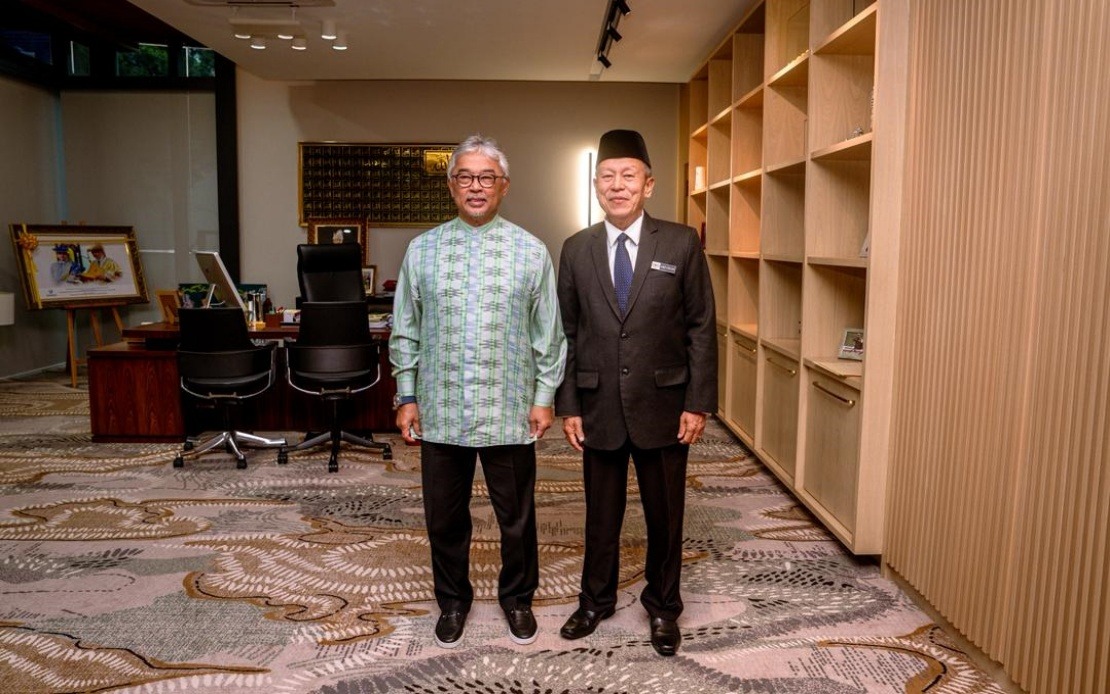
The Sultan of Pahang, Al-Sultan Abdullah Ri'ayatuddin Al-Mustafa Billah Shah, met with the chief commissioner of the Malaysian Anti-Corruption Commission on Tuesday at Shahzan House in Ampang, marking a significant engagement between the palace and Malaysia's primary corruption watchdog. The hour-long audience reflected the monarchy's continuing interest in the nation's anti-corruption infrastructure during a period when public trust in institutions remains a critical concern across Southeast Asia.
During the gathering, Datuk Seri Abd Halim Aman provided His Royal Highness with a comprehensive update on the MACC's current operational status and recent achievements. The briefing encompassed the full spectrum of the commission's mandate, from investigative work to preventative measures designed to reduce the incidence of graft in both public and private sectors. This direct engagement with palace leadership underscores the perceived importance of maintaining high-level support for anti-corruption initiatives at a time when Malaysia faces renewed scrutiny over governance standards.
The MACC presented extensive information on its integrity-strengthening programmes and specific strategies deployed to combat corruption across government agencies and statutory bodies. These initiatives represent the commission's evolving approach to tackling institutional corruption through both reactive investigations and proactive cultural reform. The discussion reflected recognition that sustained progress against corruption requires coordination across multiple levels of governance, including the traditional institutions of the monarchy that retain significant symbolic and advisory authority in Malaysian constitutional affairs.
Governance and corruption prevention emerged as central themes during the discussion, with both parties exploring current challenges confronting Malaysia's regulatory environment. The meeting addressed pressing questions about how enforcement agencies can build and maintain credibility with the public, a particularly pressing concern in Southeast Asia where institutional transparency directly influences investor confidence and economic competitiveness. Recent high-profile cases and evolving public expectations have intensified scrutiny of the MACC's effectiveness and operational independence.
The MACC highlighted its ongoing programmes aimed at enhancing public confidence in the organisation's enforcement capabilities. These efforts encompass improved transparency measures, stakeholder engagement initiatives, and strategies to demonstrate tangible results in combating high-level corruption. The commission recognises that institutional legitimacy depends not merely on investigating and prosecuting offences but on demonstrating consistent commitment to fair procedures and meaningful outcomes that resonate with Malaysian citizens across diverse communities and regions.
Al-Sultan Abdullah's willingness to receive this briefing carries symbolic weight within Malaysia's constitutional framework, where the Yang di-Pertuan Agong and state sultans occupy positions that transcend partisan politics. Royal endorsement of anti-corruption work, even in the form of granting audiences to enforcement officials, sends important signals about institutional priorities and the seriousness with which Malaysia's traditional leadership views governance standards. Such meetings reinforce the separation between the palace and political competition while affirming shared commitment to foundational principles of accountability.
For the MACC, securing access to high-level palace audiences demonstrates the agency's elevated status within Malaysia's governance architecture and provides platforms to explain its mandate beyond standard media channels. Direct engagement with the monarchy creates opportunities to contextualise the commission's work within broader national interests, potentially insulating the agency from political pressure while simultaneously enhancing its authority to pursue investigations without perceived interference. This dynamic proves particularly valuable during periods of contested political leadership or when public confidence in political institutions wanes.
Datuk Seri Abd Halim's subsequent expression of gratitude extended beyond ceremonial acknowledgement to emphasise the operational significance of royal support. His statements conveyed appreciation for Al-Sultan Abdullah's demonstrated concern regarding the MACC's contemporary challenges and the commission's capacity to sustain its mission. This language reflects the political reality that anti-corruption agencies operating in Southeast Asia depend on backing from multiple institutional quarters to maintain operational independence and withstand attempts to politicise their enforcement activities.
The commissioner further highlighted the palace's role in advancing Malaysia's governance standards by endorsing the importance of transparent, accountable, and integrity-based institutional practices. These principles, while rhetorical staples in public discourse, gain concrete meaning when articulated by traditional authorities whose legitimacy derives from sources independent of electoral politics. The framing suggests that anti-corruption work represents not partisan preference but fundamental commitment to constitutional governance that transcends ordinary political competition.
This audience reflects broader regional trends where Southeast Asian monarchies and traditional authorities increasingly engage with specialised enforcement agencies addressing corruption, human trafficking, and financial crime. The Sultan of Pahang's reception of the MACC chief positions Malaysia within this pattern while demonstrating that engagement with anti-corruption institutions remains a priority for high-level palace officials. Such interactions, though often brief, generate symbolic affirmation that comprehensive anti-corruption work enjoys elite-level sanction and contributes to institutional narratives emphasising serious commitment to governance reform.
For Malaysian observers and regional analysts monitoring Southeast Asian governance trends, this meeting illustrates the continuing relevance of traditional institutions in contemporary anti-corruption frameworks. While elected governments assume primary responsibility for implementing anti-corruption policy, Malaysia's constitutional monarchy retains capacity to reinforce institutional expectations through strategic audiences and public acknowledgement of agencies pursuing integrity objectives. The engagement demonstrates how formal structures of traditional authority intersect with modern regulatory institutions to reinforce governance legitimacy during periods when public confidence requires sustained demonstration of institutional commitment to anti-corruption principles that extend beyond electoral cycles and partisan interests.