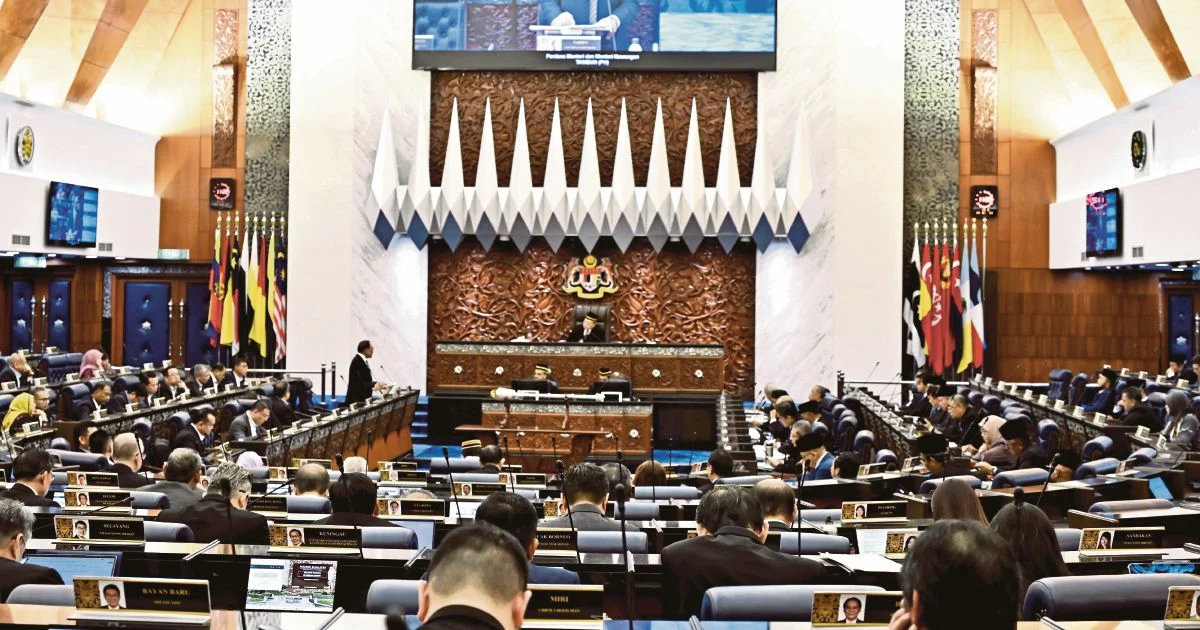
Barely an hour after convening its new parliamentary session, the Dewan Rakyat descended into acrimonious exchanges that exposed growing friction within Malaysia's political landscape. The flashpoint emerged when a dispute concerning the formal recognition of the opposition leader triggered escalating confrontations between government-aligned and opposition lawmakers, revealing deepening cracks in the country's coalition politics.
The incident underscores the volatile nature of contemporary Malaysian parliamentary dynamics, where the razor-thin margins of government control have made every procedural matter a potential flashpoint for broader political grievances. What appeared initially as a procedural disagreement transformed rapidly into a broader airing of complaints about the treatment of opposition figures and allegations of intimidatory conduct between rival coalition partners.
The clash centred on questions about how parliamentary protocol would recognise and accommodate the opposition leader, a seemingly technical matter that nevertheless carries significant constitutional and political weight. In Malaysia's parliamentary system, the formal status of opposition leadership carries both symbolic importance and practical implications for legislative privileges, speaking time allocation, and broader parliamentary standing.
Accusations of bullying behaviour by PAS—the Islamist party at the heart of the government coalition—towards Bersatu, its junior coalition ally, emerged as the focal point of parliamentary tension. These allegations reveal fault lines within the governing coalition itself, suggesting that the partnership between these two parties remains uneasy and subject to periodic eruptions of acrimony despite their ostensible political alignment.
The timing of these exchanges is particularly significant. The outbreak of hostilities so soon after the parliamentary session commenced indicates that underlying tensions had been simmering and required minimal provocation to resurface. For Malaysian observers and regional analysts monitoring the nation's political stability, such early-session disruptions signal that the government's coalition may be less cohesive than public statements suggest.
Bersatu's prominence in this dispute reflects its peculiar position within Malaysian politics. The party, led by Muhyiddin Yassin, has struggled to maintain relevance and parliamentary representation while navigating complex relationships with larger coalition partners. Allegations of PAS pressure on Bersatu suggest that smaller parties within governing coalitions face real constraints on their political autonomy and strategic decision-making.
The incident highlights how Malaysian parliament continues to serve as a theatre for airing grievances that extend far beyond the immediate parliamentary agenda. Rather than functioning purely as a legislative body focused on governance and lawmaking, the Dewan Rakyat increasingly reflects the deep political divisions and personal animosities that characterise Malaysian politics at the party level.
For regional observers, these exchanges provide insight into how Malaysia's complex multi-party system generates instability. With multiple parties competing for influence within government coalitions, disputes over procedural matters often mask deeper contests for power, ministerial portfolios, and policy direction. The heated confrontation demonstrated how quickly procedural disagreements can metastasise into broader political conflicts.
The opposition's readiness to confront government MPs over the treatment of its leadership reflects its determination to assert institutional legitimacy and parliamentary standing despite being excluded from cabinet positions. These parliamentary exchanges serve as one of the few venues where opposition parties can meaningfully challenge government actions and contest the ruling coalition's narrative.
Takiyuddin's involvement in the exchanges—as opposition lawmaker raising grievances—illustrates how individual MPs have become focal points in broader factional conflicts. Parliamentary debates increasingly centre on personalities and inter-party rivalries rather than policy substance, a trend that concerns observers of Malaysian democratic institutions.
The escalation from procedural disagreement to acrimonious exchanges also reflects the absence of established parliamentary norms around managing coalition tensions. Unlike more established Westminster systems, Malaysia's parliament has yet to develop robust conventions for containing disputes and maintaining decorum when coalition partners clash.
Looking forward, these incidents suggest that parliamentary sessions may become increasingly disruptive as coalition tensions simmer beneath the surface of apparent governmental stability. The government's ability to pass legislation and maintain parliamentary control depends partly on coalition discipline, which these public confrontations undermine. For Malaysians following parliamentary proceedings, such exchanges serve as barometers of governmental stability and coalition cohesion.
Ultimately, the heated exchanges that erupted so early in the parliamentary session underscore how fragile Malaysia's current political arrangements remain. Whether the government coalition can contain such tensions or whether further eruptions will destabilise proceedings and governance remains a significant question for Malaysia's political trajectory in the coming months.

