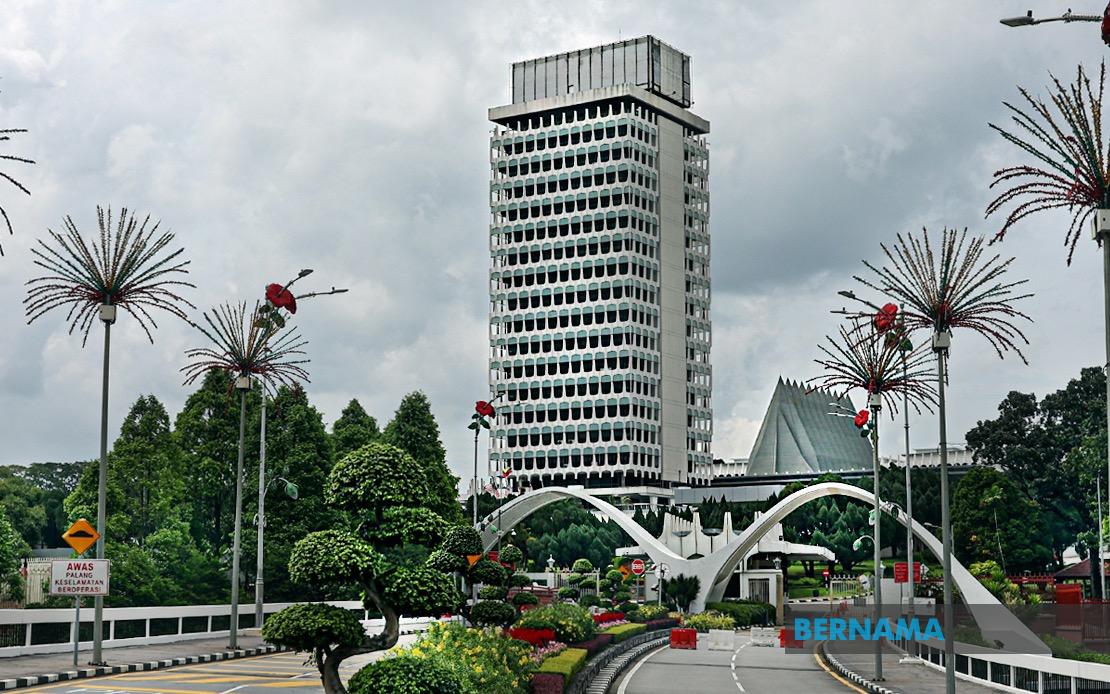
Malaysia's Parliament is set to open its Second Meeting of the Fifth Session today with MPs preparing to interrogate the government on a range of pressing economic and social policy issues, signalling growing parliamentary concern over vulnerabilities in the nation's supply chains and emerging digital threats. The 16-day sitting, which will run until July 16, promises to be substantive, with questions on global trade disruptions sharing the agenda with legislation on cybercrime and artificial intelligence governance, reflecting the twin pressures of geopolitical volatility and rapid technological change facing policymakers.
At the centre of economic scrutiny is the Strait of Hormuz, one of the world's most strategically critical chokepoints through which roughly one-third of global maritime petroleum traffic flows. Datuk Dr Richard Rapu @ Aman anak Begri, representing Betong under the GPS banner, will press the Economy Minister for the latest assessment of how trade disruptions in this vital waterway have reverberated through Malaysian industries. His line of questioning reflects legitimate concern among lawmakers and business stakeholders about how supply chain shocks—whether from geopolitical tensions, military incidents, or piracy—translate into operational pressures for Malaysian manufacturers and exporters who depend on timely, predictable input costs.
The focus on operating costs and inflationary pressure is particularly timely. Companies across Malaysia's manufacturing and export sectors, from petrochemicals to automotive parts, rely on stable shipping corridors and predictable energy prices. Disruptions to the Strait of Hormuz can cascade through the economy, pushing up energy costs and freight charges that ultimately feed into consumer prices and squeeze corporate margins. By asking specifically about the second quarter 2026 inflation reading, Dr Rapu is seeking to establish whether policymakers have a clear handle on the magnitude of this spillover effect and can distinguish between domestic and external sources of price pressure.
Equally important is the question of whether Malaysia's economic policy framework, encapsulated in the 13th Malaysia Plan, contains adequate safeguards should global economic headwinds intensify. A prolonged worldwide recession would compound the effects of trade route disruption, potentially depressing demand for Malaysian exports at the same time that input costs rise. Dr Rapu's inquiry into contingency strategies suggests Parliament wishes to ensure that contingency planning has moved beyond rhetoric into concrete policy mechanisms that can be activated to maintain the government's growth targets under stress scenarios.
On the social policy front, Onn Abu Bakar of Batu Pahat will raise haj management, a perennial concern given Malaysia's substantial Muslim population and the considerable expenditure—both public and private—involved in facilitating pilgrimage. His focus on waiting periods, costs, and pilgrim welfare indicates that current arrangements may be straining. The haj is a religious obligation and a significant economic undertaking for Malaysian families; delays and cost pressures can create real hardship. A revamped system for 2027 could represent an opportunity to modernise processes, reduce bureaucratic friction, and ensure that pilgrim safety and health standards keep pace with the physical and emotional demands of the journey.
Digital governance emerges as another flashpoint. Wong Shu Qi from Kluang will probe the Digital Minister on whether the forthcoming Artificial Intelligence Governance Bill contains explicit provisions to tackle the malicious creation and distribution of deepfake child sexual abuse material, identity spoofing, and non-consensual intimate content. This line of questioning underscores a critical gap in Malaysia's regulatory framework: as AI tools become more accessible and capable, their potential for serious harm—particularly to vulnerable populations—has outpaced legal protections. The fact that an MP feels compelled to ask such a specific question suggests that either the government's proposed framework is perceived as insufficiently detailed or that there are genuine doubts about enforcement capacity.
Food security, too, occupies Parliament's attention. Datuk Dr Radzi Jidin will ask the Agriculture and Food Security Minister what short-, medium-, and long-term measures are in train to insulate Malaysia from the food security impacts of Middle East conflict. Malaysia imports significant quantities of grains, pulses, and other staples from regions touched by regional instability; any sustained disruption to agricultural trade from that area could inflate domestic food prices and threaten food security, especially for lower-income households. The question signals that Parliament expects government to have mapped out resilience strategies rather than simply reacting to crises as they unfold.
The legislative agenda reinforces this sense of Parliament grappling with contemporary challenges. The Cybercrime Bill 2026 and amendments to the Road Transport Act 1987 are both matters of practical governance substance. The cybercrime legislation is particularly urgent given the mounting frequency and sophistication of digital attacks on individuals, businesses, and state infrastructure; as Malaysia digitalises, the legal framework must evolve accordingly. The transport act amendments likely address emerging issues in road safety and vehicle regulation that have accumulated since the previous revision.
The convergence of these parliamentary concerns—trade vulnerability, pilgrim welfare, digital governance, food security, and cybercrime—paints a picture of a regional economy and society navigating overlapping pressures from geopolitical tension, technological disruption, and demographic and social change. For Malaysian stakeholders, whether in business or civil society, the substance of these debates and the government's responses will carry implications beyond Parliament's walls, signalling how prepared the nation's leadership is to adapt policy to shifting realities. The 16-day session thus promises to be consequential in establishing whether parliamentary scrutiny of these issues translates into meaningful policy adjustment or remains largely symbolic.