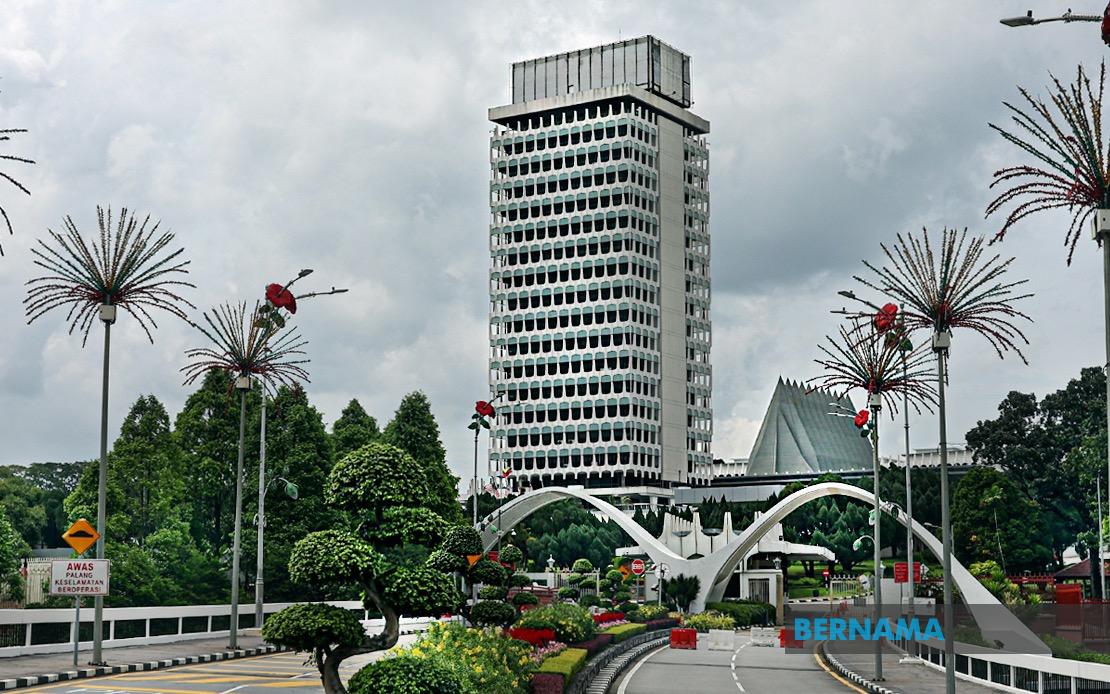
Malaysia's position on a recently announced Memorandum of Understanding between the United States and Iran aimed at resolving military tensions in West Asia will come under parliamentary scrutiny at today's sitting of the Dewan Rakyat. The discussion reflects growing regional interest in how Southeast Asian nations, particularly those with significant stakes in Middle Eastern affairs and global trade, should respond to major geopolitical developments. Lawmakers are expected to probe the government's diplomatic strategy and explore what concrete measures Kuala Lumpur intends to pursue in support of lasting stability across the troubled region.
Datuk Mohd Isam Mohd Isa from Tampin, representing the Barisan Nasional coalition, will submit a parliamentary question to the Foreign Minister during the standard Question Time session, which commences at 10 am. His query will focus on Malaysia's overarching role and strategic positioning in relation to the bilateral accord, while also probing the government's intended course of action to guarantee enduring peace. The framing of this question underscores Parliament's interest in ensuring that Malaysia actively contributes to regional conflict resolution rather than remaining a passive observer to international developments that could affect trade routes, investment flows, and regional security.
Domestic economic initiatives will also feature prominently in today's parliamentary agenda. Datuk Rosol Wahid, representing Hulu Terengganu under the Perikatan Nasional banner, has lodged a parliamentary question directed at the Minister of Domestic Trade and Cost of Living. His inquiry centres on the implementation trajectory of the MADANI Mart programme, a government initiative designed to provide affordable goods to Malaysian consumers. Rosol will seek detailed information regarding the current number of operational outlets, the volume of applications received from prospective retailers, and the scale of entrepreneurial participation. This line of questioning reflects ongoing parliamentary oversight of flagship government retail ventures aimed at tackling rising living costs, a concern that resonates across Malaysian households.
The MADANI Mart initiative represents a policy response to persistent complaints about price inflation and limited access to affordable consumer goods across the country. By requesting comprehensive implementation statistics, opposition lawmakers are attempting to gauge the programme's genuine impact and assess whether government claims about expansion and reach align with ground reality. The question also signals broader parliamentary interest in holding the executive accountable for delivery timelines and measurable outcomes in social and economic programmes.
Public health and drug enforcement concerns will surface during the question-and-answer segment as well. Khoo Poay Tiong, a Pakatan Harapan legislator representing Kota Melaka, will direct questions to the Home Minister about the trajectory of synthetic drug addiction cases recorded since 2023. He will simultaneously press the minister on the government's comprehensive strategy to counteract the escalating prevalence of synthetic narcotics, with particular emphasis on the emerging threat posed by fentanyl trafficking. The urgency in this questioning reflects mounting alarm within Parliament and among constituents regarding the proliferation of highly potent and dangerous synthetic substances, particularly those produced in illicit laboratories and smuggled across borders.
Fentanyl, a synthetic opioid thousands of times more potent than heroin, has emerged as a critical public health crisis across multiple jurisdictions, including Southeast Asia. Malaysia's drug enforcement agencies have reported increasing seizures of fentanyl and fentanyl-laced products, raising alarms about both addiction rates and overdose fatalities. Khoo's parliamentary intervention highlights the need for coordinated, evidence-based policy responses and cross-border cooperation in combating this threat, concerns that extend beyond Malaysia's borders given the region's porous boundaries and interconnected trafficking networks.
Trade and investment relationships with the United States will command legislative attention through a question posed by Datuk Seri Hamzah Zainudin from Larut. Under the Perikatan Nasional umbrella, Hamzah will ask the Minister of Investment, Trade and Industry to provide an updated assessment of the Agreement on Reciprocal Trade (ART) implementation between Malaysia and the United States. This bilateral trade accord represents an important economic plank in Malaysia-US relations and carries implications for Malaysian exporters, manufacturers, and workers. The question suggests legislative interest in monitoring the agreement's operational effectiveness and identifying any implementation bottlenecks that might disadvantage Malaysian stakeholders.
The ART negotiations have attracted considerable attention from Malaysian business chambers and industry associations, who view bilateral trade arrangements as critical to maintaining competitiveness in global markets and diversifying export destinations. Parliamentary scrutiny of implementation progress reflects recognition that trade agreements, while beneficial in principle, often encounter practical challenges requiring ongoing adjustment and diplomatic dialogue. Hamzah's question will likely elicit responses detailing tariff schedules, cumulative trade volumes, and any emerging disputes requiring resolution through diplomatic channels.
Parliament's legislative calendar today will also accommodate the first reading of three separate bills designed to modernise and strengthen Malaysian governance frameworks. The Prisons (Amendment) Bill 2026 signals government intent to reform custodial management and penal system operations, aligning practices with contemporary standards and international conventions. Simultaneously, two competition-related bills—the Competition (Amendment) Bill 2026 and the Competition Commission (Amendment) Bill 2026—demonstrate parliamentary commitment to refining Malaysia's regulatory environment for fair markets and consumer protection. These legislative initiatives will proceed through standard parliamentary procedures, beginning with introductory readings before advancing to substantive committee examination and debate.
Today's parliamentary sitting encapsulates the diverse range of issues commanding government attention and legislative oversight: from high-stakes geopolitical developments and regional peace initiatives, through domestic retail innovation addressing cost-of-living pressures, to public health emergencies and bilateral trade implementation. The questions and bills scheduled reflect Parliament's dual mandate of scrutinising executive performance while advancing legislative reforms. For Malaysian observers, the proceedings offer insight into current governmental priorities and the parliamentary opposition's emerging policy concerns, while underscoring the interconnected nature of domestic prosperity, regional stability, and international economic engagement in the contemporary global environment.