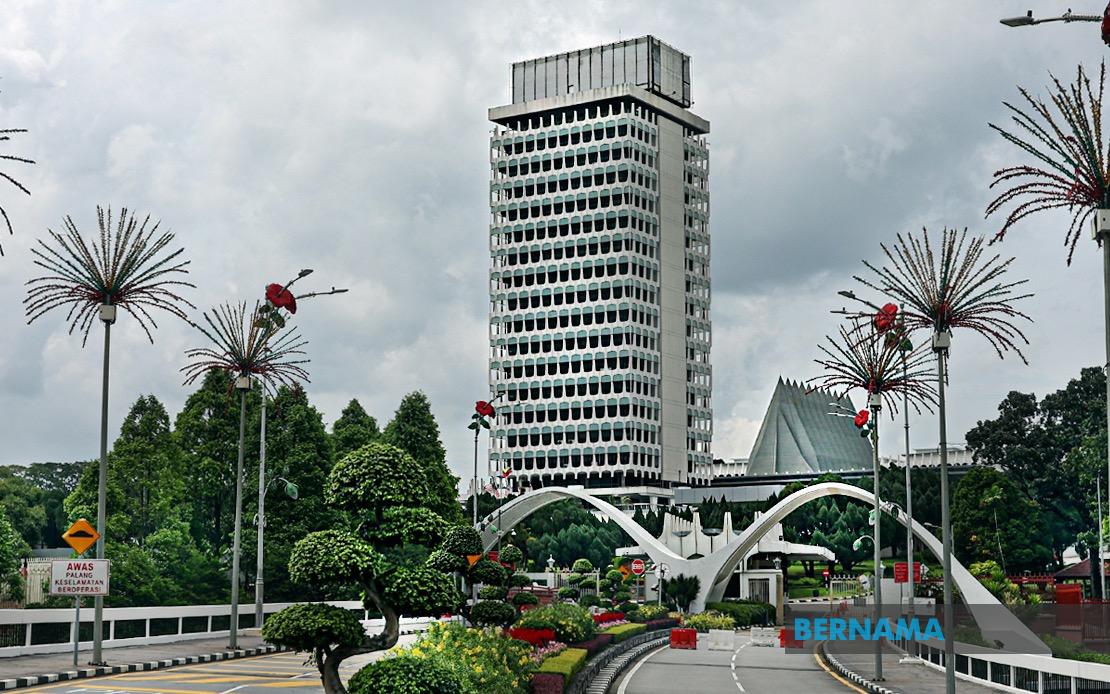
Parliament will turn its attention today to three significant policy areas spanning infrastructure, consumer protection, and digital safety, reflecting the breadth of governance challenges facing Southeast Asia's third-largest economy. The 16-day legislative session, which runs until July 16, will see members scrutinise government initiatives on water resource management, market competition enforcement, and the regulatory framework governing social media access by minors, signalling parliament's engagement with both longstanding infrastructure gaps and emerging digital-age concerns.
The first substantive matter concerns Johor's chronic water supply challenges. Suhaizan Kaiat, the Pulai parliamentarian from Pakatan Harapan, will question the Energy Transition and Water Transformation Minister about the Government's long-term vision for bolstering water resource capacity in the state. This line of inquiry addresses a persistent vulnerability in one of Malaysia's economically vital regions. Johor, which supplies water to the neighbouring Singapore city-state under longstanding bilateral agreements whilst also facing domestic demand pressures, has grappled with periodic shortages during drought cycles. The question specifically targets three strategic levers: the construction of additional dams to capture seasonal rainfall and sustain dry-season flows, the development of water treatment infrastructure to enhance supply reliability, and the adoption of recycled water schemes to reduce pressure on natural water bodies. For Malaysian readers, this matter carries direct relevance given that water insecurity affects industrial productivity, agricultural output, and residential stability. The government's response will likely reveal whether policymakers regard water security as a fundamental development priority warranting major capital investment, or whether existing capacity is deemed adequate with incremental improvements.
The second parliamentary focus concerns the Malaysia Competition Commission's capacity to police the property sector. Datuk Seri Ismail Abd. Muttalib, representing Maran under the Perikatan Nasional banner, will interrogate the Domestic Trade and Cost of Living Minister on MyCC's enforcement tools for scrutinising housing price offers and promotional packages. This reflects growing public frustration with residential property costs, which have risen faster than wage growth across much of Malaysia, pricing younger households out of homeownership. Ismail's supplementary question probes the effectiveness of investigations into anti-competitive conduct, specifically whether MyCC possesses adequate resources and authority to detect and penalise price-fixing arrangements or coordinated market manipulation among developers. This inquiry signals parliamentary concern that competition law, as currently configured and resourced, may inadequately protect consumers in a sector representing substantial household expenditure. For readers across the region, this discourse mirrors similar struggles in Singapore, Thailand, and Indonesia, where property affordability has emerged as a flashpoint for social discontent. MyCC's credibility depends partly on demonstrable enforcement against cartels and predatory pricing, yet the commission has historically operated with limited budgets and restricted investigative powers relative to its mandate.
The third parliamentary examination addresses digital governance and youth protection online. Syahredzan Johan, the Bangi MP from Pakatan Harapan, will ask the Communications Minister to articulate the rationale behind implementing age verification systems for social media platforms and to clarify the safeguards protecting user privacy during verification. This question reflects global anxieties about children's exposure to harmful content, predatory behaviour, and algorithmic manipulation on digital platforms. Syahredzan's query emphasises two technical governance concerns: ensuring that service providers collect only narrowly tailored personal data essential to confirm age, and mandating deletion protocols once verification concludes. These requirements attempt to balance child protection against privacy risks inherent in age-gate mechanisms. Southeast Asian policymakers have watched comparable debates unfold in Europe with the Digital Services Act and in the United States with proposed legislation targeting TikTok and Instagram's youth engagement strategies. Malaysia's approach to this challenge will significantly influence how the technology sector operates in the region and whether user data practices align with international privacy standards or veer toward more permissive models.
These three parliamentary inquiries collectively demonstrate parliament's engagement with challenges transcending traditional left-right political divides. Water security, consumer protection in essential markets, and digital-age safeguarding represent technical governance problems demanding sustained investment, regulatory clarity, and institutional capacity. The responses from the relevant ministers will signal whether the government prioritises these concerns or regards them as secondary to other budgetary and policy commitments. Malaysian observers will be watching closely to assess whether parliamentary questioning translates into concrete policy adjustments or remains symbolic legislative theatre.