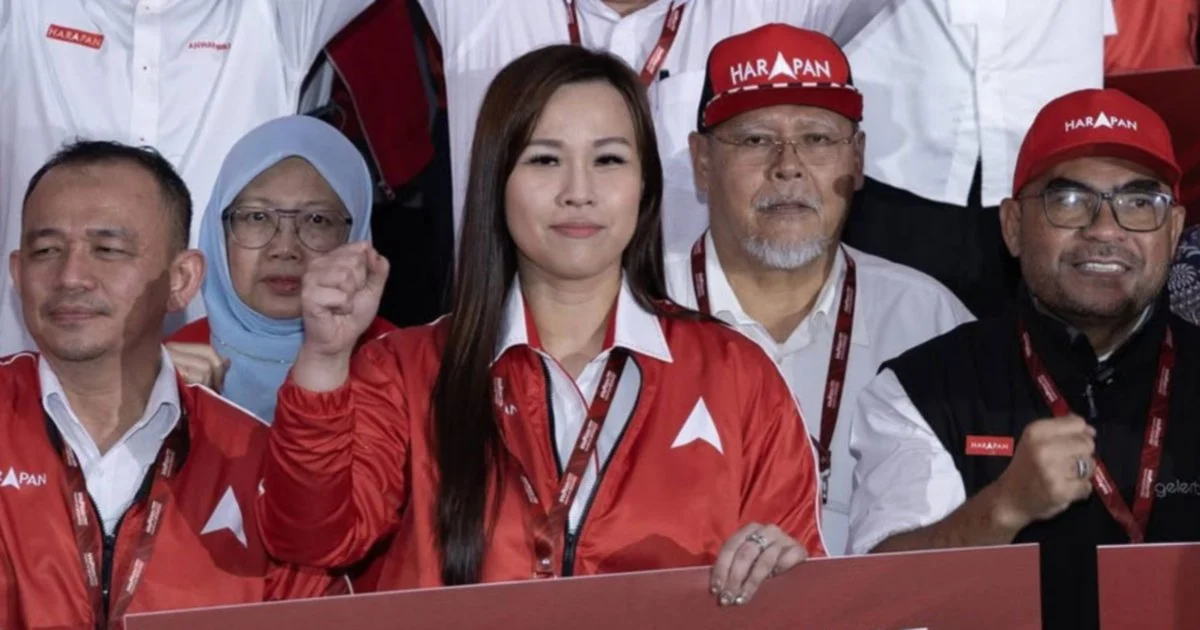
The Pasir Gudang division of Amanah has announced it will not campaign for Sharon Teo, Pakatan Harapan's selected contender for the Permas state assembly seat in the forthcoming 16th Johor state election. The decision represents a rare public rupture within the opposition coalition, with the party's local leadership objecting to what they characterise as a top-down candidate selection process that bypasses grassroots input and undermines internal democratic processes.
The term 'parachute candidate' carries particular weight in Malaysian politics, referring to external party members or political newcomers imposed on constituencies without establishing organic support networks or demonstrating local commitment. For Amanah, a party that has historically positioned itself as champion of democratic norms and transparent governance, the boycott signals that principle extends to how the coalition itself makes decisions about representation. The Pasir Gudang division's objection suggests friction between national coalition strategy and local party structures over candidate vetting procedures.
This development comes at a sensitive juncture for Pakatan Harapan, which has been seeking to project unity and strategic coordination ahead of the Johor election. Coalition coherence has been tested repeatedly in recent years across various state and federal contests, with partner parties occasionally pursuing independent agendas or objecting to seat allocations. Such tensions, while common in multi-party coalitions, risk undermining the collaborative message that Pakatan seeks to convey to voters weary of fractious opposition politics.
The Permas constituency carries particular strategic importance in the broader Johor political landscape. Located within Johor Baru district, it represents terrain where Pakatan has competitive prospects, particularly given demographic shifts and urban voter preferences in recent years. A divided campaign effort, even if symbolic, could complicate vote consolidation efforts in a contest where opposition parties are looking to make gains against the entrenched Barisan Nasional machinery.
Amanah's position within Pakatan has evolved considerably since the coalition's formation. The party emerged from the 2018 political realignment following the collapse of the PAS-PKR partnership and has worked to establish itself as a moderate Islamic political voice within the broader opposition framework. However, like its coalition partners, Amanah must navigate the competing demands of national strategy and local party autonomy. Decisions made at coalition leadership level don't always align with grassroots expectations in specific constituencies.
The question of candidate selection mechanisms remains contentious across Malaysian political parties. While larger parties like DAP, PKR, and Amanah have adopted various vetting procedures involving member surveys, divisional councils, and leadership appointments, the balance between democratic input and strategic decision-making differs substantially. Local activists frequently voice frustrations when centrally-selected candidates lack demonstrated community engagement or when selections appear to prioritise other considerations—such as individual political connections or perceived electability—over local legitimacy.
For Sharon Teo and the broader Permas campaign, the Amanah boycott represents an additional headwind. While her nomination reflects Pakatan's confidence in her candidacy, the absence of active campaign support from a coalition partner reduces ground mobilisation capacity in a marginal seat. In close three-way contests between Pakatan, Barisan Nasional, and independent candidates, such disparities can prove consequential. Pacifying the Pasir Gudang division while maintaining unity presents a delicate challenge for Pakatan strategists.
The boycott also illustrates how coalition politics in Malaysia remains fragile despite periods of apparent stability. Unlike the more vertically-integrated structure of Barisan Nasional during its long dominance, Pakatan comprises parties with distinct bases, leaderships, and policy preferences. Managing these differences constructively requires ongoing negotiation and compromise. When parties resort to public boycotts rather than behind-the-scenes dispute resolution, it signals either breakdown in internal communication channels or deliberate political messaging.
Amanah's Pasir Gudang decision reflects broader generational and organisational tensions within Malaysian opposition politics. Younger party members and grassroots activists increasingly demand meaningful participation in candidate selection, viewing parachute appointments as violations of democratic principle and practical hindrances to mobilisation. Senior party leadership, meanwhile, sometimes prioritises strategic factors such as personal networks, perceived winnability, or coalition balance over internal consultation procedures. Such tensions rarely disappear; they merely resurface with each election cycle.
The Johor state election offers Pakatan an opportunity to demonstrate competitive performance in a large and diverse state where Barisan Nasional retains substantial organisational advantages. However, internal disagreements over candidate selection threaten to complicate this objective. Whether coalition leadership can resolve the Permas dispute through negotiation or damage control remains to be seen. The broader question concerns whether Pakatan can develop dispute-resolution mechanisms robust enough to prevent similar public divisions in future contests, thereby strengthening its presentation to voters as a viable, cohesive alternative government.