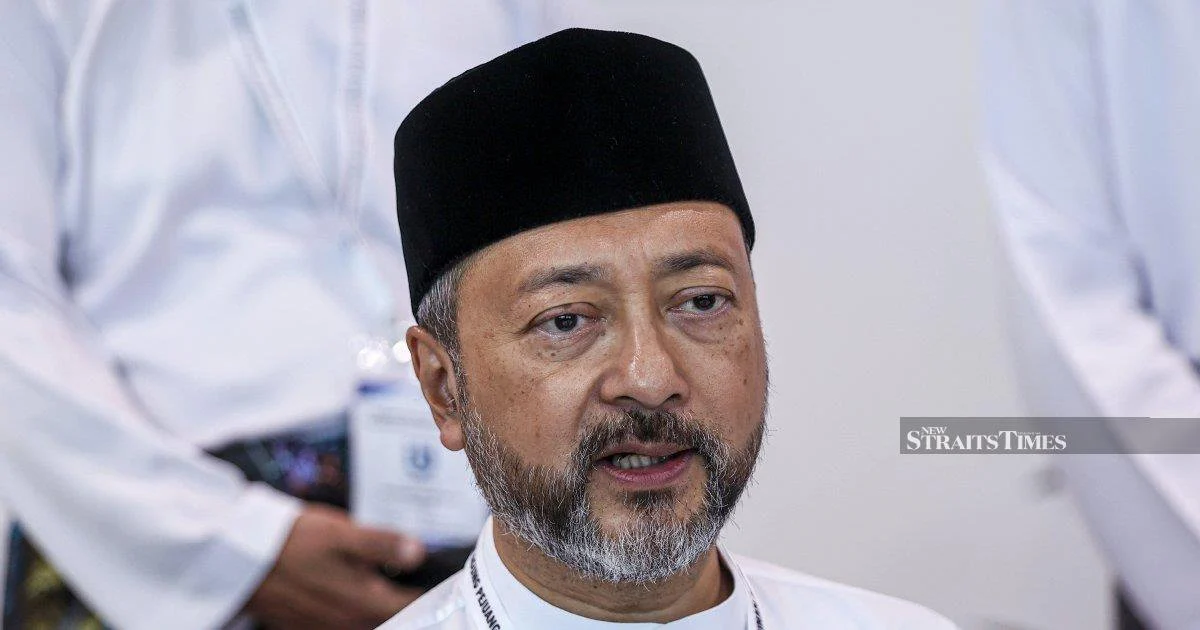
Parti Pejuang Tanah Air's formal admission into Perikatan Nasional signals the beginning of a more expansive endeavour to consolidate political movements and confront mounting national dilemmas, party president Datuk Seri Mukhriz Mahathir declared here today. The development represents a significant realignment within Malaysia's fragmented political landscape, where attempts to forge stronger coalitions have intensified over recent months amid calls for greater institutional stability and coherent governance approaches.
Mukhriz's assertion that Pejuang's integration constitutes merely the opening phase of a larger unification initiative suggests the party is positioning itself as a bridge within the opposition-aligned coalition. The timing of this accession carries particular weight given the current volatility of Malaysian politics, where parliamentary mathematics remain unstable and no single bloc commands overwhelming legislative dominance. By framing the party's move as part of a grander consolidation narrative, Mukhriz is attempting to establish Pejuang as a catalyst for broader systemic realignment rather than simply another minor faction seeking shelter within an established bloc.
The Perikatan Nasional coalition, which currently encompasses Bersatu, PAS, and other component parties, has sought to strengthen its institutional architecture and expand its grassroots footprint across the peninsula. Pejuang's entry potentially adds organisational depth and provides Mukhriz's faction with a platform to articulate alternative political visions beyond the two traditional superpowers of Malaysian politics. The party, established in 2020 following Mahathir's departure from UMNO and subsequent conflicts within his own Bersatu formation, has struggled to establish decisive electoral traction despite its founder's historical prominence and continued political influence.
Understanding the strategic implications requires appreciating how coalition politics operate in Malaysia's current context. The 2022 election resulted in a hung parliament and subsequent political instability, eventually leading to the formation of the unity government involving both Pakatan Harapan and Barisan Nasional. This fragmentation has created multiple power centres competing for influence, and smaller parties like Pejuang occupy precarious positions where alignment decisions carry enormous consequences for political survival. By joining PN, Pejuang gains access to stronger institutional resources and electoral machinery while potentially influencing the coalition's policy directions toward positions more amenable to its leadership's perspectives.
Mukhriz's references to addressing "growing national challenges" likely encompass a wide spectrum of contemporary concerns including economic management amid persistent inflation pressures, reform of the civil service and public administration, and questions surrounding Malaysia's federal structure and inter-ethnic governance frameworks. Positioning Pejuang as a solution provider rather than merely a political opportunist seeking coalition membership becomes crucial for maintaining party cohesion and member morale. The narrative of broader consolidation serves to elevate the party beyond accusations of pragmatic self-interest, instead casting the move within a framework of national responsibility.
For Malaysian political observers and ordinary voters, this development reflects the ongoing challenge of building durable, ideologically coherent coalitions capable of articulating distinct governing visions. Unlike Westminster systems where clear majority governments typically emerge from electoral contests, Malaysia's proportional representation dynamics and multi-ethnic composition necessitate complex coalition arrangements. Pejuang's accession to PN must be evaluated within this structural reality, where parties frequently recalibrate alliances based on evolving electoral prospects and policy alignments.
Regionally, Malaysia's internal political movements carry significance beyond domestic borders. Southeast Asian observers monitor Malaysian coalition-building closely, as the nation remains a bellwether for regional democratic practices and multi-ethnic political management. Mukhriz's articulation of broader consolidation efforts signals that despite surface fragmentation, serious actors within Malaysian politics continue seeking structural reforms and institutional strengthening—principles increasingly important as the region grapples with governance challenges and rising populist pressures.
The substantive policy implications of this realignment require careful monitoring. Whether Pejuang's incorporation genuinely strengthens Perikatan Nasional's policy consistency and legislative effectiveness, or merely adds another competing faction within an already complex coalition structure, remains to be determined through concrete legislative outcomes and governance decisions. The rhetoric of unity and consolidated purpose must ultimately translate into tangible policy achievements and coherent parliamentary conduct to validate Mukhriz's framing of this development.
Pejuang's membership status also raises questions about internal coalition dynamics within PN. The integration of Mukhriz's faction into a bloc already containing Bersatu—the party from which Pejuang emerged amid considerable acrimony—suggests negotiations have reconciled previous antagonisms or at least established frameworks for managed coexistence. Such reconciliations, while politically necessary, sometimes mask underlying tensions that resurface during crucial legislative moments or resource distribution disputes.
Looking forward, the credibility of Mukhriz's broader consolidation narrative will depend on whether additional realignments materialise within defined timeframes. If Pejuang's accession genuinely initiates a wider convergence of political forces, subsequent announcements regarding other party memberships or formal cooperation agreements should emerge relatively soon. Conversely, should no further tangible consolidation occur, observers may interpret today's announcements as rhetorical positioning rather than evidence of systemic political transformation. The distinction carries implications not merely for parliamentary stability but for Malaysian democracy's capacity to deliver coherent governance during increasingly complex national circumstances.