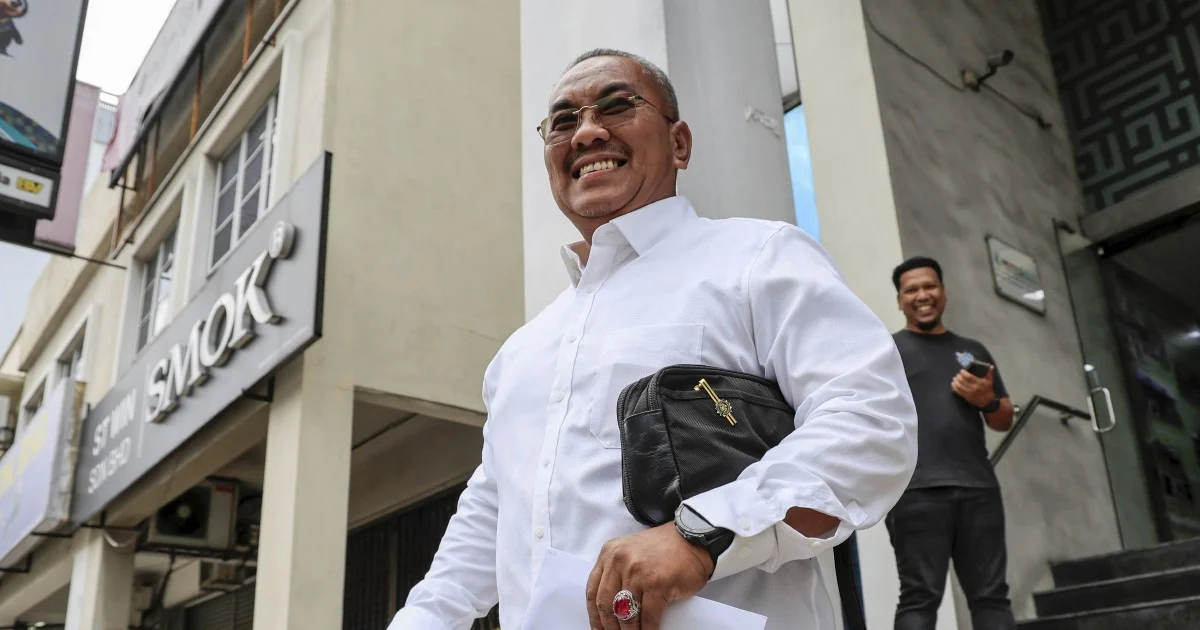
Perikatan Nasional's election machinery has cleared a significant hurdle ahead of Johor's state polls, with the coalition completing negotiations over parliamentary and state assembly seat allocations. Datuk Seri Sanusi Md Nor, the coalition's election director, made the announcement in Kuala Lumpur, signalling that internal coalition discussions have concluded and member parties can now proceed to finalise their campaign strategies and candidate selections. The resolution of 34 overlapping seats represents the successful negotiation of territorial claims where multiple coalition partners had sought the same constituencies.
For Malaysian political observers, the completion of these negotiations underscores the operational maturity of the Perikatan Nasional bloc, which has grown into a formidable political force since its establishment. Unlike earlier coalition arrangements that frequently collapsed under the strain of seat distribution disputes, PN's ability to resolve conflicts across its component parties—which include Parti Islam Se-Malaysia, Parti Pribumi Bersatu Malaysia, Parti Amanah Negara, and smaller partners—demonstrates increasingly sophisticated internal governance mechanisms. The fact that all 34 contentious seats have been settled without public acrimony suggests that party leaders have developed working protocols for managing competitive interests within their broader alliance.
Johor represents particularly fertile electoral ground for PN, given the state's strategic importance as Malaysia's second-largest state by population and its historical political swings. The state has long been considered a Barisan Nasional stronghold, but recent electoral shifts and internal BN divisions have created openings for opposition and alternative coalitions. PN's successful internal negotiations position the alliance to present a unified front in what promises to be a competitive contest. The ability to avoid public disputes over seat allocations is itself politically valuable, as it presents the coalition as organised and conflict-free compared to potential rivals.
The resolution process for overlapping seats typically involves negotiations at multiple levels, from party headquarters down to state and district party chapters. In PN's case, the outcome reflects compromises where one partner may have relinquished claims to certain seats in exchange for securing other constituencies or acquiring positions within the coalition's leadership structures. Such arrangements often involve quid pro quo agreements that balance the interests of larger parties like PPBM and PAS with smaller coalition members seeking meaningful representation. The specificity of reporting 34 resolved seats suggests a meticulous accounting process and detailed documentation of the final allocation.
For Johor specifically, this development carries implications for multiple demographic and geographic constituencies. The state encompasses urban centres like Johor Bahru and Iskandar Puteri, suburban constituencies, and rural areas where different coalition partners may hold traditional strengths. PAS, for instance, typically performs well in rural Malay-Muslim majority areas, while PPBM and other partners may prioritise urban or mixed constituencies. The settlement of overlapping claims therefore reflects a geographic and demographic mapping of PN's strategic priorities across the state.
The timing of this announcement is strategically significant. By publicly confirming that internal negotiations are complete, PN leadership can pivot toward campaign activities, candidate announcements, and policy messaging without the distraction of ongoing seat disputes. This demonstrates clear understanding of electoral timelines and the importance of presenting unified party images during campaign periods. Early clarification of seat allocations allows party machinery to mobilise grassroots organisations, conduct candidate vetting, and prepare electoral logistics without last-minute scrambles or public disputes that could undermine voter confidence.
From a broader Southeast Asian perspective, PN's institutional development reflects wider trends in opposition coalition-building across the region. Countries from Thailand to Indonesia have witnessed the emergence of multi-party alliances attempting to challenge incumbent governments, and like those counterparts, PN faces the fundamental challenge of maintaining coalition cohesion despite divergent party interests, ideologies, and geographical bases. Successful navigation of these challenges, as evidenced by the seat negotiations outcome, strengthens PN's viability as a governing alternative.
The resolution also has implications for BN's Johor campaign strategy. The long-governing Barisan Nasional, while retaining substantial state machinery advantages, faces the prospect of competing against a well-organised coalition rather than fragmented opposition forces. This necessitates BN's own careful strategic planning and coalition management, as UMNO, MCA, and MIC in Johor will need to coordinate effectively to maintain state control. The competitive environment has clearly intensified as PN demonstrates operational capacity comparable to established governmental coalitions.
Looking forward, the test of these negotiations will come during the campaign and election itself. Seat allocations on paper mean little if component parties cannot effectively mobilise their grassroots organisations, recruit competitive candidates, and secure voter support. Nevertheless, the successful conclusion of negotiations establishes the necessary foundation for PN to contest Johor systematically and comprehensively. The coalition's demonstrated ability to manage internal disputes through dialogue rather than public conflict represents significant political maturation, even as questions remain about whether electoral success will follow this organisational achievement.