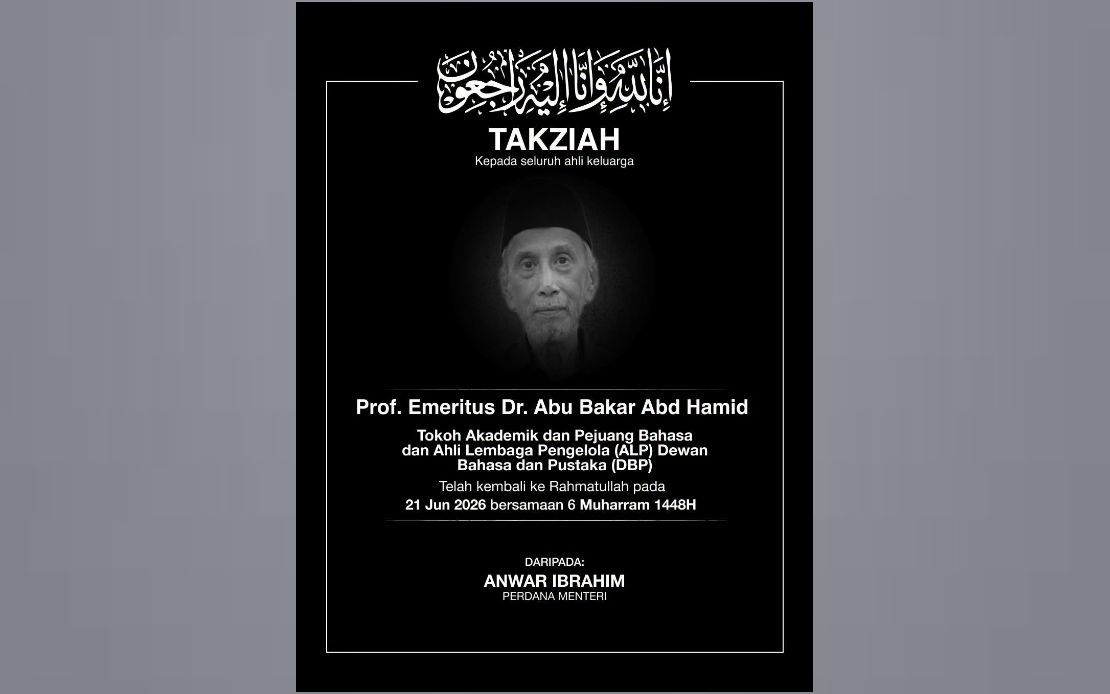
Prime Minister Datuk Seri Anwar Ibrahim has grieved the loss of Professor Emeritus Datuk Abu Bakar Abd Hamid, an intellectual luminary whose contributions to Malaysian education and literature shaped the nation's cultural landscape. The scholar passed away on June 21 at his residence in Petaling Jaya, Selangor, after experiencing sudden respiratory distress. In an emotional Facebook tribute released on June 24, Anwar reflected on his personal connection to the late academic, underscoring the profound impact Abu Bakar wielded across multiple generations of Malaysian intellectuals and students.
Abу Bakar's career embodied the intellectual ambitions of post-independence Malaysia. As a former deputy vice-chancellor of Universiti Malaya, he occupied a pivotal institutional role during a formative period in the nation's higher education system. Yet his influence extended far beyond administrative corridors. He was recognized throughout his lifetime as a towering presence in Malay literature, someone whose scholarship and passion for the written word helped define the parameters of literary discourse in the Malay-speaking world. His recognition came not merely from academic peers but from policymakers who acknowledged his strategic importance to nation-building efforts.
The late scholar's fingerprints were evident in one of Malaysia's most significant educational undertakings. Abu Bakar served as joint secretary of the committee responsible for establishing Universiti Kebangsaan Malaysia in 1968, a role that positioned him among the architects of an institution designed to champion Malay language and culture. For those familiar with Malaysian higher education history, this role carries particular significance—UKM emerged during a pivotal moment when the nation was negotiating its cultural and linguistic identity in the post-1969 period. Abu Bakar's involvement reflected his commitment to ensuring that Malay scholarship achieved institutional prominence and international credibility.
Anwar's personal tribute carried the warmth of a former student reflecting on formative mentorship. The Prime Minister recalled Abu Bakar not merely as a dispenser of academic knowledge but as an embodiment of intellectual passion—someone whose enthusiasm for learning and discovery inspired successive cohorts of Malaysian scholars and professionals. This dimension of Anwar's remembrance highlights how Abu Bakar's influence transcended the formal curriculum, operating instead through the power of personal example and the cultivation of intellectual curiosity. For Malaysian readers, this speaks to a cherished but increasingly rare model of academia where senior scholars actively mentored younger minds through inspiration rather than mere instruction.
Throughout his distinguished career, Abu Bakar accumulated numerous accolades reflecting his standing within Malaysia's intellectual establishment. These honours were not ceremonial in nature but rather testified to concrete contributions across multiple domains—literary criticism, linguistic scholarship, academic administration, and institutional development. The specificity of such recognition suggests that Abu Bakar's work was not confined to theoretical abstraction but engaged directly with the practical challenges of developing robust intellectual infrastructure within Malaysia. His awards represented acknowledgment from both domestic and international bodies that his contributions enriched not just Malaysian letters but broader conversations about Southeast Asian culture and identity.
From 1996 to 2000, Abu Bakar chaired the Board of Governors of Bernama, the Malaysian National News Agency. This appointment reflected trust in his judgment and institutional integrity during a period when Malaysia's media landscape was navigating complex political and social questions. His tenure preceded the significant transformations that would reshape Malaysian journalism in subsequent decades, positioning him as a steward of press institutions during a consequential moment. The role also underscored how his expertise extended beyond literature into the broader question of how knowledge and information should be managed and disseminated within a developing nation.
The circumstances of his death—sudden respiratory failure at approximately 10:30 pm on June 21—suggest a passing without extended illness, a reality that perhaps sharpened the shock for those who knew him. He was a native of Johor, meaning his intellectual journey carried him from Malaysia's southern state to the national capital, where he would establish his most significant institutional legacies. This geographical trajectory mirrors broader patterns of Malaysian intellectual migration, where provincial talent flows toward Kuala Lumpur's universities and cultural institutions. Abu Bakar's movement embodied this pattern while simultaneously contributing to making Kuala Lumpur a genuine centre of Malay literary and intellectual life.
Anwar's invocation of religious blessing in his tribute—"May Allah SWT forgive his sins and grant his soul peace and a special place"—reflects how Malaysian public figures typically frame remembrance within Islamic spiritual frameworks. Yet beyond its devotional content, this language also signals respect and honour, suggesting that Abu Bakar's life was understood as having been lived in accordance with principles that transcended mere professional achievement. The public nature of Anwar's grief, shared through social media rather than confined to private ceremony, underscores Abu Bakar's status as a national cultural figure whose passing warranted acknowledgment by the highest political office.
Abу Bakar's funeral on June 24 at Bukit Kiara Muslim Cemetery concluded the formal rituals surrounding his death, yet the true measure of his legacy will emerge through how subsequent scholarship engages with his intellectual contributions. For Malaysian readers interested in the development of Malay literature, higher education policy, or the intellectual foundations of the modern Malaysian state, Abu Bakar's archive represents a crucial resource. His life traversed the pivotal decades of Malaysian nation-building, and his work touched domains from curriculum development to literary criticism to press governance. The loss of such a figure removes from contemporary discourse someone who could speak authoritatively about how Malaysian institutions were constructed and what philosophical commitments animated their founders.
The passing of intellectual figures of Abu Bakar's stature typically occasions broader reflection within academic and literary circles about continuity and succession. His students, colleagues, and institutional heirs now face the challenge of ensuring that his intellectual contributions remain accessible and relevant to new generations. In an era when traditional humanities scholarship faces pressures from competing disciplinary and technological claims, remembering figures like Abu Bakar—who devoted careers to questions of language, culture, and institutional development—becomes an act of intellectual preservation. The challenge for Malaysian universities and cultural institutions will be determining how to honor his legacy while simultaneously adapting his insights to contemporary questions about identity, technology, and the future of the Malay-speaking intellectual world.
For Prime Minister Anwar, the opportunity to publicly mourn Abu Bakar carried additional resonance given his own trajectory from student activist to senior statesman. Anwar's academic formation occurred within institutions that Abu Bakar helped shape, and his political philosophy has been influenced by intellectuals of that generation who grappled with fundamental questions about Malaysia's direction. By publicly grieving Abu Bakar, Anwar simultaneously acknowledged the intellectual debts that shaped his own worldview while signaling the importance he attaches to scholarly contributions in national life. This intersection of personal memory, institutional history, and political leadership reflects how figures like Abu Bakar occupy a unique position in Malaysian public consciousness—neither politicians nor entertainers, yet wielders of genuine influence on how the nation understands itself.