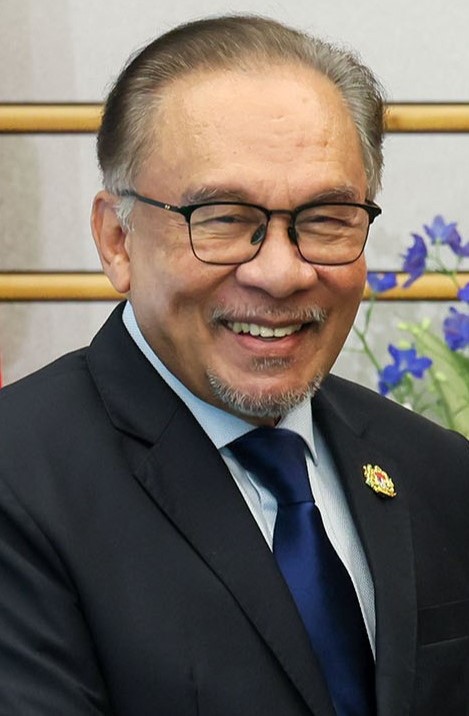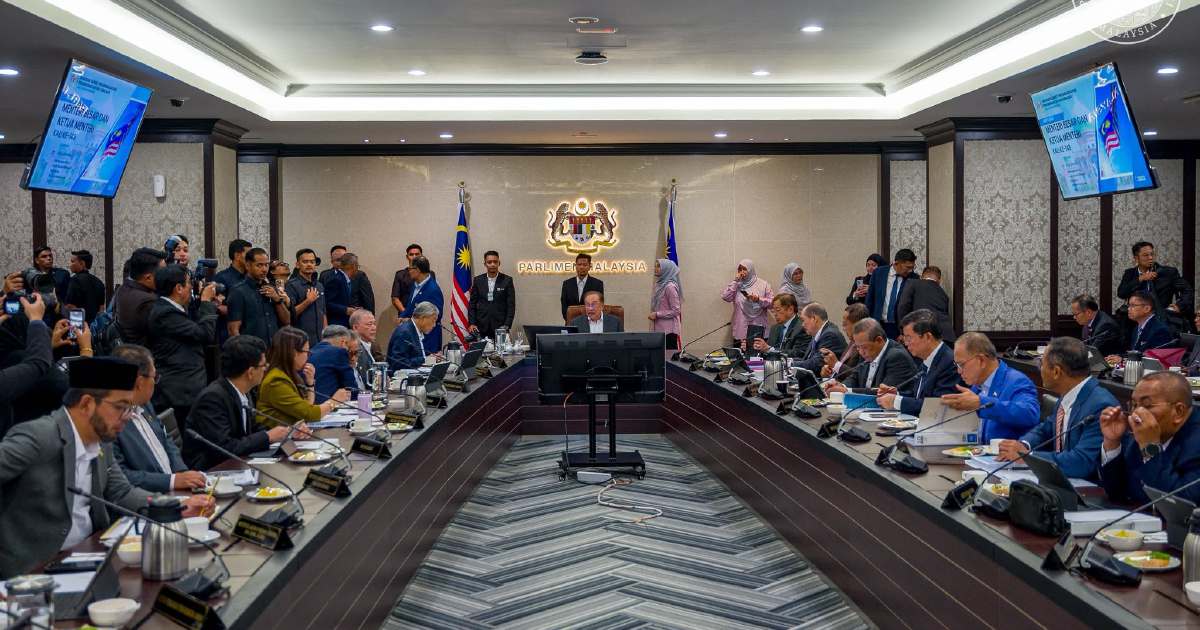
Prime Minister Datuk Seri Anwar Ibrahim presided over the 149th Meeting of Menteris Besar and Chief Ministers at the Parliament building in Kuala Lumpur today, steering discussions toward a comprehensive economic recovery strategy as the nation confronts mounting external headwinds. The gathering of Malaysia's top state administrators reflects the federal government's determination to align regional leaders around coordinated policies designed to fortify economic resilience in an increasingly volatile international environment.
The timing of the convocation underscores growing concern within policymaking circles about the ripple effects emanating from Middle East tensions. Regional conflicts have historically disrupted supply chains, inflated energy costs, and dampened investor confidence across Southeast Asia. For Malaysia, a trading nation with significant exposure to global commodity and financial markets, such geopolitical turbulence carries tangible implications for employment, consumer spending, and business investment. The summit's focus on economic revival signals that federal and state governments recognise the urgency of proactive measures rather than reactive management.
The presence of Menteris Besar from opposition-controlled states and Chief Ministers representing federal territories within a single chamber suggests an effort to transcend partisan divisions on matters deemed critical to national economic interest. Devolved governance in Malaysia means that state governments wield considerable influence over land use, local investment incentives, and commerce regulation. Without coordinated action, inconsistent policies across states can fragment market opportunities and complicate federal initiatives. By convening this body, Anwar Ibrahim seeks to establish a platform where regional administrators can harmonise their approaches to recovery.
Economic revival has become an increasingly urgent policy priority for Malaysia. The nation has weathered successive shocks—the aftermath of the COVID-19 pandemic, elevated living costs, and fluctuating crude oil revenues—that have constrained growth and household purchasing power. Inflation has persisted despite central bank interventions, squeezing lower and middle-income earners. Unemployment, particularly among younger workers, remains a structural challenge. These domestic pressures coincide with external uncertainty, creating a dual imperative: states must both address immediate citizen welfare and position Malaysia competitively for post-crisis opportunities.
The focus on reinforcing economic strength rather than merely maintaining stability reflects a shift toward forward-looking strategy. Rather than defensive postures, the meeting appears designed to explore mechanisms for expanding trade relationships with resilient partners, diversifying export markets away from regions most affected by Middle East volatility, and attracting foreign direct investment into sectors less vulnerable to geopolitical shocks. Renewable energy, digital services, and high-value manufacturing represent growth vectors where state-level initiative can complement federal strategy.
Menteris Besar and Chief Ministers control substantial fiscal resources and regulatory authority within their jurisdictions. Aligning their capital expenditure priorities, streamlining business registration processes, and coordinating tax incentives for priority sectors would amplify the impact of any central government stimulus. The 149th meeting likely served as a forum for federal ministers to brief state leaders on macroeconomic projections, announce sector-specific support measures, and solicit state governments' input on ground-level implementation challenges. Such two-way dialogue is essential because state administrators understand local business ecosystems in ways federal planners cannot.
Malaysia's economic diversification remains incomplete, with over-reliance on petrochemicals, palm oil, and semiconductors creating vulnerability to commodity price swings and supply chain disruption. The meeting's economic revival agenda presumably encompasses acceleration of value-added manufacturing, expansion of the services sector, and development of green industries. States hold keys to these transitions through their control of industrial parks, skills training partnerships with educational institutions, and regulatory environments that either facilitate or hinder entrepreneurship.
The reference to global uncertainty arising from Middle East conflicts suggests that Malaysian policymakers view the current moment as a potential inflection point. History shows that geopolitical shocks can either precipitate prolonged economic stagnation or create windows for repositioning. Nations that respond decisively—by investing in new competitive advantages, courting displaced investment flows, and strengthening domestic demand—can emerge stronger. Conversely, those that delay or remain fragmented across subnational boundaries risk being left behind as global supply chains reorganise.
For Malaysian citizens and businesses, the significance of this 149th meeting extends beyond ceremonial governance. The decisions and commitments announced here will likely translate into concrete measures: industrial incentives that attract manufacturers seeking to diversify away from contested regions, infrastructure projects that enhance state competitiveness, and coordinated messaging that restores investor and consumer confidence. Without state-level buy-in and implementation, federal policy announcements ring hollow. Anwar Ibrahim's emphasis on economic revival and his efforts to forge consensus among ideologically diverse state leaders suggest recognition that Malaysia's recovery depends on unified, coordinated action across all levels of governance.