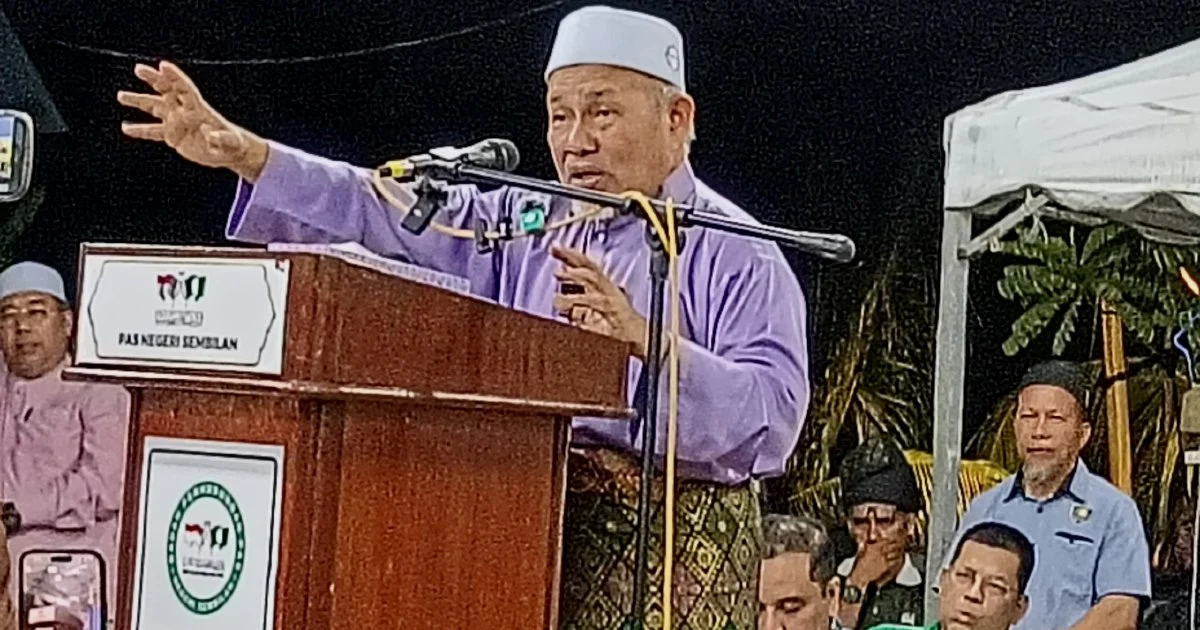
The ownership structure of Perikatan Nasional has become a flashpoint within Malaysia's opposition coalition, with senior figures now openly disputing who exercises ultimate authority over the bloc. Pas deputy president Datuk Seri Tuan Ibrahim Tuan Man has forcefully contested suggestions that Bersatu maintains singular control, insisting instead that the alliance functions as a genuinely shared enterprise among its constituent organisations.
Tuan Ibrahim's intervention represents a significant pushback against what appears to be growing assertions of Bersatu dominance within the coalition framework. His comments, seemingly directed at fellow coalition figure Peja, underscore simmering tensions that have periodically surfaced as Perikatan Nasional has consolidated its position as Malaysia's primary opposition force. The clarification becomes necessary precisely because of such misunderstandings or deliberate mischaracterisations regarding decision-making authority and strategic direction within the bloc.
The composition of Perikatan Nasional has evolved considerably since its formal establishment. The coalition currently brings together Bersatu, Pas, Umno (following its return in 2022), and several smaller parties spanning both peninsular Malaysia and the East Malaysian states. This multifaceted membership structure theoretically distributes power across multiple power bases rather than concentrating it within a single party apparatus. The principle of collective ownership, as Tuan Ibrahim articulated, reflects this ostensible commitment to partnership rather than hierarchical control.
Yet the reality of Malaysian coalition politics frequently diverges from such stated principles. Bersatu, particularly under former prime minister Mahathir Mohamad and later Muhyiddin Yassin, has historically wielded disproportionate influence within opposition structures due to its parliamentary seat count and organisational capacity. The party's founding narrative as a splinter group that attracted significant defectors from Umno gave it early momentum and numerical strength. This trajectory has created perceptions of Bersatu as the coalition's senior partner, even if formally it operates as an equal member.
The dispute over Perikatan Nasional's governance reveals deeper anxieties among coalition members about resource allocation, strategic decision-making, and the distribution of electoral opportunities. Pas, as Malaysia's largest Islamic party with substantial organisational networks particularly in rural areas, views itself as essential to the coalition's electoral viability. The party's grievances often centre on whether it receives adequate recognition for its contributions and whether its interests are fairly represented in coalition decisions. Tuan Ibrahim's emphatic statement can thus be read as a reassertion of Pas's standing within the alliance structure.
The East Malaysian component of Perikatan Nasional adds another dimension to these ownership disputes. Parties representing Sabah and Sarawak constitute a meaningful bloc within the coalition, yet frequently voice complaints about being marginalised in deliberations dominated by peninsular political figures and dynamics. When the coalition's ownership or control is attributed primarily to Bersatu, smaller or geographically distant members naturally feel their position weakened. Clarifications such as Tuan Ibrahim's serve to reinforce the legitimacy of their continued participation.
Malaysian opposition coalitions have historically struggled with cohesion partly because of precisely these ambiguities surrounding authority and ownership. Pakatan Harapan's eventual fragmentation was precipitated by disputes over leadership structure, resource sharing, and perceived dominance by particular parties. The current tensions within Perikatan Nasional, though not yet approaching that severity, suggest similar underlying vulnerabilities. Without clear, mutually accepted frameworks for decision-making and equitable partnership, coalition members become susceptible to friction whenever significant strategic choices arise.
The political economy of coalition ownership matters substantially for Malaysian governance prospects. Should Bersatu successfully consolidate control—or be perceived as doing so—smaller partners may grow resentful and seek alternative alignments. This fragmentation risk becomes particularly acute during electoral periods when coalition viability directly determines how opposition votes translate into parliamentary representation. Tuan Ibrahim's intervention therefore addresses not merely a matter of principle but a practical concern about maintaining the coalition's structural integrity heading into electoral cycles.
Peikatan Nasional's ability to project itself as a genuine alliance rather than a Bersatu-dominated vehicle carries implications for voter perception as well. Malaysian voters have demonstrated wariness toward coalitions perceived as vehicles for particular personalities or parties rather than genuine partnerships. The coalition's electoral prospects partly hinge on convincing voters that it represents a broad-based, fairly distributed alternative to the current government. Disputes over ownership, if allowed to fester publicly, undermine that narrative and provide ammunition for rival camps.
The implicit criticism directed at Peja through Tuan Ibrahim's statement reflects the negotiation processes constantly occurring within opposition structures. Senior figures regularly make statements that ostensibly address specific individuals or incidents but actually communicate positions to broader audiences within the coalition. Tuan Ibrahim's reaffirmation that Perikatan Nasional belongs collectively to all members represents a coded message to other component parties that Pas will not accept marginalisation within the alliance framework.
Moving forward, coalition dynamics will likely remain tense if these governance ambiguities persist unresolved. Clear, documented agreements regarding decision-making procedures, resource distribution, and the respective authority of component parties would theoretically prevent such disputes. However, the reality of Malaysian politics frequently privileges informal understandings over formal mechanisms, with personal relationships and factional alignments often determining actual power distribution regardless of what official structures suggest.
For Malaysian observers monitoring opposition developments, these ownership disputes matter because they signal whether Perikatan Nasional possesses sufficient cohesion to effectively challenge government incumbents. Coalition fragmention benefits the ruling establishment by splitting the opposition vote and reducing the coherence of policy alternatives presented to voters. Conversely, a coalition that successfully functions as an integrated whole, despite comprising ideologically diverse components, can substantially reshape electoral competition. Tuan Ibrahim's assertion ultimately serves as a marker of whether such integration remains feasible.

