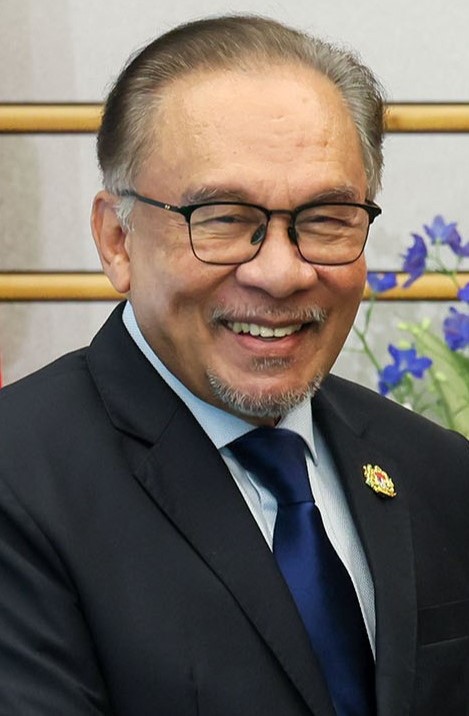
Malaysia's path to sustained economic transformation hinges on maintaining consistent policy direction and governance reform, according to Housing and Local Government Minister Nga Kor Ming, who highlighted the government's track record of delivering measurable progress under the MADANI framework led by Prime Minister Datuk Seri Anwar Ibrahim.
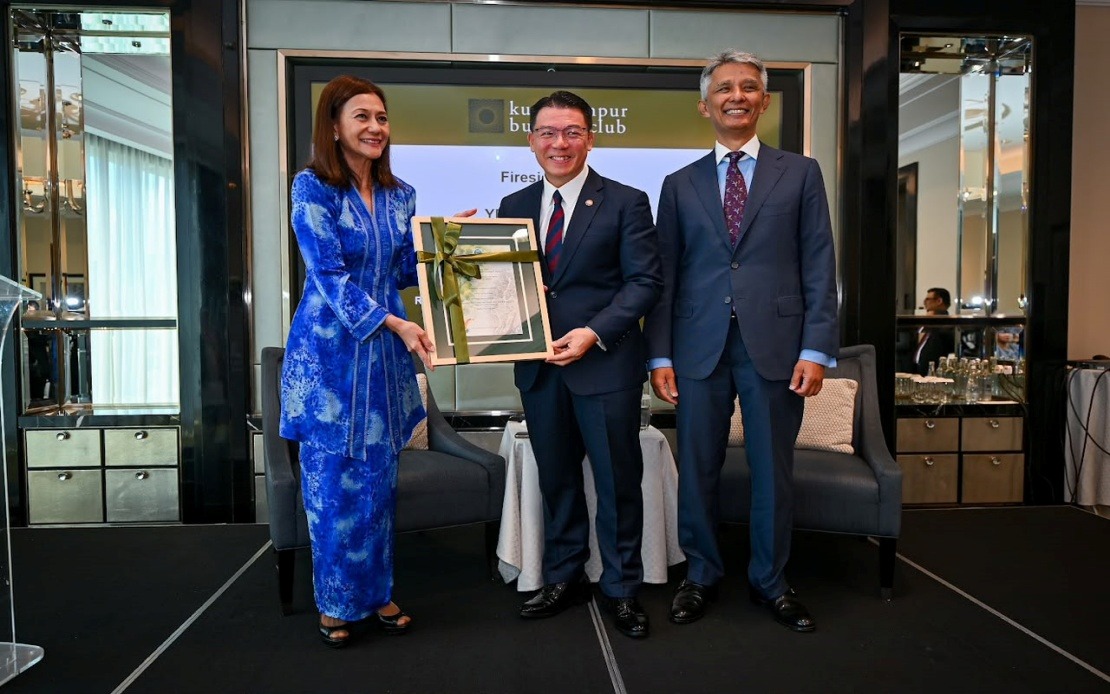
Spaking at a Kuala Lumpur Business Club fireside chat themed "Future Cities, Future Growth: How MADANI Reforms Are Reshaping Malaysia's Urban Economy", Nga emphasized that policy continuity serves as the foundation for deepening structural reforms and strengthening institutional capacity. Without such consistency, he argued, the economic transformation initiatives already in motion risk losing momentum, ultimately undermining the nation's competitive positioning in an increasingly complex global economy.
The minister stressed that maintaining investor confidence requires a predictable and stable governance environment. International investors—whether large multinational corporations or smaller regional operators—depend on policy certainty to make long-term capital allocation decisions. When administrations change direction abruptly or lack clear strategic vision, foreign direct investment typically flows elsewhere. By contrast, countries that demonstrate sustained commitment to reform agendas signal reliability and reduce perceived political and economic risk.
Nga pointed to several concrete achievements that underscore the government's reform credentials. Malaysia has solidified its position as a preferred investment destination, supported by transparent policy frameworks, macroeconomic fundamentals, and relative political stability. The nation's trade performance has remained resilient despite global economic headwinds, demonstrating the effectiveness of diversified economic strategies and prudent fiscal management.
Improvement in Malaysia's Corruption Perceptions Index ranking represents a particularly significant development, as international surveys of this kind directly influence investor decisions and market sentiment. Enhanced transparency and reduced perceptions of corruption strengthen institutional legitimacy and reduce the risk premiums that foreign investors typically demand when entering emerging markets. Similarly, stronger international credit ratings reflect greater confidence in the nation's fiscal trajectory and ability to service obligations, translating into lower borrowing costs for both government and private sector entities.
The minister highlighted diplomatic initiatives as integral to the economic transformation agenda, noting that strategic partnerships create new avenues for investment and economic cooperation. Recent high-profile engagements exemplify this approach, including a RM52.73 billion strategic partnership with Turkmenistan and long-term energy collaboration initiatives with Russia. Such arrangements not only secure energy supplies and diversify revenue streams but also signal Malaysia's role as a reliable partner in international economic affairs, enhancing the nation's soft power and attracting businesses seeking exposure to emerging markets with strong geopolitical positioning.
For Malaysia and Southeast Asia more broadly, the emphasis on policy continuity carries particular significance. The region remains attractive to investors but faces intense competition from other emerging economies pursuing aggressive development strategies. Indonesia, Vietnam, Thailand, and the Philippines are simultaneously positioning themselves as manufacturing alternatives to China and India, bidding for regional investment flows. Malaysia's ability to differentiate itself depends partly on demonstrating institutional capability and reform momentum that competitors cannot easily replicate. Consistent governance provides that edge.
The urban economy angle merits deeper consideration, as Malaysia's future growth increasingly depends on efficient, liveable cities that attract both talent and capital. The MADANI framework's emphasis on urban development, housing affordability, and integrated urban planning directly addresses the infrastructure deficits that constrain competitiveness. Cities like Kuala Lumpur, Penang, and Johor Bahru must evolve into hubs comparable to Singapore or Bangkok to retain regional prominence. This transformation cannot succeed through sporadic interventions; it requires sustained investment, coherent planning frameworks, and multi-year policy implementation that survives political transitions.
Nga's implicit argument for extended governance continuity reflects pragmatic recognition that meaningful structural reform typically requires time horizons exceeding single electoral cycles. Institutional capacity building, infrastructure development, and behavioural change in governance cultures cannot be rushed. Nations that maintain reform momentum across administrations tend to accumulate transformative achievements, whereas those that reverse course repeatedly find themselves cycling through the same debates without progress.
However, the emphasis on continuity also invites scrutiny of how effectively current policies are actually being implemented. Announcements and strategic frameworks matter only insofar as they translate into concrete results. Business leaders participating in the fireside chat would likely expect detailed metrics demonstrating not merely government commitment but tangible improvements in areas like ease of doing business, infrastructure quality, regulatory efficiency, and human capital development. For regional investors comparing opportunities across Southeast Asia, such measurable outcomes remain the ultimate currency.
The framing of policy continuity as prerequisite for transformation resonates particularly strongly amid global economic uncertainty. Supply chain disruptions, inflation pressures, geopolitical tensions, and shifting trade patterns create turbulent conditions in which strategic clarity becomes even more valuable. Investors seeking stable jurisdictions in which to park capital and establish operations gravitate toward governments projecting confidence and demonstrating adaptive capacity within consistent frameworks—not rigid dogmatism, but coherent evolution guided by clear principles.
Moving forward, the test of Malaysia's commitment to sustained economic transformation will ultimately rest on whether business-friendly policies translate into measurable outcomes across multiple indicators: foreign direct investment inflows, employment generation, wage growth, productivity improvements, and quality of life metrics. Policy continuity matters, but only as means to these substantive ends. The MADANI framework must prove itself through results if it is to maintain the broad support necessary for sustained implementation across potential changes in political personnel.