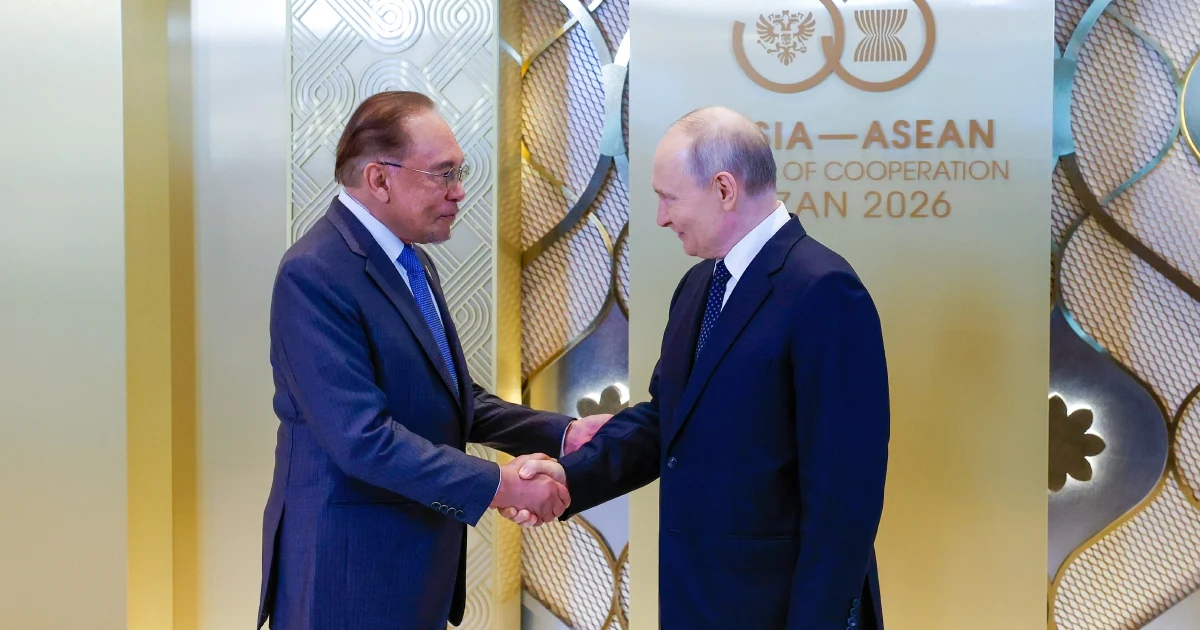
Prime Minister Datuk Seri Anwar Ibrahim disclosed in Bintulu that Russia's President Vladimir Putin has pledged to maintain consistent energy supplies to Malaysia as part of broader efforts to anchor the country's position within the competitive global energy marketplace. The assurance underscores Malaysia's calculated approach to building resilience in its energy infrastructure by cultivating relationships with multiple major energy producers rather than concentrating dependence on a single source.
Malaysia's energy security strategy reflects the geopolitical realities facing Southeast Asia, where demand for petroleum, natural gas, and electrical power continues to climb amid rapid industrialisation and urbanisation. By establishing partnerships with Russia alongside its traditional suppliers and existing relationships with other nations, Malaysia seeks to insulate itself from supply disruptions, price volatility, and the strategic leverage that dominant suppliers might otherwise exercise. The approach mirrors broader regional trends in which nations have become increasingly conscious of energy independence as a critical component of national security.
Anwar's framing of this diplomatic development situates Malaysia within a larger narrative about developing countries asserting agency in global energy markets. Rather than accepting the terms offered by any single power, Malaysia is positioning itself as a nation that can negotiate from a position of strength by offering alternative partnerships and diversified sourcing options. This strategy proves particularly valuable given ongoing geopolitical tensions that have disrupted conventional energy trade routes and supply chains throughout Europe and Asia.
The Bintulu location for this announcement carries symbolic significance, as the coastal Sarawak town has long served as a hub for Malaysia's liquefied natural gas exports and represents the nation's oil and gas sector headquarters. The choice of venue emphasises the centrality of energy production to Malaysia's economic interests and suggests that discussions with Russian counterparts likely addressed specific sectoral concerns relevant to Malaysia's energy industry professionals and policymakers.
Russia's willingness to commit to Malaysia reflects Moscow's broader strategy of expanding economic ties throughout Asia as Western sanctions limit its integration with European markets. For Russia, Malaysia represents a significant consumer market with substantial energy infrastructure and growing demand. The commitment also demonstrates how major energy producers view Southeast Asian nations as increasingly important economic partners worthy of sustained diplomatic engagement and commercial dedication.
For Malaysia, securing long-term energy supply guarantees carries profound implications for industrial planning, electricity generation capacity, and petrochemical manufacturing. Industries relying on stable energy costs and reliable supply can make longer-term capital investments with greater confidence when governments successfully negotiate multiyear energy agreements with established suppliers. This translates into economic growth prospects, employment opportunities, and industrial competitiveness across multiple sectors.
The timing of this announcement also reflects Malaysia's broader foreign policy recalibration under Anwar's leadership, which has emphasised pragmatic engagement with global powers rather than alignment with any singular bloc. Malaysia's traditional partnerships with Western nations remain intact, yet the government has simultaneously strengthened ties with China, Russia, and Middle Eastern powers to maximise diplomatic and economic flexibility. This balanced approach allows Malaysia to benefit from relationships with multiple centres of global power without sacrificing autonomy or strategic independence.
Energy security concerns extend beyond simple supply questions to encompass price stability and commercial terms. Nations that establish diversified supplier relationships gain negotiating leverage when existing suppliers attempt to impose unfavourable pricing or contractual conditions. Malaysia's engagement with Russia thus provides negotiating counterweight that strengthens the country's hand when dealing with other major energy producers, potentially yielding more competitive terms across its entire energy portfolio.
The announcement warrants close observation regarding specific implementation details, including volumes of energy supplies, pricing mechanisms, contract duration, and delivery mechanisms. Questions remain about whether this represents a formal long-term agreement or a more general commitment requiring further negotiation. Malaysian stakeholders in energy-intensive industries will monitor developments carefully to understand whether these pledges translate into concrete supply contracts that substantially alter Malaysia's energy sourcing patterns.
For Southeast Asian nations more broadly, Malaysia's approach to energy diplomacy offers instructive lessons about leveraging geopolitical competition among major powers to secure advantageous terms. As global energy markets remain volatile and geopolitical tensions persist, countries throughout the region are adopting similar strategies of cultivating multiple partnerships rather than depending on traditional suppliers or accepting dictated terms from dominant powers. Malaysia's visible emphasis on strategic partnerships signals to regional peers and global investors that the country intends to maintain stable, secure energy supplies necessary for sustained economic development and industrial expansion throughout the coming decades.
%22%2F%3E%3C%2Fpattern%3E%3C%2Fdefs%3E%3Crect%20width%3D%22100%25%22%20height%3D%22100%25%22%20fill%3D%22url(%23ph1pb81g)%22%2F%3E%3Crect%20width%3D%22100%25%22%20height%3D%22100%25%22%20fill%3D%22url(%23ph1pb81p)%22%2F%3E%3Ctext%20x%3D%2250%25%22%20y%3D%2250%25%22%20text-anchor%3D%22middle%22%20dominant-baseline%3D%22central%22%20fill%3D%22rgba(255%2C255%2C255%2C0.95)%22%20font-family%3D%22Georgia%2C%20'Times%20New%20Roman'%2C%20serif%22%20font-weight%3D%22700%22%20font-size%3D%22272%22%20letter-spacing%3D%22-0.02em%22%3EMITRA%3C%2Ftext%3E%3C%2Fsvg%3E)
%22%2F%3E%3C%2Fpattern%3E%3C%2Fdefs%3E%3Crect%20width%3D%22100%25%22%20height%3D%22100%25%22%20fill%3D%22url(%23ph3khjrg)%22%2F%3E%3Crect%20width%3D%22100%25%22%20height%3D%22100%25%22%20fill%3D%22url(%23ph3khjrp)%22%2F%3E%3Ctext%20x%3D%2250%25%22%20y%3D%2250%25%22%20text-anchor%3D%22middle%22%20dominant-baseline%3D%22central%22%20fill%3D%22rgba(255%2C255%2C255%2C0.95)%22%20font-family%3D%22Georgia%2C%20'Times%20New%20Roman'%2C%20serif%22%20font-weight%3D%22700%22%20font-size%3D%22320%22%20letter-spacing%3D%22-0.02em%22%3ERim%3C%2Ftext%3E%3C%2Fsvg%3E)
%22%2F%3E%3C%2Fpattern%3E%3C%2Fdefs%3E%3Crect%20width%3D%22100%25%22%20height%3D%22100%25%22%20fill%3D%22url(%23ph3tt8dg)%22%2F%3E%3Crect%20width%3D%22100%25%22%20height%3D%22100%25%22%20fill%3D%22url(%23ph3tt8dp)%22%2F%3E%3Ctext%20x%3D%2250%25%22%20y%3D%2250%25%22%20text-anchor%3D%22middle%22%20dominant-baseline%3D%22central%22%20fill%3D%22rgba(255%2C255%2C255%2C0.95)%22%20font-family%3D%22Georgia%2C%20'Times%20New%20Roman'%2C%20serif%22%20font-weight%3D%22700%22%20font-size%3D%22226%22%20letter-spacing%3D%22-0.02em%22%3EDiesel%3C%2Ftext%3E%3C%2Fsvg%3E)