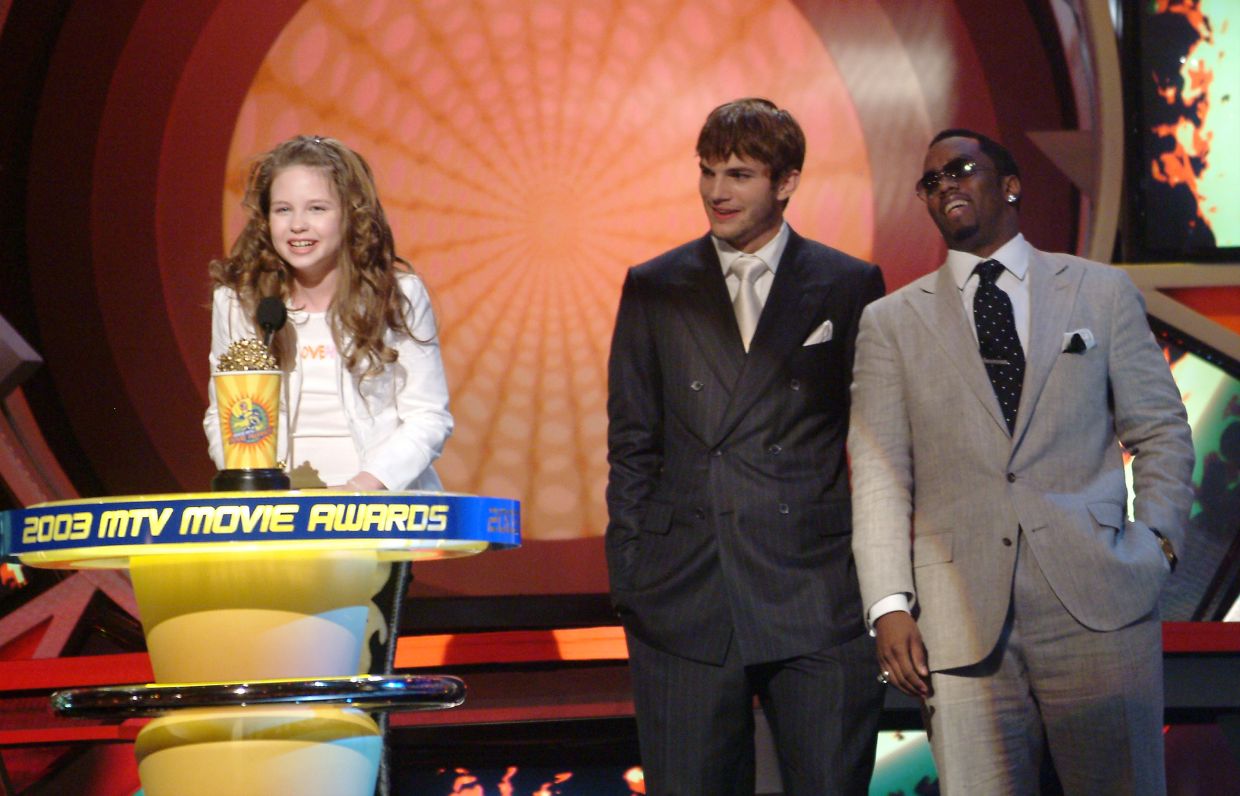
A video from the 2003 MTV Awards featuring Sean "Diddy" Combs inviting a 12-year-old Daveigh Chase to an afterparty has circulated widely online in the wake of the actress's death, drawing fresh attention to the controversial music mogul's interactions with young people and raising troubling questions about his behavior in the industry.
Chase, best known for her chilling portrayal of Samara Morgan in The Ring, died on June 16 at a Los Angeles hospital at the age of 35. According to her father, John Schwallier, she succumbed to complications stemming from bacterial meningitis and a blood infection, compounded by severe malnutrition. In her final years, Chase had been living rough near the hospital where she eventually died, battling persistent struggles with substance abuse that had consumed much of her adult life.
The resurfaced footage captures a moment during the 2003 MTV Awards when Chase, then just entering her teenage years, received recognition for her villain performance. After presenters Ashton Kutcher and Combs handed her the Best Villain trophy, the music producer approached the young actress with a drink in hand. In the exchange visible in the clip, Combs asks pointedly, "You're going to the after-party, right?" Chase, appearing uncomfortable or uncertain, nods in response. Combs's enthusiastic reaction—shouting "Yeah!"—while Kutcher laughed off the interaction, contrasts starkly with contemporary awareness of appropriate adult-child boundaries at industry events.
The timing of this video's resurgence carries particular weight given Combs's dramatic legal downfall. The 55-year-old rap producer was arrested in September 2024 at the Park Hyatt Hotel in Midtown Manhattan as federal authorities intensified their investigation into his conduct. The arrest marked a watershed moment for an entertainment figure who had long controlled narratives about his exclusive social gatherings and business practices.
Central to the government's case against Combs were allegations regarding his so-called "freak-off" parties—extravagant, multi-day gatherings reportedly fueled by drugs and centred on commercial sexual activity frequently involving sex workers. These events, once celebrated in celebrity circles as the ultimate exclusive experience, became the focal point of a sprawling federal sex trafficking investigation that would ultimately reshape public understanding of power dynamics within the music industry.
In July 2025, after a federal sex trafficking trial concluded in New York, Combs was found guilty of two counts of transportation to engage in prostitution. The convictions carried serious consequences: he was sentenced to 50 months in prison. He is currently incarcerated at FCI Fort Dix in New Jersey, where he awaits further legal proceedings. Beyond the criminal conviction, Combs now faces over 100 civil lawsuits, many alleging sexual assault, harassment, and exploitation spanning decades.
The resurfaced MTV clip has taken on new significance in light of these developments, prompting cultural commentators and social media users to reexamine moments that might have seemed innocuous or merely inappropriate at the time. The footage demonstrates how patterns of behavior—particularly an adult's casual approach to drawing children into adult-oriented social situations—can appear alarming when contextualized within a broader pattern of alleged misconduct.
For Malaysian and Southeast Asian audiences, this case underscores the importance of safeguarding mechanisms within entertainment industries across the region. While Hollywood's reckoning with sexual misconduct and exploitation has been widely documented, similar dynamics exist in local and regional entertainment sectors, often with less public accountability. The Combs saga illustrates how institutional power, celebrity status, and inadequate oversight can facilitate harmful behavior for extended periods.
Chase's tragic trajectory—from child star to street homelessness and early death—represents a cautionary tale about the vulnerability of young performers. Her final years, marked by addiction and deprivation, suggest that the entertainment industry's culture of enabling high-profile figures came at a genuine human cost. The fact that her struggles received limited public attention until her death, and only then through the lens of a resurfaced video involving a disgraced mogul, reflects broader patterns in how the industry sometimes discards young talent when they are no longer commercially useful.
The convergence of Chase's death announcement with the circulation of the Combs video raises uncomfortable questions about celebrity culture, institutional responsibility, and the long-term psychological and material consequences for child performers. Industry observers point to the need for stronger protections for minors in entertainment settings, clearer reporting mechanisms for inappropriate behavior, and greater corporate accountability for those who facilitate access to vulnerable young people.
Combs's legal situation continues to evolve, with prosecutors and civil plaintiffs pursuing multiple angles of investigation and litigation. The 50-month sentence, while significant, has provoked debate about whether it adequately reflects the scope of alleged conduct spanning several decades. His case has already prompted industry-wide discussions about party culture, power imbalances, and the normalization of exploitative behavior within celebrity circles.
As the criminal and civil proceedings unfold, the resurfaced MTV clip serves as a historical document of a different era's casual approach to child safety in entertainment spaces. The video demonstrates how normalized certain interactions had become, and how difficult it was for observers at the time to recognize boundary violations that contemporary standards would immediately flag as inappropriate. For viewers today, the exchange between Combs and the preteen Chase encapsulates broader failures of institutional oversight and the human cost of unchecked power in entertainment.