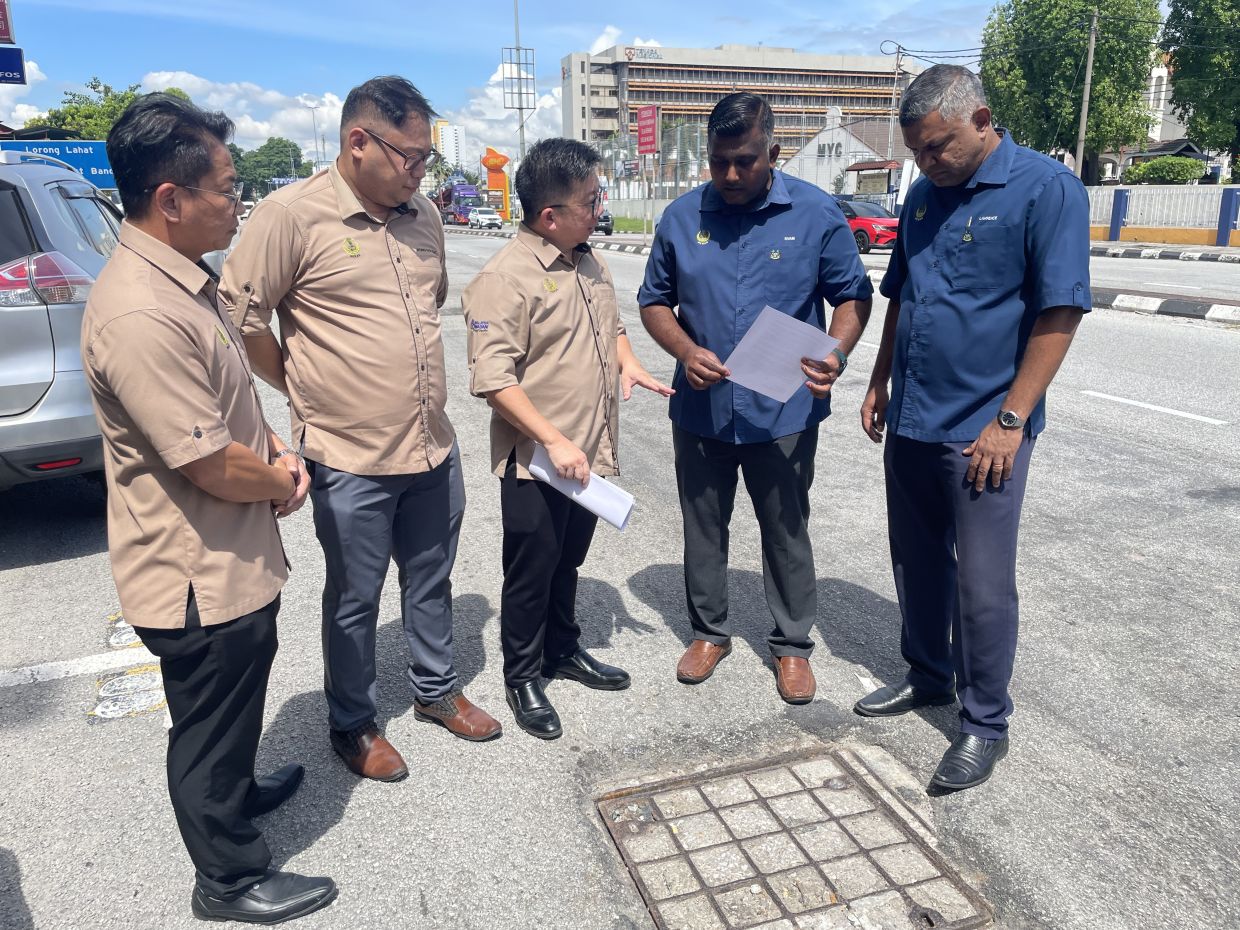
Motorists in Ipoh can expect significant improvements along Jalan Lahat after local authorities greenlit a RM2.6 million resurfacing initiative set to launch this July. The project will tackle one of the city's most problematic road stretches, addressing years of deterioration that has frustrated commuters and drawn widespread social media criticism. The work encompasses approximately 3.8km of road surface across both directions, stretching from the Falim traffic lights through to the Jalan Leong Boon Swee junction near the Little India commercial district.
Menglembu state assemblyman Chaw Kam Foon announced the development, emphasizing that the initiative would benefit road users navigating the three state constituencies of Buntong, Tebing Tinggi and Menglembu. The project, financed through the Malaysian Road Records Information System (Marris) funding mechanism, represents a long-overdue intervention on a route that has become synonymous with poor road conditions. Chaw explained that while Jalan Lahat spans between 10km and 11km in total length, the current project strategically concentrates resources on the most critically damaged sections, allocating approximately 1.9km of resurfacing work in each direction.
The deteriorating state of Jalan Lahat became impossible to ignore following a viral video circulating on social media depicting a substantial pothole on the road's flyover section. The incident sparked immediate concern among safety-conscious motorists and prompted rapid emergency repairs to the offending defect. However, temporary patching proved insufficient to address the underlying infrastructure problems. Within a single month leading up to the announcement, approximately 20 vehicles sustained tyre punctures after encountering potholes along the affected sections, creating a ripple effect of inconvenience and expense for commuting residents and business operators.
Councillor K. Sivam provided additional context regarding the extended timeline for addressing the issue, noting that the resurfacing request had been repeatedly submitted since 2024 without resolution. The lengthy approval process finally culminated in formal authorization this year, allowing planners to progress toward implementation. Sivam confirmed that the tender process was underway at the time of announcement, with construction crews expected to mobilize in July and complete the resurfacing works within approximately three weeks—a relatively tight timeline that underscores the project's prioritization.
The road's heavy utilization by diverse traffic streams has compounded the infrastructure challenges. Jalan Lahat serves as a vital corridor for residential neighbourhoods, educational institutions, and commercial enterprises throughout Ipoh's central zone. Large trucks and lorries regularly traverse the route, their substantial axle loads accelerating pavement degradation over time. Previous attempts to restore road quality through conventional pothole patching and filling proved ineffective, particularly given the tropical climate's corrosive impact on temporary repairs and the relentless pressure from high-volume vehicular traffic that quickly dislodged patch materials.
Beyond surface-level deterioration, Sivam identified underground utility infrastructure as a contributing factor to road damage. Past excavation works associated with sewerage pipeline installations had left lasting scars on Jalan Lahat's structural integrity. Contractors had conducted these underground works but failed to adequately restore the road surface afterward, creating weak points susceptible to cracking and subsidence. This pattern of inadequate reinstatement reflected broader challenges in coordinating between utility companies and road authorities across Malaysian cities, where underground maintenance frequently compromises surface quality without proportionate restoration efforts.
The comprehensive resurfacing initiative will encompass more than simple asphalt application. Sivam outlined that the project scope includes levelling of utility access points, elimination of road undulations that create discomfort and potential vehicle damage, and repainting of lane markings to restore clear navigation guidance. These elements address both immediate surface problems and the underlying structural deficiencies that contributed to accelerated pavement failure. The attention to detail suggests a commitment to delivering a durable solution rather than a temporary cosmetic fix.
Looking beyond the immediate resurfacing project, authorities have instituted enhanced oversight mechanisms to prevent recurrence of similar deterioration patterns. The Corridor Utiliti Darul Ridzuan (KUDR) will assume responsibility for monitoring future utility excavation works along Jalan Lahat, wielding authority to enforce compliance with established restoration specifications. This regulatory framework introduces meaningful consequences for negligence: companies failing to properly reinstate road surfaces face financial penalties through compounding mechanisms, formal fines, or mandatory repeat repair orders. Such enforcement structures address a systemic weakness in Malaysian infrastructure management where utility providers historically faced minimal accountability for post-excavation restoration quality.
The Jalan Lahat project illustrates how sustained public pressure, amplified through social media platforms, can catalyze government response to chronic infrastructure deficiencies. The viral pothole video proved more effective than years of bureaucratic requests in securing funding approval. This dynamic reflects broader Southeast Asian urbanization patterns where rapid vehicle growth outpaces infrastructure maintenance capacity, creating dangerous conditions that demand intervention. For Ipoh residents and the broader Perak business community, the July commencement represents tangible acknowledgment that quality road infrastructure remains essential to economic productivity and public safety.
The three-week completion target assumes optimal weather conditions and no unforeseen complications during construction, timelines that sometimes prove optimistic in tropical environments. Nevertheless, the project's scheduled implementation provides clarity for commuters planning alternative routes during the disruption period. Local business operators along Jalan Lahat, particularly in the Little India commercial zone, will need to coordinate with construction teams to maintain reasonable access during works. The initiative's success will establish precedent for addressing similar road deterioration challenges across other Ipoh corridors and throughout Perak's urban centres.