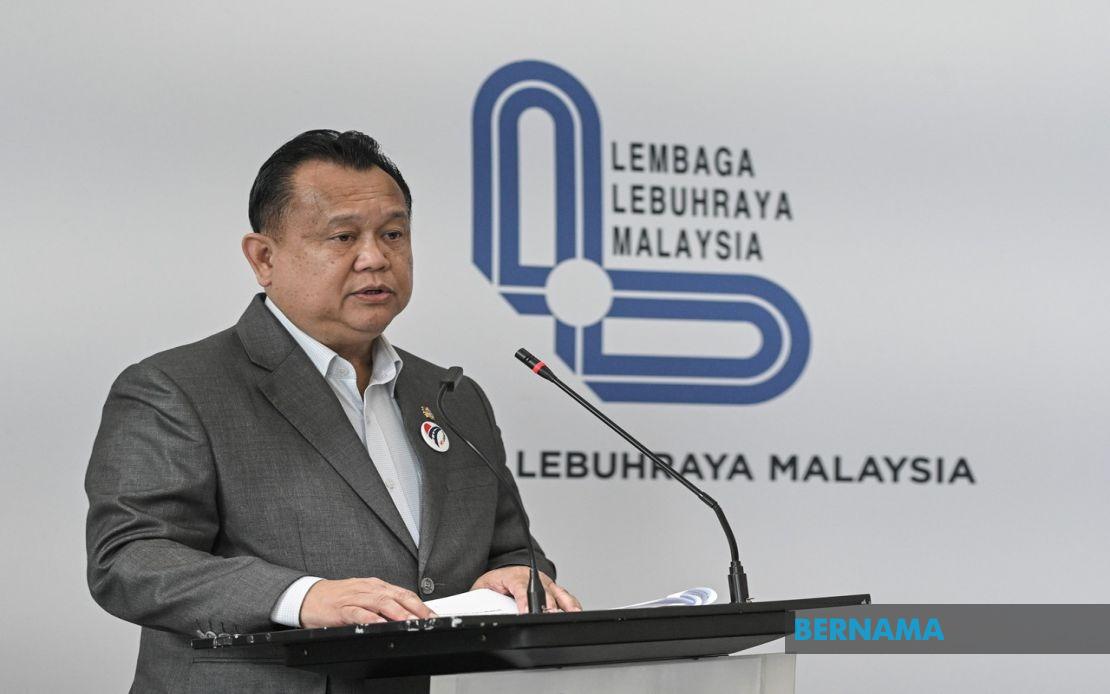
Malaysia's Works Ministry has announced a significant infrastructure investment aimed at reducing highway accidents through improved illumination at dangerous road segments. The government has allocated RM25.2 million for the initial rollout of solar-powered LED street lights across 32 identified high-risk and accident-prone locations on the country's highway networks, Works Minister Datuk Seri Alexander Nanta Linggi revealed on June 23. The project encompasses the installation of 3,000 light poles as part of the broader MADANI Monitoring programme, signalling a coordinated approach to address road safety challenges that continue to burden Malaysia's transportation infrastructure.
The initiative emerged from commitments outlined in the 2026 Budget, which Prime Minister Datuk Seri Anwar Ibrahim announced in October last year with an initial provision of RM30 million. Works Ministry officials, partnering with the Finance Ministry and Malaysian Highway Authority (LLM), have scaled back the immediate outlay to RM25.2 million for this opening phase, with remaining funds to be deployed following periodic assessments of additional requirements. This staged allocation approach allows authorities to evaluate implementation effectiveness and gather data on performance metrics before committing the full budget envelope.
The adoption of solar-powered LED technology represents a strategic shift toward sustainable infrastructure solutions while simultaneously addressing road safety imperatives. Solar-powered systems offer distinct advantages for remote or accident-prone highway stretches where conventional grid connections may be impractical or prohibitively expensive. LED lighting provides superior illumination quality and consistency compared to traditional street lights, reducing shadows and blind spots that contribute to collision risks. The combination harnesses renewable energy resources, aligning with Malaysia's broader sustainability commitments while reducing long-term operational costs associated with conventional electricity-dependent street lighting infrastructure.
Accident prevention through enhanced road visibility remains a pressing national concern. Malaysia's highway network, spanning thousands of kilometres, experiences persistent challenges related to inadequate lighting at critical junctures where accident rates spike considerably. Many fatal and serious injury collisions occur during nighttime hours when visibility deteriorates sharply, particularly at curves, intersections, and climbing lanes where driver attention demands are highest. By concentrating resources on the 32 most problematic locations, the government demonstrates a data-driven approach to allocating limited infrastructure funds toward maximum life-saving impact.
The project timeline reflects operational urgency, with the Letter of Acceptance handed to the selected contractor immediately upon announcement, enabling rapid mobilisation of construction crews and materials. Authorities have set November 2024 as the completion deadline for the full initial phase, compressing the delivery schedule to demonstrate commitment to road safety improvements. This accelerated timeline requires significant coordination among contractors, suppliers, and government oversight bodies, particularly given the technical specifications involved in deploying solar and LED systems across dispersed highway locations potentially spanning multiple states and regions.
Implementation of this project carries broader implications for Malaysia's infrastructure modernisation trajectory. Success with solar LED installations at highway locations could establish a template for expanded deployment across secondary roads, urban streets, and other public spaces requiring improved lighting. The cost-effectiveness and environmental benefits may encourage local authorities and private developers to adopt similar technologies, creating market momentum for solar infrastructure in Malaysia. Additionally, the project demonstrates how strategic investments in safety infrastructure can generate economic returns through reduced accident costs, fewer hospitalisation burdens on healthcare systems, and increased road user confidence.
Regional context adds another dimension to understanding this initiative's significance. Southeast Asian nations collectively grapple with road safety challenges, with the World Health Organization identifying road traffic injuries as a leading cause of death in the region. Malaysia's proactive approach to targeting high-risk areas through technological solutions offers a replicable model for peer nations facing similar constraints of limited budgets and extensive road networks. Neighbouring countries may observe this project's outcomes with interest, particularly regarding cost-efficiency metrics and accident reduction rates that would inform their own infrastructure planning.
The project's success hinges substantially on accurate identification of the 32 target locations. Selection criteria likely incorporated accident data analysis, traffic volume patterns, topographical characteristics, and lighting infrastructure audits to pinpoint areas where improved illumination would yield the greatest safety gains. This evidence-based site selection methodology ensures that public funds concentrate on interventions with demonstrated potential to prevent collisions and fatalities. Ongoing monitoring of accident rates and traffic incident patterns at these locations will provide valuable data for assessing project effectiveness and informing future road safety investments.
Stakeholder coordination proves essential for effective execution. The Works Ministry's partnership with the Finance Ministry ensures budgetary alignment and fund availability, while collaboration with Malaysian Highway Authority brings operational expertise regarding highway management and maintenance protocols. Contractors must navigate the technical complexities of solar panel installation, battery storage systems, LED fixture configuration, and integration with highway safety infrastructure such as barriers and signage. Maintenance protocols will require development to ensure sustained functionality of solar panels, battery systems, and LED fixtures across diverse environmental conditions encountered along Malaysian highways.
Longer-term fiscal implications deserve consideration as the government contemplates scaling this initiative beyond the initial 32 locations. Full deployment across accident-prone highway segments nationwide might require substantially greater capital investment, yet operational cost savings from solar technology could offset long-term expenses compared to grid-dependent alternatives. Life-cycle cost analyses and accident prevention benefits must inform subsequent expansion decisions to ensure optimal resource allocation. Furthermore, integration with emerging smart highway technologies, such as traffic monitoring sensors or emergency communication systems, could enhance the value proposition of these installations while creating synergies across infrastructure modernisation efforts.