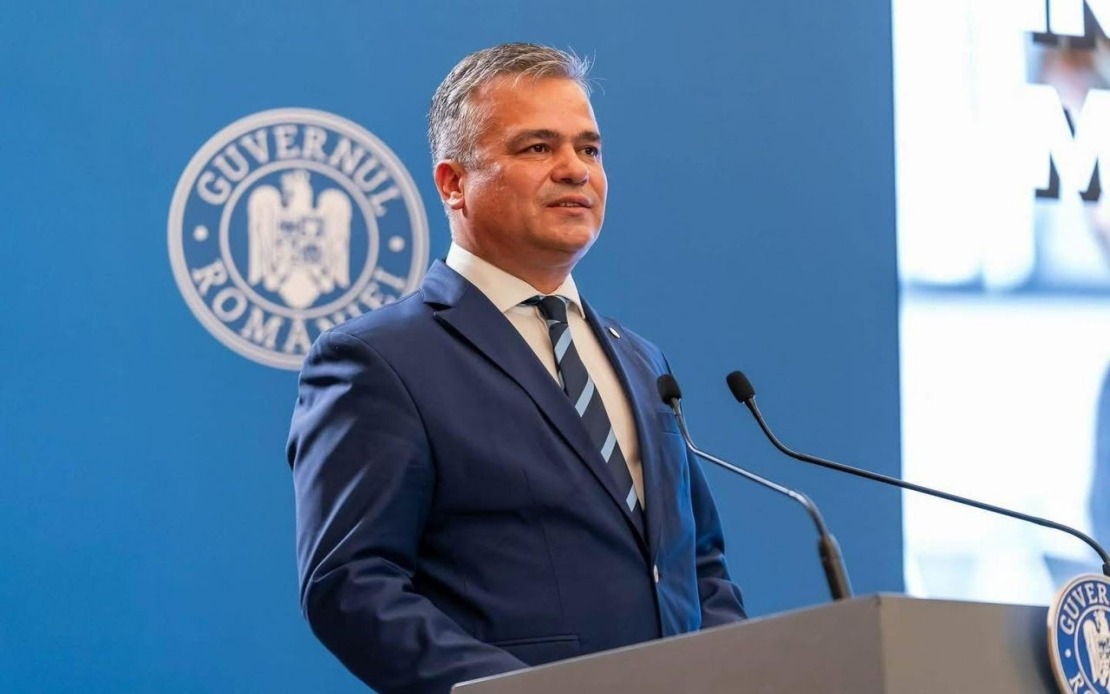
Adrian Vestea, Romania's prime minister-designate, has formally submitted his proposed cabinet lineup and government programme to parliament, marking a significant step toward resolving the political impasse that has gripped the country in recent weeks. The submission came after securing endorsement from the Social Democratic Party at a party meeting held on Sunday, signalling that the bloc would throw its support behind Vestea's bid to lead the nation. Through a statement issued on social media, Vestea emphasised that the presentation of both his executive team and policy framework represented a crucial juncture in returning Romania to normal institutional functioning, pledging to end the prolonged period of uncertainty that has characterised the political landscape.
The newly proposed government structure reflects an effort to bridge divides within Romania's fractious political establishment. Vestea, who holds the position of first vice-chair within the National Liberal Party, has assembled a coalition cabinet that includes members from both the Social Democrats and fellow NLP representatives who align with his vision. This coalition arrangement is noteworthy given that the National Liberal Party's official leadership had previously and publicly rejected the prospect of forming any governmental partnership with left-leaning political forces. The composition thus represents a departure from the party's stated position, underscoring the pragmatic compromises sometimes necessary when government formation becomes deadlocked.
Vestea's administration has articulated five principal strategic objectives that will guide its governance agenda over the coming period. Foremost among these is the consolidation of political stability, a priority reflecting the ongoing volatility within Romania's parliamentary dynamics. The government has also committed itself to accelerating the rate at which European Union funding streams are absorbed and deployed, a matter of considerable importance given Romania's reliance on Brussels-allocated resources for development initiatives. Maintaining macroeconomic equilibrium represents a third pillar of the proposed administration's platform, reflecting concerns about inflation and fiscal sustainability that persist across Central and Eastern Europe following global economic turbulence.
Infrastructure development forms the fourth element of Vestea's policy framework, with the government pledging to undertake and complete strategic projects that enhance Romania's productive capacity and connectivity. The fifth priority centres on national security matters, encompassing both conventional defence considerations and strategic initiatives that may include technological advancement and border security enhancements. This multi-pronged approach suggests an attempt to address both immediate operational concerns and longer-term structural challenges facing the Romanian state.
The path to this parliamentary submission has been marked by considerable political manoeuvring and behind-the-scenes negotiations typical of coalition formation in European parliamentary systems. The Social Democratic Party's decision to back Vestea, announced at their Sunday gathering, effectively repositioned a significant bloc of parliamentary seats behind the prime minister-designate, providing him with a workable majority or near-majority in the legislature. This endorsement became possible despite the stated reservations of the National Liberal Party establishment, suggesting that individual party members and regional factions within the NLP possessed sufficient autonomy or disagreement with the party line to enable Vestea to assemble his proposed administration.
However, the formal approval of Vestea's cabinet composition by parliament remains uncertain at this stage. While the Social Democratic Party's backing provides a crucial foundation of support, Romanian media outlets have reported that the ultimate parliamentary verdict on whether the proposed ministerial team meets with sufficient approval remains unclear. This ongoing ambiguity underscores the complexities inherent in coalition governments, where securing preliminary endorsements from major parties does not necessarily guarantee smooth passage through formal parliamentary procedures or ensure that individual legislators will follow party directives during crucial votes.
For Malaysian observers and regional stakeholders, Romania's political dynamics offer instructive parallels with Southeast Asian coalition governance challenges. Like several ASEAN nations, Romania must navigate the delicate balance between securing cross-party cooperation and maintaining ideological coherence within political movements. The willingness of the Social Democrats to support a candidate from the centre-right National Liberal Party, despite historical tensions between left and right, demonstrates how pragmatic coalitions can emerge when the alternative is continued governmental paralysis. This model of flexible coalition-building, while sometimes criticised as unstable, has enabled many European democracies to function effectively even with highly fragmented parliaments.
The emphasis Vestea's government places on accelerating European fund absorption holds particular relevance for regional observers. Romania's integration into the European economic and institutional framework demonstrates how external financial mechanisms can drive domestic priorities and policy choices. As ASEAN nations increasingly engage with larger economic blocs and multilateral institutions, similar dynamics may arise wherein access to development financing from regional or global institutions shapes governmental agendas and priorities, much as EU funds now influence Romanian policy trajectories.
The stated commitment to restoring institutional stability and predictability also merits attention from comparative governance perspectives. Romania's experience with prolonged political uncertainty highlights how coalition crises and governmental vacuums can undermine public confidence in state institutions and create opportunities for policy stagnation. The Romanian parliament's forthcoming decision on whether to ratify Vestea's cabinet will demonstrate whether the preliminary endorsements from major parties translate into sufficient parliamentary support to ensure meaningful governmental authority and legitimacy as the administration takes office.