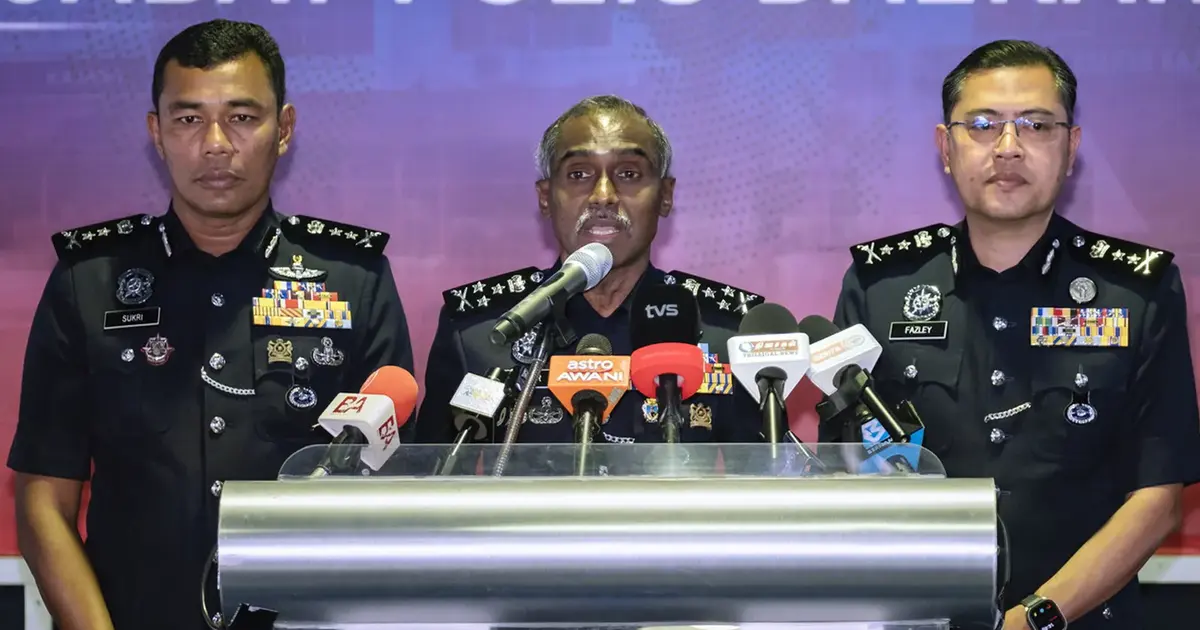
Bukit Aman's Criminal Investigation Department has successfully concluded a targeted four-day operation across Selangor that culminated in the apprehension of 39 individuals listed as wanted persons. According to CID chief M Kumar, the sweep represents a significant blow to organised criminal networks operating in the state, with the captured suspects facing charges spanning a spectrum of serious offences ranging from armed robbery to burglary and theft. The operation underscores renewed police commitment to dismantling active criminal cells that have been evading authorities across the densely populated Selangor region.
Of the 39 arrested, 34 individuals were taken into custody in connection with violent and property-related crimes that have plagued communities throughout the state. These suspects include individuals wanted in connection with street robberies, home invasions, vehicle thefts, and commercial burglaries—offences that have generated significant public concern and complaints to law enforcement agencies. The property crime category particularly reflects a persistent challenge facing Malaysian law enforcement, as organised theft rings continue to target residential and commercial establishments despite enhanced surveillance and patrol measures. The successful roundup signals progress in addressing criminal activity that directly impacts public safety and investor confidence in Selangor.
Beyond conventional criminal charges, five of the arrested individuals were detained under the Security Offences (Special Measures) Act, commonly referred to as Sosma. This statutory provision grants authorities expanded powers to detain individuals suspected of involvement in activities deemed threatening to national security, including suspected links to extremist organisations, terrorism financing, and related national security concerns. The inclusion of Sosma detainees within this operation suggests that police intelligence operations have identified security threats requiring immediate intervention alongside conventional crime prevention efforts. The distinction between the two categories highlights how modern law enforcement must simultaneously address street-level criminality and more complex security threats that transcend traditional criminal categorisation.
The four-day duration of the operation reflects the intensity and coordination required to apprehend multiple suspects across a geographically sprawling state like Selangor. Police likely deployed resources across multiple districts simultaneously, coordinating intelligence gathering, surveillance, and tactical execution to maximise the probability of capturing elusive wanted persons. Selangor's status as Malaysia's most populous state and its proximity to Kuala Lumpur create particular operational challenges, as criminal networks leverage the region's urban complexity and cross-border mobility to evade capture. The successful conclusion of such an intensive operation demonstrates the capacity of law enforcement agencies to mount sophisticated, sustained enforcement campaigns when public safety priorities demand concentrated effort.
Criminal networks operating in Selangor have long represented a concern for authorities, given the state's strategic economic importance and dense population centres that provide both targets and concealment for criminal activity. Organised property crime rings, in particular, have demonstrated adaptive capacity to evolving security measures, prompting law enforcement to employ increasingly sophisticated intelligence techniques and operational tactics. The capture of 34 individuals involved in violent and property crimes removes active criminal operators from circulation and provides investigators with intelligence that may illuminate broader criminal networks and their operational patterns. Each arrest creates opportunities for intelligence gathering that can inform prevention of future criminal activity and identification of previously unknown suspects.
The Sosma detentions within this operation reflect Malaysia's ongoing security challenges in combating extremist recruitment and financing activities that occasionally intersect with conventional criminal networks. The concurrent arrest of national security suspects alongside ordinary criminals suggests that police intelligence operations maintain holistic situational awareness that extends beyond conventional crime categories. This integrated enforcement approach recognises that contemporary security threats often blur traditional distinctions between organised criminality and ideological extremism. The successful identification and apprehension of Sosma-eligible suspects demonstrates that police operational capacity encompasses both community safety concerns and broader national security imperatives.
M Kumar's public disclosure of operation results serves an important communication function, reassuring Selangor residents that their law enforcement agencies actively pursue wanted persons and maintain momentum against criminal networks. Public confidence in police effectiveness depends significantly on visible enforcement outcomes and transparent communication regarding significant operational achievements. The announcement provides accountability to taxpayers and residents funding law enforcement services, demonstrating concrete results from deployed resources. Equally, such public disclosure can serve deterrent functions by illustrating the eventual consequences of evading arrest and remaining engaged in criminal activity.
The geographic scope of Selangor itself complicates wanted person apprehension, as state boundaries facilitate criminal mobility and cross-jurisdictional complexities that require coordination among multiple police units and agencies. The successful operation suggests effective inter-unit coordination and information sharing that enabled simultaneous arrest operations across dispersed locations. This operational capability becomes increasingly important as criminal networks demonstrate growing sophistication and geographic dispersion. The investment in coordinated enforcement capacity generates dividends in public safety outcomes and contributes to Malaysia's broader crime reduction objectives.
Moving forward, the arrest of these 39 individuals establishes a baseline of enforcement activity that authorities will likely build upon through intelligence analysis and secondary investigations. Interrogation of apprehended suspects typically yields intelligence regarding broader criminal networks, sources of stolen property, weapon networks, and connections to other wanted persons. The extended investigation phase following initial arrests often proves as valuable as the arrests themselves in terms of criminal network disruption and prevention of future offences. Selangor residents and business operators can anticipate continued police emphasis on wanted person apprehension and organised crime disruption as enforcement priorities evolve.
%22%2F%3E%3C%2Fpattern%3E%3C%2Fdefs%3E%3Crect%20width%3D%22100%25%22%20height%3D%22100%25%22%20fill%3D%22url(%23ph3onqdg)%22%2F%3E%3Crect%20width%3D%22100%25%22%20height%3D%22100%25%22%20fill%3D%22url(%23ph3onqdp)%22%2F%3E%3Ctext%20x%3D%2250%25%22%20y%3D%2250%25%22%20text-anchor%3D%22middle%22%20dominant-baseline%3D%22central%22%20fill%3D%22rgba(255%2C255%2C255%2C0.95)%22%20font-family%3D%22Georgia%2C%20'Times%20New%20Roman'%2C%20serif%22%20font-weight%3D%22700%22%20font-size%3D%22272%22%20letter-spacing%3D%22-0.02em%22%3EWorld%3C%2Ftext%3E%3C%2Fsvg%3E)
%22%2F%3E%3C%2Fpattern%3E%3C%2Fdefs%3E%3Crect%20width%3D%22100%25%22%20height%3D%22100%25%22%20fill%3D%22url(%23ph2wfn9g)%22%2F%3E%3Crect%20width%3D%22100%25%22%20height%3D%22100%25%22%20fill%3D%22url(%23ph2wfn9p)%22%2F%3E%3Ctext%20x%3D%2250%25%22%20y%3D%2250%25%22%20text-anchor%3D%22middle%22%20dominant-baseline%3D%22central%22%20fill%3D%22rgba(255%2C255%2C255%2C0.95)%22%20font-family%3D%22Georgia%2C%20'Times%20New%20Roman'%2C%20serif%22%20font-weight%3D%22700%22%20font-size%3D%22320%22%20letter-spacing%3D%22-0.02em%22%3EIAEA%3C%2Ftext%3E%3C%2Fsvg%3E)
%22%2F%3E%3C%2Fpattern%3E%3C%2Fdefs%3E%3Crect%20width%3D%22100%25%22%20height%3D%22100%25%22%20fill%3D%22url(%23ph1jghhg)%22%2F%3E%3Crect%20width%3D%22100%25%22%20height%3D%22100%25%22%20fill%3D%22url(%23ph1jghhp)%22%2F%3E%3Ctext%20x%3D%2250%25%22%20y%3D%2250%25%22%20text-anchor%3D%22middle%22%20dominant-baseline%3D%22central%22%20fill%3D%22rgba(255%2C255%2C255%2C0.95)%22%20font-family%3D%22Georgia%2C%20'Times%20New%20Roman'%2C%20serif%22%20font-weight%3D%22700%22%20font-size%3D%22320%22%20letter-spacing%3D%22-0.02em%22%3EIran%3C%2Ftext%3E%3C%2Fsvg%3E)