Singapore's security apparatus has moved against two citizens radicalised through exposure to extremist online content sparked by the Israeli-Palestinian conflict, marking the latest intervention in what authorities describe as a growing threat among the city-state's youth. Cyrus Dzulqarnain Al-Shahriar, 19, has been issued a restriction order by the Internal Security Department (ISD), while Tarmizi Mohd Taha, a 30-year-old customer service officer, faces detention under the Internal Security Act (ISA). Both cases underscore how geopolitical events thousands of miles away are reshaping radicalisation pathways within Southeast Asia's most developed economy.
The revelations about Cyrus paint a portrait of gradual ideological drift facilitated by algorithmic exposure to increasingly extreme content. Beginning in 2022 when he sought religious education through online groups, the teenager's trajectory illustrates how seemingly innocuous starting points can lead to dangerous extremist positions. His initial engagement with Islam-focused communities exposed him to anti-Western narratives and anti-LGBTQ messaging, which he amplified through his own social media posts. The algorithmic ecosystem that connects users with like-minded communities—a feature of global social media platforms—appears to have functioned as a radicalisation accelerator in his case.
Following Hamas's October 2023 attacks against Israel, Cyrus encountered pro-Hamas content that reframed civilian casualties as legitimate religious warfare. He progressed from passive consumption of such narratives to active support, eventually contemplating travel to Gaza to join Hamas operations. His plan to join the organisation faltered not due to ideological reconsideration but rather practical constraints: insufficient resources and personal fear of violence. This distinction matters for security analysts, as it suggests opportunity rather than conviction may have prevented direct action. The lack of a complete ideological rejection meant he remained vulnerable to alternative violent pathways.
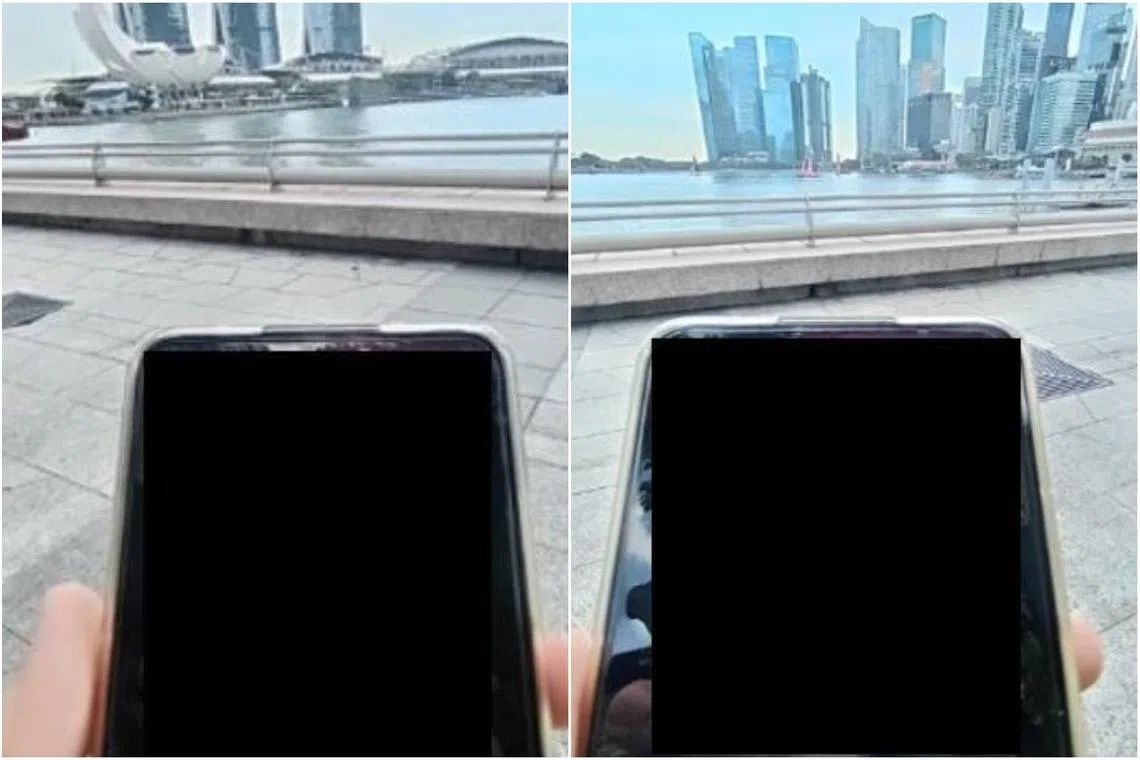
What distinguishes Cyrus's case is his embrace of what authorities term Composite Violent Extremism (CoVE), colloquially described as a "salad bar" approach where individuals selectively draw from multiple, sometimes contradictory extremist ideologies. In early 2025, Cyrus encountered an obscure online group adhering to violent accelerationist ideology—the belief that creating chaos through violence would establish Islam as the world's dominant civilisation. Members of this group viewed Singapore itself as an extension of American and Zionist control, a characterisation that would resonate with anti-Western sentiment globally but carries particular salience in a multiethnic, multicultural city-state committed to religious harmony. Cyrus took photographs of extremist publications against the backdrop of Marina Bay Sands, a photographic act that served as both ideology expression and group allegiance.
Particularly concerning to authorities was Cyrus's embrace of incel ideology alongside his Islamist extremism, demonstrating how disparate violent movements can coexist within a single individual's worldview. After encountering posts about Elliot Rodger, the 2014 California mass killer, Cyrus immersed himself in incel forums and adopted the subculture's language and grievances. He made online threats against women using dehumanising terminology and fantasised about violence against LGBTQ individuals and couples. For Malaysian observers, this hybrid threat represents an emerging pattern where traditional religious extremism melds with newer Western-origin ideological movements centred on gender resentment and social alienation.
The second case, involving Tarmizi Mohd Taha, presents a different profile but identical geopolitical trigger. Tarmizi, a customer service officer, expressed willingness to conduct attacks on Singapore if Hamas provided instruction. His previous service as a logistics assistant in the Singapore Police Force made him believe he possessed skills valuable to Hamas operations. Unlike Cyrus, who remained primarily in the digital sphere, Tarmizi had demonstrated operational capacity and explicitly expressed readiness for physical violence. His detention reflects authorities' assessment that the threat had progressed beyond ideation to genuine operational possibility.
The emergence of eight Singaporeans radicalised specifically by the Gaza conflict within roughly eighteen months demonstrates how regional and global conflicts increasingly generate security challenges in stable, relatively insulated city-states. Malaysia, with its larger Muslim population, greater land borders facilitating illicit movement, and different security apparatus capacity, faces arguably greater vulnerability to similar radicalisation patterns. The mechanisms driving these cases—social media algorithms, private messaging groups, the global reach of ideological content—operate identically across the region, suggesting Malaysian authorities should anticipate comparable cases among their own youth populations.
Authorities emphasise that Cyrus's thoughts "did not progress beyond ideation" and he took no preparatory steps toward violence, factors that distinguished him from Tarmizi. However, the ISD characterized his support for terrorist organisations and online incitement to violence as security concerns necessitating intervention. This represents a proactive security posture that detains and restricts individuals before they transition from ideological commitment to operational planning. The approach reflects Singapore's zero-tolerance stance toward any manifestation of extremism, irrespective of whether plots have advanced to execution phases. Cyrus will enter a rehabilitation programme designed to deconstruct his radical beliefs, an initiative that raises questions about efficacy, particularly for individuals holding hybrid ideological positions lacking coherent logical structures.
The ISD's framing of CoVE as a distinct and evolving threat deserves scrutiny. The agency noted that individuals adopting this "salad bar" approach lack coherent worldviews yet retain capacity for serious violence. This diagnosis challenges conventional counter-extremism strategies premised on targeting specific ideological narratives or organisational structures. When a radicalised person draws selectively from Islamist extremism, violent accelerationism, and incel ideology—three ideological frameworks with contradictory foundational assumptions—traditional deradicalisation talking points may prove ineffective. The hybrid nature of such threats suggests future security challenges will demand more sophisticated understanding of how disparate movements intersect within individual psychologies.
For Malaysia and the broader Southeast Asian region, these Singapore cases signal the urgent need to strengthen digital literacy and family-level resilience against online radicalisation. The progression from casual religious inquiry to supporting terrorist organisations occurred within three years, largely through unmonitored social media engagement. Malaysian parents, educators, and community leaders should recognise that algorithms connecting youth to extreme content operate without regard for national borders or demographic characteristics. The sophistication of online extremist communities—including private chat groups, shared multimedia, and coordinated digital warfare campaigns—means that traditional community-based prevention efforts require significant digital competency to remain relevant.
The photograph Cyrus took for his group exemplifies how modern extremism integrates performative elements suited to social media culture. By publicly posting images documenting his allegiance against iconic Singapore landmarks, he simultaneously demonstrated commitment to his online group and broadcast extremist ideology to broader audiences. This performative radicalisation, where violent commitment is expressed through social media gesture, creates detectable markers that security services can monitor, yet also makes identification dependent upon robust digital surveillance capabilities that raise civil liberties questions across democratic societies. Malaysia must calibrate its response to such threats while maintaining constitutional protections—a balance Singapore navigates through its broad ISA framework but which presents different challenges within Malaysia's federal system and multiple state governments.
The timing of these detentions in June 2024, more than eighteen months after Hamas's October 2023 attacks, underscores how radicalisation processes operate on extended timelines. Grievance exposure does not immediately translate to security threats; instead, individuals gradually internalise ideologies, encounter confirmation within online communities, and progress through stages of commitment. This extended trajectory offers intervention windows, particularly at earlier stages before individuals join active extremist groups or commit to violent action. Yet the very factors enabling radicalisation—algorithmic recommendation systems, encrypted communication platforms, and the global dissemination of extremist content—make early intervention increasingly difficult without invasive surveillance infrastructure that democratic societies remain reluctant to deploy comprehensively.