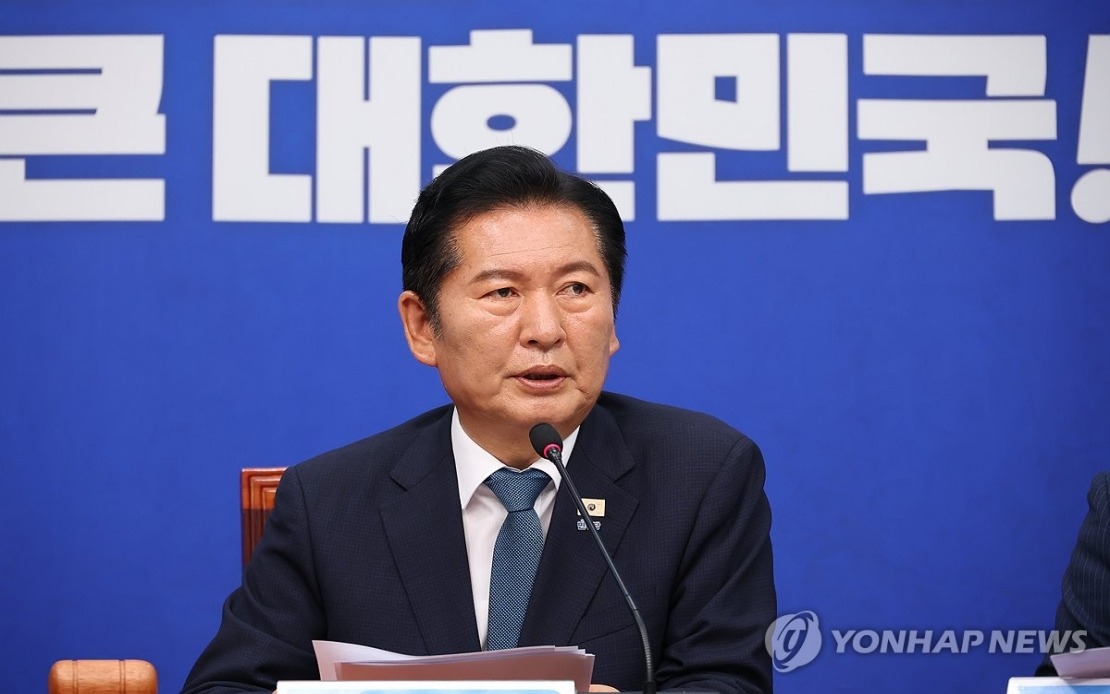
South Korean lawmaker Jung Chung-rae stepped down as chairman of the ruling Democratic Party on Wednesday, a manoeuvre widely interpreted as clearing the way for his candidacy in the party's forthcoming national convention scheduled for August 17. The resignation, announced during a meeting of the party's supreme council at the National Assembly, represents a strategic repositioning ahead of what is shaping up to be a competitive internal election for the party's top leadership role.
In his resignation statement, Jung reflected on his tenure with a blend of self-criticism and determination. He described wrestling with difficult introspection over recent days, acknowledging the weight of decisions made during his time as party leader. His comments suggested awareness of the considerable pressures surrounding his position and the competing interests within the party infrastructure that have created tension throughout his chairmanship.
Throughout his address, Jung emphasised his unwavering commitment to supporting President Lee Jae Myung's administration. He underscored his efforts to maintain cohesion between the Democratic Party, the government apparatus, and the presidential office, framing his leadership as fundamentally oriented towards ensuring these institutions operated in synchronisation. This framing appears designed to counter emerging criticism from within party ranks regarding his approach to governance and internal party management.
The political landscape within the ruling party has grown increasingly fractious, with tensions between different factions testing party unity. Jung acknowledged facing persistent resistance from multiple quarters—both within and outside the Democratic Party—yet characterised his response as dutiful perseverance without complaint. This rhetoric suggests his tenure has been marked by considerable internal friction, a common feature in South Korean politics where competing power bases frequently clash over policy direction and resource allocation.
Critics from the pro-Lee faction have levelled accusations that Jung has prioritised the interests of his hard-line supporters rather than pursuing alignment with the president on critical policy matters. These tensions reflect deeper divisions within the ruling party about strategic direction and the balance of power between the presidential office and the party apparatus. Such internal discord can significantly impact a ruling party's capacity to implement its legislative agenda and maintain public support.
With Jung's departure, the August convention is expected to develop into a three-cornered contest involving formidable political figures. Prime Minister Kim Min-seok, a trusted political confidant of President Lee Jae Myung, is positioned as a frontrunner given his proximity to the presidential office and his established political networks. Song Young-gil, who previously served as Democratic Party leader, represents another significant contender bringing substantial experience in party management and legislative affairs.
Song Young-gil's entry into the race has introduced an additional dimension of complexity. According to statements made by Democratic Party lawmaker Park Jie-won during an interview with radio broadcaster CBS, Song has already informed President Lee Jae Myung of his intention to contest the leadership election. More intriguingly, Song has reportedly explored the possibility of coordinating his candidacy with Kim Min-seok, potentially to consolidate support among the pro-Lee faction and prevent a fragmented contest that might advantage Jung.
The prospect of Song and Kim aligning their candidacies underscores the factional divisions within South Korea's ruling party and the strategic calculations that party heavyweights are undertaking. Such alignments are not uncommon in South Korean politics, where politicians frequently navigate complex coalition-building to secure leadership positions. However, they also highlight the fluid nature of party allegiances and the degree to which personal political fortunes can shift rapidly based on strategic manoeuvring.
During the interim period until the August convention, Democratic Party floor leader Han Byung-do will assume the responsibilities of acting party leader. This appointment represents a holding pattern designed to provide stable party management while the broader membership considers the competing visions and candidacies being presented for the top leadership role. The acting leader role is typically assigned to a relatively neutral figure capable of maintaining operational continuity without unduly advantaging any particular candidate or faction.
The timing of this leadership contest arrives at a consequential moment for South Korea's political trajectory. The Democratic Party's internal health and leadership direction will have implications extending beyond party politics, influencing the government's capacity to advance its legislative programme and respond to pressing national challenges. The outcome of the August convention will reshape power dynamics within both the party and the broader government structure.
For Malaysian observers and regional analysts, South Korea's internal political developments merit attention given the broader regional context of governance challenges and factional politics within ruling parties across East Asia. The Democratic Party's leadership contest illustrates how even established democracies navigate tensions between centralised presidential authority and diffused party power structures, offering comparative insights into managing internal party cohesion while maintaining effective governance.