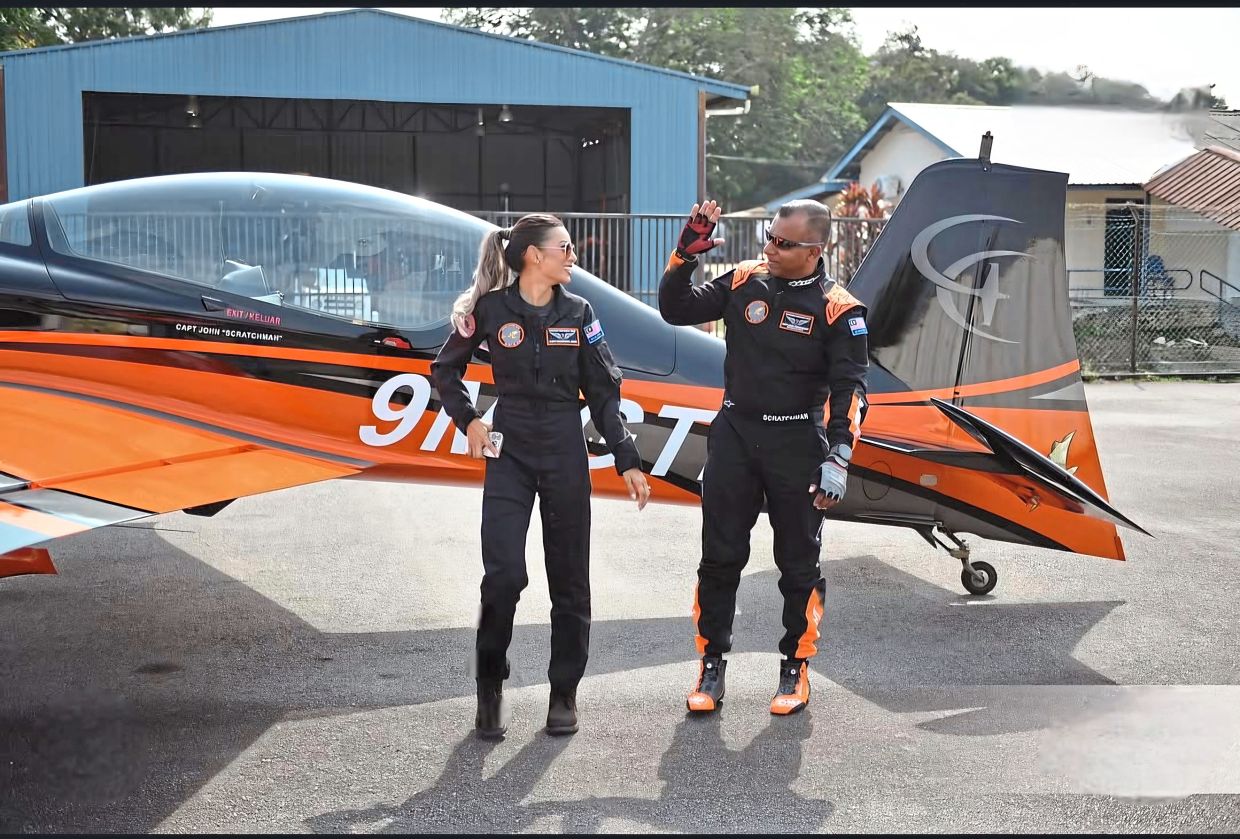
Samantha Laura John's childhood was defined by the distinctive hum of aircraft engines and the regimented discipline of military air bases. Now, at 26, she has completed flight training and earned her pilot's licence—following directly in the flight path of her father, Lieutenant-Colonel (Retired) John Sham Alagarsamy, who spent 26 years as a Royal Malaysian Air Force fighter pilot before transitioning to commercial aviation. Their shared passion for aviation represents more than a family tradition; it reflects a broader phenomenon in Malaysia where parental influence, particularly when combined with exposure to meaningful professional environments, can profoundly shape a child's career trajectory.
John Sham Alagarsamy's military aviation career was distinguished by his roles as a fighter pilot, instructor, and examiner before he shifted to the commercial sector in 2019. What sets him apart even further is his distinction as Malaysia's first and only civil aviator officially recognised by the Civil Aviation Authority of Malaysia for aerobatics expertise. His acrobatic displays at major international airshows, including the Langkawi International Maritime and Aerospace Exhibition (Lima), where he flew the GB1 GameBird aircraft, established him as a notable figure in the country's aviation community. Yet his influence extends beyond the cockpit—John is also an accomplished musician and professional deejay known as "Scratchman", having won the Malaysian Open DJ Competition in 1992 during the vinyl turntablism era, demonstrating a creative versatility that often goes unnoticed in discussions of military professionals.
Samantha's pathway to aviation was neither straightforward nor imposed. Despite growing up surrounded by military aviation culture—witnessing her father depart for training missions and combat readiness exercises—she initially explored alternative directions after completing her International General Certificate of Secondary Education. In 2018, she enrolled in a two-year cadet pilot programme with an airline based in Sepang, Selangor, seeking to test her interests beyond her father's shadow. However, this experience ultimately clarified rather than deterred her ambitions. She recognised that while the role offered rewards, her deeper calling remained aviation itself. The realisation that she had always harboured pilot aspirations, despite her exploratory detour, led her to pursue formal flight training in Ipoh, which culminated in her graduation as a qualified pilot in 2025.
Her father's parenting philosophy proves instructive for understanding how ambition is cultivated without coercion. John explicitly rejected the approach of pushing his children toward predetermined outcomes, instead framing success as a function of vision and determination. His oft-repeated counsel—"if you aim for the stars, at least you'd reach the sky"—encapsulates a philosophy that encourages bold dreaming while remaining grounded in realistic expectation. This approach resonates with academic research on career development. A study from Universiti Teknologi Malaysia's social science journal, titled "Parental Influence and Undergraduates' Career Choice Intentions", found that strong parent-child relationships, open communication, and mutual trust substantially influence career decisions by fostering genuine exploration and enabling long-term planning. Rather than dictating outcomes, such dynamics allow young people to internalise values and aspirations organically.
The family's international mobility profoundly shaped Samantha's worldview and professional perspective. Between her childhood and early adulthood, the family relocated multiple times across Malaysian air bases—Labuan, Kuantan, Alor Setar, and Butterworth in Penang—before she reached primary school age. While frequent moves presented logistical and social challenges typical of military families, Samantha now recognises these relocations as formative experiences that exposed her to disciplined environments and instilled a sense of collective purpose. In 2012, John's attachment to the Australian Defence Force while pursuing a master's degree in military and defence studies at the Australian National University took the family to Canberra. This sojourn abroad expanded Samantha's understanding of defence frameworks and international aviation systems, broadening her perspective beyond Malaysia's borders and deepening her appreciation for the complexities of cross-national military cooperation.
Samantha's current life reflects the tension between aviation passion and practical necessity. Based in Kota Kinabalu, she operates an event management company with her husband, David Chong, 30, while also offering vocal coaching services. Her pilot's licence remains active, though she has not yet transitioned to full-time commercial flying. She articulates a clear intention to eventually return to aviation and pursue a career as a commercial pilot, suggesting that her present entrepreneurial ventures represent a transitional phase rather than a permanent departure from her professional calling. This trajectory—combining business acumen with aviation credentials—positions her to eventually bring multifaceted expertise to the commercial aviation sector, whether as a pilot or in management capacities.
The sensory and cognitive experience of piloting provides Samantha with an almost meditative satisfaction. She describes being in the cockpit as therapeutic, requiring an intensity of focus and environmental awareness that demands simultaneous attention across multiple dimensions. The pilot's perpetual forward gaze, constant anticipatory thinking, and unwavering situational awareness create a mental discipline that she finds deeply engaging. This reflection reveals that her commitment to aviation transcends career ambition; it represents an alignment between her cognitive strengths and professional identity, a match that many individuals spend lifetimes attempting to achieve.
The father-daughter dynamic between John and Samantha carries pronounced mutual respect, evident in their interaction and conversation patterns. Samantha speaks to her father with measured courtesy that reflects decades of discipline and values instilled during her upbringing on military bases. John, for his part, emphasises that parental impact is ultimately evaluated through the positive influence imparted to the next generation, particularly through modelled behaviour rather than explicit instruction. His recognition as a recipient of the Most Gallant Order of Military Service (Kesatria Angkatan Tentera) during his RMAF service reflects institutional acknowledgement of his professional contributions, yet he appears to view his greatest achievement as having raised a daughter who shares his values and pursues meaningful work.
Samantha and John's story contextualises a broader pattern observable in Malaysian aviation where children of military and commercial pilots frequently pursue similar careers. Sisters Safia Amira Abu Bakar and Safia Anisa Abu Bakar exemplify this tendency, having followed their father Captain Abu Bakar Shafie into aviation professions. Such patterns suggest that exposure to aviation environments during formative years, combined with parental modelling and encouragement, creates powerful normalising effects. What might appear extraordinary to those outside aviation circles becomes an attainable aspiration for those raised within it. The relative rarity of female pilots in Malaysia's aviation sector adds particular significance to Samantha's achievement; her determination to pursue aviation despite prevailing gender imbalances in the field demonstrates how strong foundational support from family can enable individuals to navigate and eventually help transform professional domains marked by underrepresentation.
Looking forward, Samantha's trajectory embodies the evolving nature of Malaysian aviation careers in the twenty-first century. Unlike her father, whose career followed a relatively linear path from military service to commercial aviation, her experience encompasses entrepreneurship, event management, vocal instruction, and aeronautical credentials. This diversification reflects broader economic and professional trends while maintaining aviation as a persistent thread through her working life. Her eventual return to commercial flying, anticipated by both her and her father, will likely benefit from her accumulated professional experience and business perspective. Meanwhile, her presence in the cockpit contributes to the gradual normalisation of women in Malaysian aviation, potentially inspiring other daughters of pilots—and those without aviation family backgrounds—to consider careers in flight operations and related fields. The family's legacy thus extends beyond personal achievement to encompass incremental shifts in professional demographics and aspirations across Southeast Asian aviation.