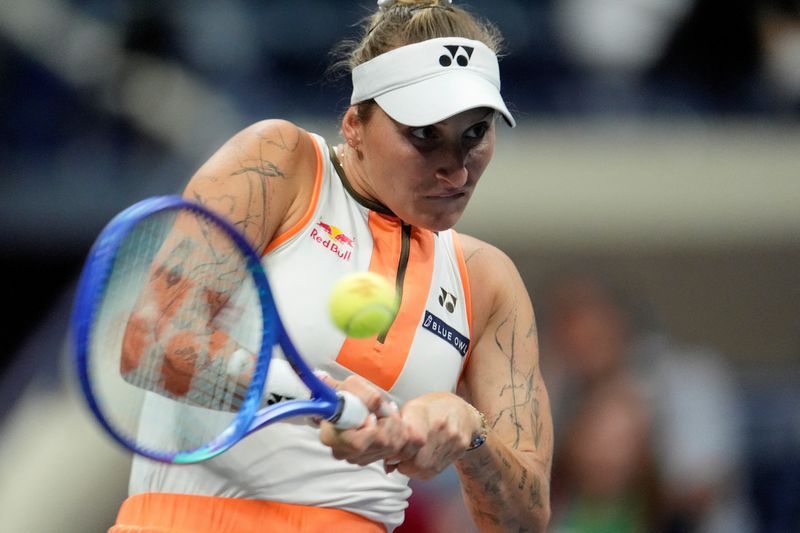
The tennis world faces mounting pressure to overhaul its anti-doping framework following the International Tennis Integrity Agency's decision to suspend former Wimbledon champion Marketa Vondrousova for four years. The Czech player's ban, handed down on Monday for failing to submit to an out-of-competition test at her home in December, has crystallised long-simmering tensions between players, governing bodies, and those tasked with ensuring fair competition across the sport.
Vondrousova's case is particularly contentious because the 26-year-old has never tested positive for prohibited substances. Her suspension stems solely from her refusal to comply when a doping control officer arrived at her residence at 8:15 p.m., seeking an immediate sample. In April, the player explained she had reached her psychological limit after enduring months of stress, and that the sudden demand from an unidentified stranger at her home felt like a serious violation of her privacy. This account resonated with the Professional Tennis Players Association, which released a pointed statement questioning whether the penalty fitted the alleged offence.
The PTPA's intervention marks an escalation in the ongoing dispute between players and anti-doping authorities. The association stopped short of defending Vondrousova's specific actions but emphasised the disproportionality of imposing a four-year suspension on someone with a clean testing record. More broadly, the PTPA has demanded that athletes gain meaningful input into the rules governing their testing, a demand backed by the association's filing of a lawsuit last year against tennis's governing bodies over alleged privacy violations inherent in random drug testing protocols. The message from players is clear: they accept the principle of testing, but insist on having a seat at the table where testing policies are formulated.
Underlying this dispute is a growing pattern of inconsistency in how anti-doping violations are handled across professional tennis. High-ranking players including Jannik Sinner and Iga Swiatek avoided lengthy bans following positive test results, a disparity that has fuelled suspicions among the broader player community that the system favours the sport's elite. Such perceptions, whether justified or not, corrode confidence in the integrity of anti-doping enforcement and raise questions about whether punishments are applied uniformly regardless of a player's ranking, nationality, or commercial value to the sport.
The safety and privacy concerns raised by Vondrousova deserve particular scrutiny in the context of women's professional tennis. The Czech player cited her fear of answering her door to an unidentified person late at night, a concern grounded in the traumatic 2016 knife attack on fellow Czech Petra Kvitova at her home. This is not an abstract concern; it reflects real vulnerabilities faced by female athletes who often maintain lower public profiles than their male counterparts and may be more vulnerable to criminal intrusion. The question of whether unannounced visits to players' residences outside regular business hours strike the right balance between testing integrity and player welfare remains unresolved.
In response to the mounting criticism, ITIA CEO Karen Moorhouse has defended both the testing regime and the procedures designed to safeguard players. She emphasised that the agency operates under the World Anti-Doping Agency code, ensuring consistency with anti-doping frameworks across all international sports rather than maintaining tennis-specific protocols. Moorhouse contended that unpredictable testing is essential to prevent doping and that procedures include multiple safeguards: testers are trained professionals who carry identification and whose gender is matched to the athlete's preference. Players retain the right to verify identity through alternative means if they have doubts about a tester's credentials. These assurances, however, may offer limited comfort to athletes who remain apprehensive about late-night visits.
The tension between effective anti-doping enforcement and athlete welfare extends beyond personal safety. Moorhouse acknowledged that testing imposes a genuine burden on players whose careers already demand extraordinary levels of physical exertion, mental resilience, and public scrutiny. Recognising this reality, however, does not automatically resolve the underlying conflict: how can tennis maintain rigorous, unpredictable testing while respecting reasonable boundaries around player privacy and personal security? An independent tribunal ultimately supported the principle that such testing is necessary, yet the tribunal's perspective may not fully capture the lived experience of players facing surprise visits.
For Malaysian and Southeast Asian tennis fans and players, this case carries broader implications. As the region continues producing competitive talent on the international stage, local athletes may face similar pressures and anxieties around out-of-competition testing. The debate unfolding in tennis could influence how other sports under the WADA code balance enforcement with athlete protections. Furthermore, regional sports bodies should monitor developments in how players gain formal representation in rule-making processes—a model that could be adapted across different sports and governance structures in Southeast Asia.
Vondrousova retains the right to appeal her four-year ban to the Court of Arbitration for Sport, which may yet revisit the proportionality of the sanction and the procedural safeguards available to athletes. The 2023 Wimbledon champion has been sidelined since January due to a shoulder injury, placing her future in professional tennis in further jeopardy. Her case will likely become a touchstone for future anti-doping disputes, potentially forcing tennis authorities to reconsider whether current testing procedures adequately protect player welfare without compromising the sport's commitment to clean competition.
The broader lesson emerging from this controversy is that anti-doping authorities must engage in genuine dialogue with players rather than presenting their frameworks as immutable. The PTPA's call for meaningful athlete involvement in rule-making is not, on examination, a radical proposal; it echoes governance practices in other domains where those affected by rules have a voice in their formulation. Tennis would likely benefit from convening a stakeholder forum involving players, governing bodies, independent anti-doping experts, and advocates for athlete safety to explore testing protocols that serve both integrity and welfare. Vondrousova's four-year suspension may ultimately prove less significant for what it does to her career than for how it reshapes conversations around player rights in professional sport.

