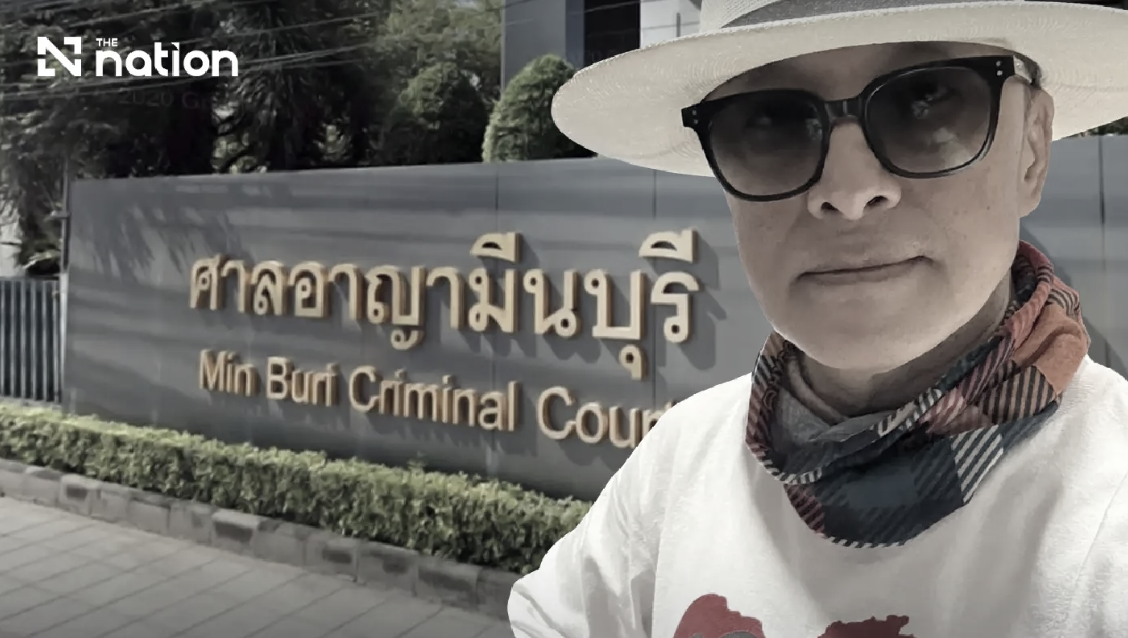
A Bangkok criminal court on Wednesday handed down a two-year prison sentence to Manasawin Nantasen, the 64-year-old entertainer known professionally as Tik Shiro, following his conviction for drunk driving that resulted in two deaths. The verdict marks a rare instance of accountability against a prominent Thai public figure in a country where celebrity status frequently appears to shield individuals from rigorous legal consequences. Manasawin's case comes amid growing public discourse in Thailand about whether the wealthy and well-connected truly face equal justice under the law, particularly in incidents causing loss of life.
Manasawin rose to international recognition throughout the late 1980s and 1990s, establishing himself as one of Thailand's most celebrated entertainers through a distinctive stage persona that drew striking parallels to Michael Jackson. His signature aesthetic—featuring iconic fedora hats, black leather jackets, and precisely choreographed dance routines—made him instantly recognizable to Thai audiences and earned him the enduring moniker of Thailand's answer to the American pop legend. For decades, he maintained considerable cultural relevance and fan loyalty across the Southeast Asian region.
The incident underlying the court's sentence occurred on an October 2024 evening when Manasawin operated his vehicle across a Bangkok bridge whilst under the influence of alcohol. His car struck a stationary motorcycle positioned on the bridge. The collision killed a 28-year-old woman who had been riding the motorcycle, whilst her 21-year-old brother, who was also present, suffered severe injuries when the impact threw him off the bridge structure. The younger brother subsequently succumbed to his injuries while receiving treatment at a hospital, bringing the death toll to two family members.
Footage recorded at the crash scene documented Manasawin on his knees, visibly expressing grief over the devastation he had caused. This emotional display, captured on video and distributed widely through Thai social media platforms, generated substantial public attention. The imagery resonated particularly because it underscored the gravity of consequences even for celebrated entertainers, yet simultaneously sparked discussion about whether genuine remorse adequately addresses fatal consequences or ensures systemic accountability.
The Bangkok court acknowledged several mitigating factors in determining the sentence length. According to the judicial statement, Manasawin's cooperation with authorities, including his voluntary surrender and provision of testimony beneficial to the case, weighed favourably in sentencing calculations. Additionally, the court noted that he demonstrated remorse through his attendance at the funeral ceremonies of the deceased victims and by providing financial compensation to their bereaved families. Nevertheless, the bench issued an order permanently revoking his driving privileges, a measure reflecting the severity with which authorities regarded his actions.
Manasawin's case emerges within a broader Thai context marked by high-profile incidents involving celebrities and influential individuals. Just days after Manasawin's sentencing, rock musician Sek Loso was released from detention having completed a prison term of just over one year for drug possession and unlawful firearm ownership. The timing of these concurrent cases has intensified public scrutiny regarding disparities in the application of Thai justice.
These recent developments have reignited conversation about a particularly notorious 2012 incident involving Vorayuth Yoovidhya, heir to the Red Bull family fortune. Yoovidhya allegedly drove his Ferrari sports car into a Bangkok motorcycle police officer in an affluent residential neighbourhood, killing the officer instantaneously. Despite an official investigation being initiated, Yoovidhya was ultimately never charged in connection with the death, a resolution that many Thais interpreted as evidence of wealth providing immunity from criminal prosecution.
Another emblematic case involves the son of former Pheu Thai Member of Parliament Chalerm Yubamrung, who allegedly discharged a firearm at another individual in a crowded Bangkok nightclub in 2001 following an altercation. The individual charged in that incident was subsequently acquitted when the court determined that evidence presented by prosecutors was insufficiently robust to sustain a conviction. These unresolved and controversially concluded cases have cultivated widespread public perception that Thailand's legal system operates according to a dual standard based on social status and financial resources.
Manasawin's two-year sentence, while representing decisive action compared to outcomes in several other high-profile cases, continues to fuel debate about whether judicial outcomes genuinely reflect the magnitude of harm caused or merely represent calculated consequences that wealthy defendants can absorb. The sentence's relative brevity compared to potential maximum penalties for fatal drunk-driving offences has prompted observers to question whether celebrity status and public remorse demonstrations influence sentencing in ways that ordinary citizens lacking such advantages cannot access.
For Southeast Asian readers, particularly Malaysian observers familiar with similar concerns about unequal justice application in their own jurisdictions, Manasawin's case illustrates how questions about judicial fairness and elite accountability transcend national borders throughout the region. The incident underscores the challenge facing developing democracies in Asia where traditional power structures, wealth concentration, and media influence continue to intersect with formal legal systems in ways that complicate equal application of law.
Moving forward, the Manasawin verdict may establish precedent for how Thai courts address fatal drunk-driving incidents involving public figures, potentially influencing judicial decision-making in comparable future cases. Public discourse surrounding the sentence will likely inform ongoing legislative and judicial debates about whether penalty structures for impaired driving offences require recalibration to ensure consequences proportionate to harm inflicted, irrespective of the defendant's social standing or celebrity status.