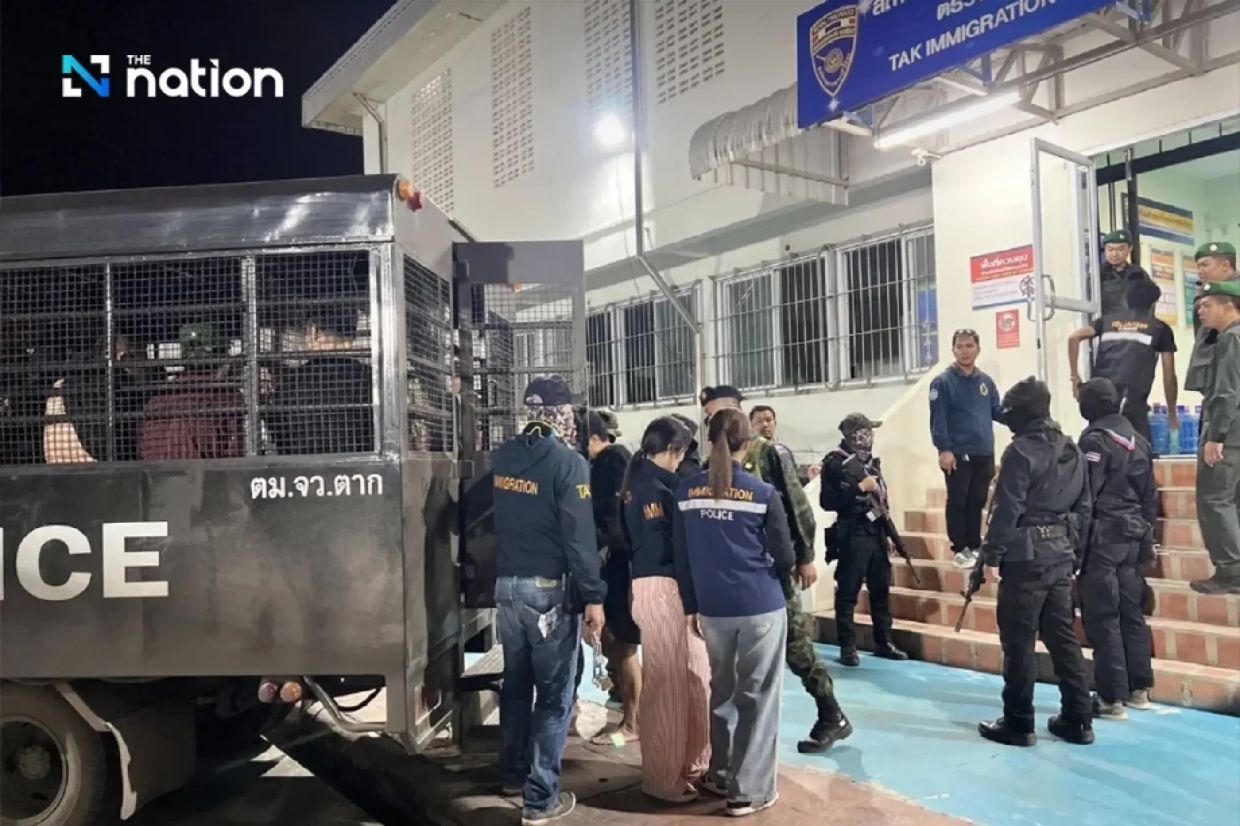
Thailand's government is moving forward with significant amendments to its immigration legislation aimed at streamlining the deportation process for foreign nationals convicted of crimes. The overhaul comes as authorities grapple with an influx of transnational criminal operations that have established footholds across the kingdom, prompting security agencies to prioritise the swift removal of foreign offenders who pose risks to Thai society. Deputy Prime Minister Pakorn Nilprapunt has been tasked with coordinating discussions between the Royal Thai Police, Immigration Bureau, and Interior Ministry to reform the legal framework governing alien deportations.
The underlying problem stems from structural weaknesses in Thailand's current immigration procedures. Under existing law, foreign detainees can lodge appeals within 48 hours of receiving deportation orders, and these legal challenges typically delay removal while the courts examine evidence and arguments. In many instances, individuals awaiting deportation have successfully obtained temporary reprieves on humanitarian or legal grounds, allowing them to remain in Thai custody for extended periods. Some detainees lack financial resources to pay for repatriation and must wait for their embassies to arrange funding, while others exploit procedural gaps to avoid returning home. The result is a congested detention system where serious offenders remain in state facilities at considerable cost while legal processes unfold slowly through various administrative and judicial channels.
A significant trigger for this reform effort was the introduction of a 60-day visa exemption covering 93 countries and territories in July 2024 under the previous administration. This scheme allowed visitors to enter Thailand without advance visa applications, eliminating the standard security screening that Thai embassies would ordinarily conduct. Since potential visitors no longer needed to apply for visas beforehand, authorities lost the opportunity to review criminal backgrounds or financial status before arrival. The exemption inadvertently created conditions for visa runs, where visitors repeatedly crossed borders to reset their permitted stay duration rather than returning home. This loophole enabled certain foreign nationals to establish quasi-permanent residency while evading proper oversight.
The consequences of this regulatory gap have manifested across multiple domains of criminal activity. Law enforcement authorities report that foreign nationals have used Thailand as a base for illegal work in hospitality and entertainment sectors, competing with Thai workers in restaurants, resorts, and related businesses. Others have engaged in property acquisition through nominee arrangements, circumventing restrictions on foreign ownership. More seriously, organised networks have established call-centre scam operations targeting victims in other countries, along with money laundering schemes and illicit financial networks. These problems have concentrated in popular tourist destinations including Pai in Mae Hong Son province, Pattaya in Chonburi, Koh Phangan in Surat Thani, and Bangkok itself, where enforcement operations have intensified.
Recognising the security implications, the Anutin government elevated transnational crime suppression to a priority objective. Security agencies implemented four proactive measures: enhanced monitoring of travellers entering and exiting Thailand with unusual frequency and unclear purposes, strengthened screening of individuals from high-risk nations, improved integration of international criminal databases with Interpol and domestic security services, and reforms to reduce overlapping visa entitlements. These steps represented a fundamental shift toward preventive enforcement rather than reactive prosecution. In May 2026, following the Anutin 2 government's formation, the Cabinet voted to cancel the 60-day visa exemption entirely, reverting Thailand to bilateral country-by-country visa arrangements where most visitors would receive maximum stays of 30 days.
The government's rationale for this policy reversal centred on security rather than tourism volume. Officials argued that the extended exemption failed to generate substantial increases in visitor arrivals or travel spending, while exposing the nation to heightened criminal and security risks. By narrowing visa privileges and imposing stricter entry requirements, Thailand aims to prioritise tourism quality over quantity, attracting legitimate travellers while deterring those seeking to exploit lax procedures. Prime Minister Anutin Charnvirakul emphasised that Thailand remains welcoming toward honest foreign visitors, investors, and business operators, but those who violate laws or cause harm must face swift legal consequences and removal from the kingdom.
The legislative focus centres on Sections 54 and 55 of the 1979 Immigration Act, which establish the legal foundation for removing foreign nationals. Current provisions allow deportation orders to be contested through multiple mechanisms, each capable of introducing delay. Detainees may petition the court for humanitarian relief, invoke protection clauses from international human rights treaties to which Thailand is party, or request temporary release pending case resolution. Thailand's membership in the United Nations Human Rights Council and ratification of eight major international human rights conventions—covering civil and political rights, economic and social rights, children's rights, women's rights, racial discrimination, torture prevention, disability rights, and protection from enforced disappearance—means that human rights considerations embed themselves throughout extradition and deportation procedures.
The complexity multiplies when considering whether Thailand maintains extradition treaties with the detainee's home country. When formal treaties exist, the attorney-general must review cases before referring them to court for extradition orders. Where no treaty applies, the Foreign Ministry initiates the process by requesting the attorney-general's assessment, who then petitions the court for an order. Each pathway involves distinct legal considerations, potentially prolonging timelines. Police spokesman Pol Lt Gen Trairong Phiwpan acknowledged that repatriation can proceed more rapidly when detainees forego human rights challenges, but when counterclaims and petitions are filed, courts must pause deportations to examine evidence thoroughly, inevitably extending processes.
Government officials recognise that reform must balance efficiency with legal rigour and humanitarian obligations. The proposed changes aim to compress unnecessary procedural steps, impose realistic timeframes for case resolution, and eliminate redundant administrative layers—all while preserving the capacity of courts and authorities to assess individual case circumstances thoroughly. Variations in case complexity necessitate flexibility: some matters involve straightforward illegal entry or visa overstay, whilst others implicate organised transnational crime networks or scamming operations requiring extensive investigation. Police authorities suggest that improvements should focus on streamlining rather than dismantling protections, enabling faster processing without compromising defendants' rights to legal representation or judicial review.
For Malaysia and the broader Southeast Asian region, Thailand's initiative holds significant implications. Transnational criminal networks operating across borders routinely exploit regulatory disparities and procedural delays to evade apprehension. By tightening entry requirements and accelerating deportations, Thailand creates less hospitable conditions for criminals who treat the kingdom as a staging ground for regional operations. The emphasis on integrating international criminal databases with local agencies strengthens the entire region's capacity to identify and track offenders moving between jurisdictions. Malaysian authorities managing similar challenges in border security and organised crime prevention may examine Thailand's legislative framework as a potential model for their own reforms. The coordination between immigration, law enforcement, and foreign ministry entities demonstrates how institutional cooperation can address security threats that transcend traditional bureaucratic silos.
Deputy Prime Minister Pakorn's ongoing consultations with relevant agencies will determine the scope and timeline for legislative amendments. Officials must evaluate impacts across multiple dimensions—enforcement feasibility, diplomatic implications, fiscal costs of detention systems, and judicial capacity. Any substantial reform will require Cabinet approval and likely parliamentary debate, particularly given constitutional and human rights sensitivities. The government appears committed to proceeding cautiously, respecting Thailand's international obligations whilst addressing genuine security vulnerabilities. Success will depend on whether revised procedures genuinely accelerate deportations without creating legal loopholes that criminals could exploit, and whether neighbouring countries' cooperation improves information sharing and repatriation coordination. The reforms therefore represent not merely domestic policy adjustments, but an attempt to reshape regional security dynamics by raising the consequences for transnational criminals operating in Southeast Asia.

