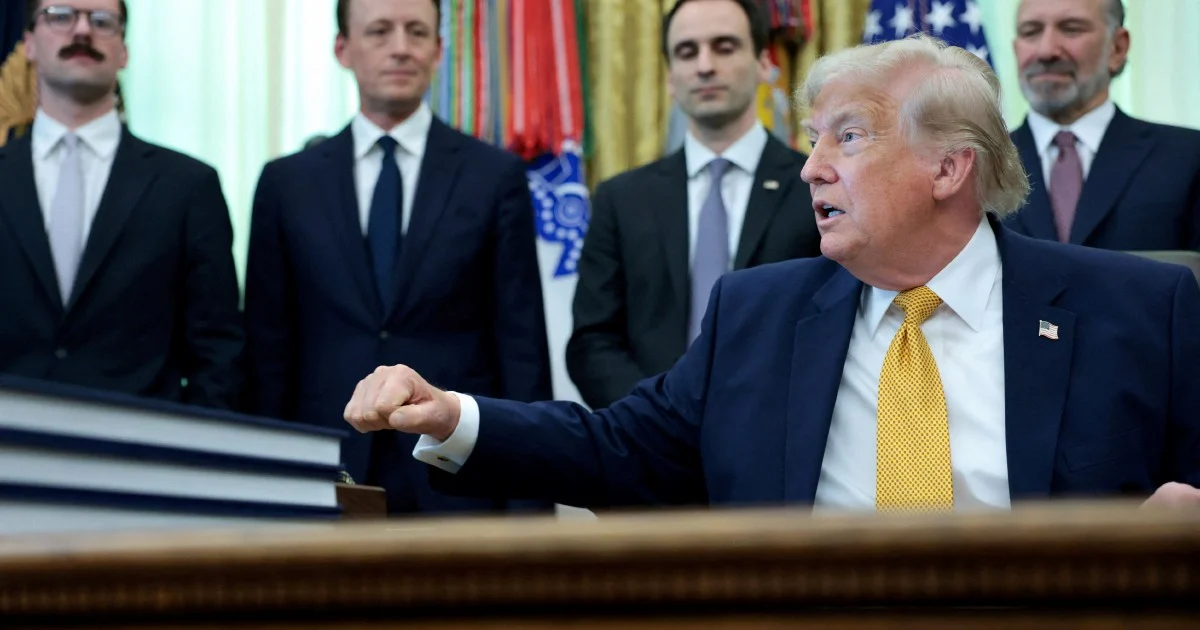
The United States Justice Department moved forward with its investigation into a purported scheme to breach the White House on Monday, announcing the arrest of two more individuals allegedly connected to the conspiracy. The plot, according to authorities, centred on plans to assault the presidential residence while a mixed martial arts competition was being held on its grounds with President Donald Trump in attendance.
Details surrounding the alleged attack remain limited at this stage, though the involvement of federal law enforcement agencies underscores the seriousness with which American security services treat threats to presidential venues and official events. The Justice Department's public announcement of these arrests signals an expanding investigation that has now resulted in multiple apprehensions as investigators work to uncover the full scope of the alleged scheme.
The White House, America's most heavily fortified official residence, routinely hosts high-profile events ranging from state functions to cultural celebrations. The prospect of staging a mixed martial arts event on its lawns represents an unusual public gathering, though professional combat sports have grown in mainstream acceptance and presidential engagement. Such large-scale events would necessarily involve extensive security preparations and coordination between Secret Service personnel and other law enforcement agencies tasked with protecting the president and securing the perimeter.
For Malaysian and Southeast Asian observers, this incident reflects broader patterns of security challenges facing democracies worldwide. Nations across the region, particularly those hosting major international events or sporting competitions, contend with similar threats that require sophisticated intelligence gathering and rapid response capabilities. The systematic approach demonstrated by American authorities—identifying suspects, securing arrests, and building a prosecutorial case—offers insights into counterterrorism and security protocols that security agencies throughout Asia monitor and study.
The timing of arrests and the progression of the investigation suggest that intelligence agencies had developed credible information about the alleged plot before it could advance toward implementation. Such proactive law enforcement action typically depends on cooperation between federal agencies, tip-offs from the public, and sophisticated surveillance capabilities. In the American context, such operations frequently involve the Federal Bureau of Investigation working alongside Secret Service personnel responsible for presidential protection.
The nature of an alleged attack plan targeting the White House carries profound implications not only for security policy but also for public confidence in government's capacity to protect critical infrastructure and national leadership. Attacks or assassination attempts against serving presidents represent exceptional historical events in American politics, though security around presidential venues has intensified dramatically since the September 2001 terrorist attacks fundamentally reshaped American security thinking.
Mixed martial arts competitions have evolved into major commercial enterprises with substantial television audiences and sponsorship revenues. The sport has expanded globally, with significant followings in Asia, Europe, and the Middle East. Association with presidential events would elevate the profile of such competitions considerably, making them attractive venues for official recognition and attendance. The security implications of hosting such events at sensitive government locations demand careful assessment of risk factors and mitigation strategies.
The emerging investigation raises questions about how authorities identified and tracked the suspected conspirators. Modern security work increasingly depends on digital forensics, financial investigation, and analysis of communications between suspects. Law enforcement agencies in democratic nations must balance surveillance capabilities against privacy protections and civil liberties considerations—a tension that becomes particularly acute when investigating alleged threats to government premises or officials.
Investigations of this nature typically unfold over extended periods as prosecutors build cases intended to withstand judicial scrutiny. The additional arrests announced Monday likely represent prosecutorial progress but probably do not indicate the investigation's conclusion. Federal authorities may continue identifying additional suspects or gathering evidence to establish the nature and scope of alleged planning, coordination, and intent. The Justice Department's willingness to announce arrests publicly suggests sufficient confidence in the evidence and legal foundations for prosecution.
From a Southeast Asian perspective, American security protocols and investigative methodologies serve as reference points for regional security services developing their own capacity to manage threats against critical infrastructure and government facilities. Nations throughout Asia increasingly confront complex security challenges ranging from terrorism to political extremism, making the American experience—both successes and failures—instructive for policymakers and security professionals across the region.
The alleged plot also reflects contemporary security preoccupations regarding mass gatherings, public events, and threat assessment in open societies. Democratic nations must continuously navigate the challenge of facilitating public access and civic engagement while maintaining security measures sufficient to prevent attacks. This balance remains perpetually difficult, requiring constant refinement of protocols and techniques.
As the investigation develops, additional details will likely emerge through court filings, press statements, and eventual trial proceedings. The Justice Department's announcement of these arrests demonstrates that security agencies take alleged threats with appropriate seriousness while maintaining the legal procedures and evidentiary standards essential to criminal prosecution in the American system.