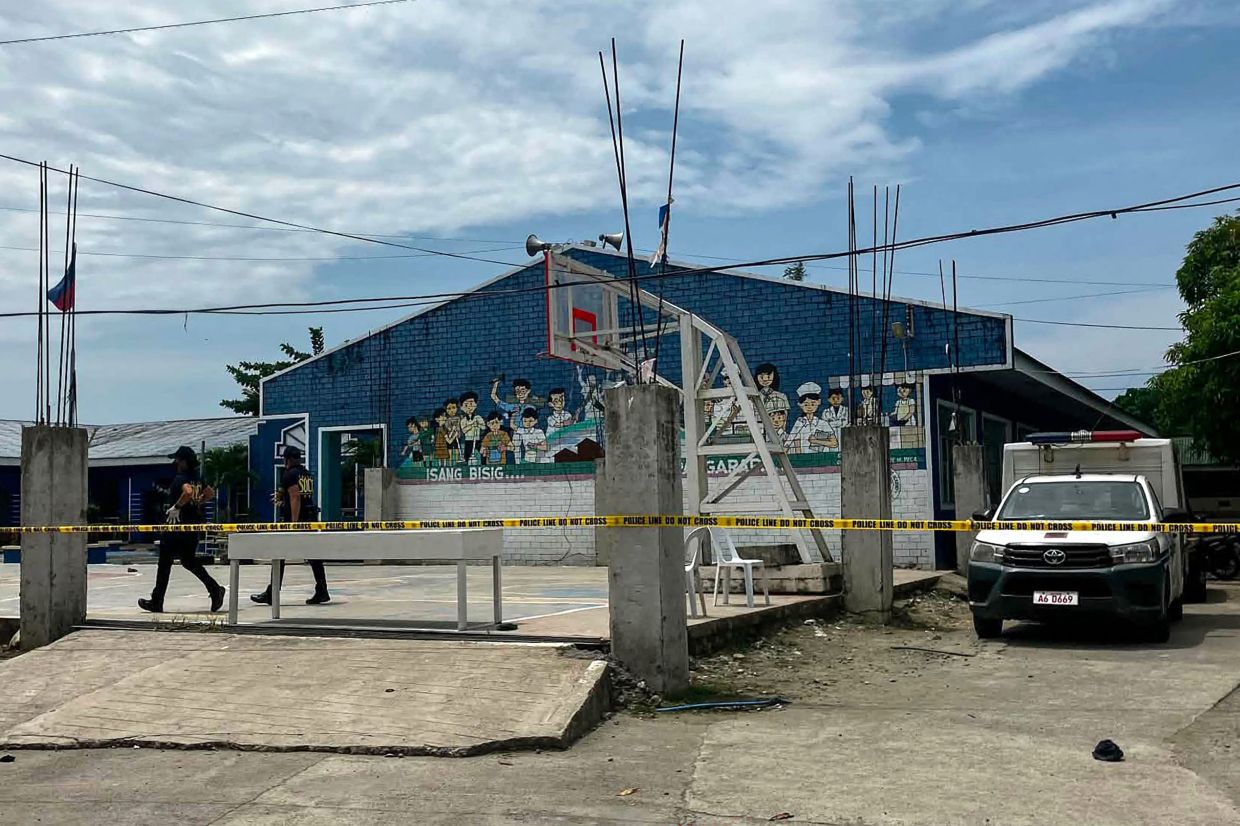
Shock reverberated through the Philippines following a mass shooting at San Jose National High School in Tacloban City on Monday morning, when two teenage students armed with handguns opened fire on their classmates, leaving three dead and seven wounded. The incident, occurring at a government school serving over 1,500 students, has prompted calls for heightened security measures across educational institutions nationwide and sparked investigations into the security lapses that allowed the attack to happen.
The two suspects, aged 14 and 15, were quickly apprehended following the attack. Regional police chief Brigadier General Jason Capoy explained that both shooters and their victims were enrolled at the same institution. During preliminary interrogation, the suspects indicated they had experienced bullying at school, though Capoy did not provide further details regarding their specific grievances or interactions with other students. Neither suspect had prior criminal records, a fact that raises questions about whether warning signs were missed in the lead-up to the violence.
The weapons used in the attack originated from separate sources and highlight concerning gaps in firearm regulation and safeguarding protocols. One of the suspects obtained a 9 millimetre pistol from his aunt, a police officer, who now faces investigation for failing to secure the weapon properly. The second suspect wielded a calibre 38 revolver of undetermined provenance. The ability to smuggle both firearms into the school campus revealed a critical vulnerability in the institution's security infrastructure. With only a single guard stationed to monitor multiple entry and exit points across the sprawling campus, the armed teenagers encountered minimal resistance as they carried out their assault.
The shooting unfolded in a calculated and methodical manner. After the initial volley of gunfire erupted in one classroom, panicking students scattered throughout the building seeking safety. The two suspects pursued fleeing victims into an adjacent room, expanding the casualty zone. Police recovered at least forty shell casings at the scene, suggesting an extended barrage of sustained fire. The majority of those killed and injured were female students, a demographic breakdown that underscores the indiscriminate nature of the violence.
Harrowing footage captured on mobile phones documented the terror experienced by students trapped in classrooms as gunfire erupted nearby. Videos show frightened teenagers cowering beneath desks, their screams and sobs audible over the sounds of repeated gunshots. Some students desperately called their mothers, seeking reassurance and connection as danger closed around them. Additional footage reveals streams of panicked young people evacuating the campus, many clinging to one another for psychological comfort and physical protection.
The capture of both suspects followed different trajectories. One of the shooters was apprehended immediately at the school following the attack, offering little resistance to arrest. His accomplice, however, managed to flee the campus and sought refuge in a neighbouring house. Police located the fugitive after residents in the area reported suspicious activity, demonstrating how community alertness can assist law enforcement in critical situations. Both teenagers now face interrogation as authorities attempt to construct a comprehensive timeline and establish the full motivations behind the assault.
President Ferdinand Marcos Jr. has moved swiftly to respond to the tragedy, ordering comprehensive investigations into how the shooting occurred and what systemic failures enabled it. Communications Undersecretary Claire Castro conveyed the president's distress regarding the incident, acknowledging the profound grief and anxiety felt by the victims' families and the wider school community. The presidential directive extends beyond San Jose National High School, with authorities instructed to strengthen security protocols across all educational facilities, government offices, and public gathering places throughout the nation.
The legal framework governing the prosecution of the suspects presents a significant complication. Under the 2006 Philippine law on juvenile justice, the 14-year-old suspect is exempt from criminal liability, as the minimum age of criminal responsibility stands at fifteen years old. The 15-year-old may potentially face prosecution only if investigators establish that the individual comprehensively understood the gravity of the crime and fully grasped the legal consequences of their actions. Both teenagers will ultimately be transferred to government welfare and rehabilitation officers for processing through the juvenile justice system rather than the criminal courts.
While firearms-related crimes remain endemic across Philippine society, fuelled by widespread circulation of unlicensed weapons and weak enforcement of gun control legislation, school shootings occupy a distinctly rare category within the nation's crime landscape. The Philippines has experienced sporadic incidents of armed violence in educational settings, but such occurrences remain uncommon relative to other forms of criminal activity. A notable precedent occurred in 2022, when a gunman attacked De La Salle University in the Manila metropolitan region during graduation proceedings, fatally shooting a former municipal official and two others in what authorities characterised as a premeditated act stemming from a long-standing personal vendetta. That assailant was captured at the scene.
The Tacloban shooting underscores persistent vulnerabilities in institutional security and raises difficult questions about early intervention in youth mental health and conflict resolution. Authorities have urged the public to remain composed and cooperate with ongoing investigations by submitting relevant information. The incident will likely intensify debate within policy circles regarding the balance between maintaining secure educational environments and preserving the open, accessible character of public schools. For Malaysian observers, the tragedy serves as a sobering reminder of how bullying and peer conflict, if left unaddressed, can escalate into devastating violence, and how systemic weaknesses in security and oversight can transform isolated incidents into mass casualty events.