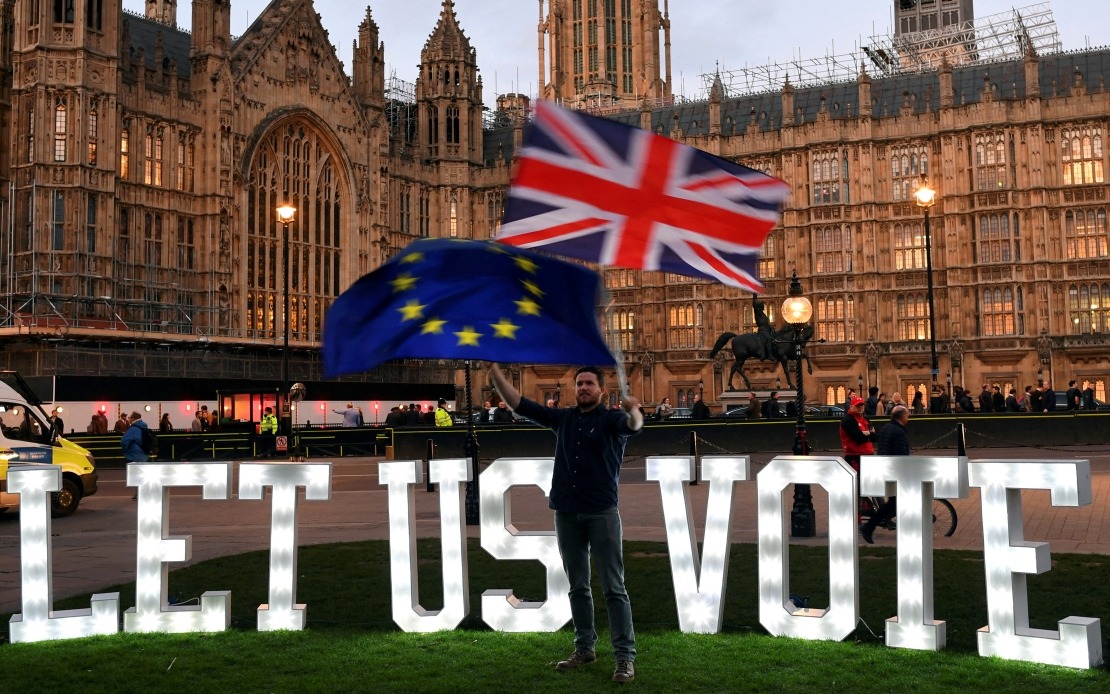
Britain's departure from the European Union appears destined to remain permanent, according to Richard Balfe, a prominent Conservative peer in the House of Lords, despite expectations that a new government may reconsider the country's fractious relationship with Brussels. Speaking to international news outlets, Balfe acknowledged that while efforts to undo Brexit might materialise under fresh political leadership, such attempts would likely prove unsuccessful in practical terms, reflecting the entrenched nature of Britain's exit from the bloc and the political divisions that persist around the issue.
The assessment comes at a pivotal moment for UK governance. Prime Minister Keir Starmer announced on Monday his decision to step aside as Labour Party leader while maintaining his position as prime minister until his successor takes office. The party's election process to select a replacement will commence on July 9 and conclude before Parliament returns in September, setting the stage for a potential change in the country's highest office and, consequently, its European strategy.
Balfe's cautious outlook reflects a broader scepticism about reversing a decision that has defined British politics for nearly a decade. Rather than anticipating dramatic policy shifts, the peer suggested the incoming administration would adopt a pragmatic approach of "muddling along"—a characteristically British formulation describing incremental problem-solving without grand vision. More significantly, he predicted that the new government would ultimately align Britain's trajectory with American strategic interests, suggesting geopolitical considerations rather than European integration may increasingly shape UK foreign policy.
The timing of Balfe's comments carries particular resonance as Britain commemorates June 23, marking ten years since the referendum that fractured the nation. In that 2016 ballot, just over half of British voters—52 per cent—endorsed withdrawal from the EU, a decision that would reshape decades of institutional alignment and trading relationships. The referendum result reflected deep regional and demographic divisions that continue to echo through contemporary British politics, making reversal extraordinarily difficult from both a parliamentary and public opinion standpoint.
The formal mechanics of Brexit unfolded over subsequent years with grinding inevitability. On January 31, 2020, the United Kingdom formally severed its 47-year membership in the European bloc, becoming the first nation to exit the union. This moment represented not merely administrative transition but a symbolic rupture with the post-war European project that had defined Britain's international positioning.
The transition arrangements that followed created a peculiar liminal space where British territory remained subject to EU regulations and citizens enjoyed streamlined travel protocols, effectively postponing the full consequences of separation. This arrangement persisted until December 31, 2020, after which a comprehensive trade and cooperation agreement took effect on January 1, 2021. The new framework eliminated preferential trading access and imposed customs formalities that fundamentally altered centuries of established commercial patterns.
The economic consequences have proven substantial and measurable. The Financial Times documented that Britain's role as a major international trade hub had been significantly diminished by its departure, while investment in British enterprises faced fresh complications and increased costs. These dynamics suggest that any future government considering reversal would confront not merely political obstacles but deeply embedded structural changes in supply chains, regulatory frameworks, and investor confidence—obstacles that neither rhetoric nor legislation alone could readily overcome.
Balfe's assessment implicitly acknowledges these realities. The notion that a new prime minister might enthusiastically champion renewed EU membership appears politically implausible, given that such a reversal would require either a second referendum—itself deeply divisive—or parliamentary action that would invite accusations of overturning the democratic will expressed in 2016. The political capital required to attempt such a reversal, combined with the genuine uncertainty about whether public opinion has shifted sufficiently, renders the enterprise formidable.
For Malaysian and Southeast Asian observers, the British situation offers instructive parallels regarding the durability of major geopolitical decisions once implemented. Britain's experience demonstrates how referendum-driven choices, particularly those rooted in identity and sovereignty concerns rather than technical policy adjustments, acquire momentum and constituencies that make reversal extraordinarily difficult even when economic evidence mounts that the original choice was economically damaging. The entrenchment effect visible in British politics—where continued friction with EU arrangements paradoxically hardens positions on both sides rather than generating consensus for resolution—speaks to psychological and institutional factors that transcend cost-benefit analysis.
The prospect of Britain gravitating toward American alignment rather than European reintegration, as Balfe suggests, would represent a distinct strategic reorientation with implications extending across the Atlantic alliance and global trade arrangements. Such a trajectory would further embed Britain's distance from European structures and potentially influence how Britain engages with other relationships, including those throughout Asia and the Pacific region where Malaysia and other ASEAN nations conduct increasingly important trade and diplomatic activities.
Ultimately, Balfe's prognosis suggests that while incoming British leadership may attempt minor accommodations with the EU or subtle policy adjustments, the fundamental architecture of Brexit will endure. The new government, rather than attempting dramatic reversals, will likely focus on managing the consequences of the original decision and negotiating the least unfavourable terms within the constraints that exit has established. This trajectory reflects not just political prudence but the hardening reality that some decisions, once implemented at scale, acquire their own stubborn permanence regardless of subsequent regret or recognition of their costs.