The United Kinabalu Progressive Organisation (UPKO) has formally accepted membership within Gabungan Rakyat Sabah (GRS), marking a consolidation of political forces within the state's unique coalition structure. The decision represents UPKO's strategic alignment with the dominant coalition architecture in Sabah, where locally-rooted parties have historically played a defining role in state politics. The party's accession was formally confirmed following official receipt of its application, with UPKO's leadership expressing unwavering commitment to buttressing GRS initiatives across the administration and development agenda under Chief Minister Datuk Seri Hajiji Noor's stewardship.
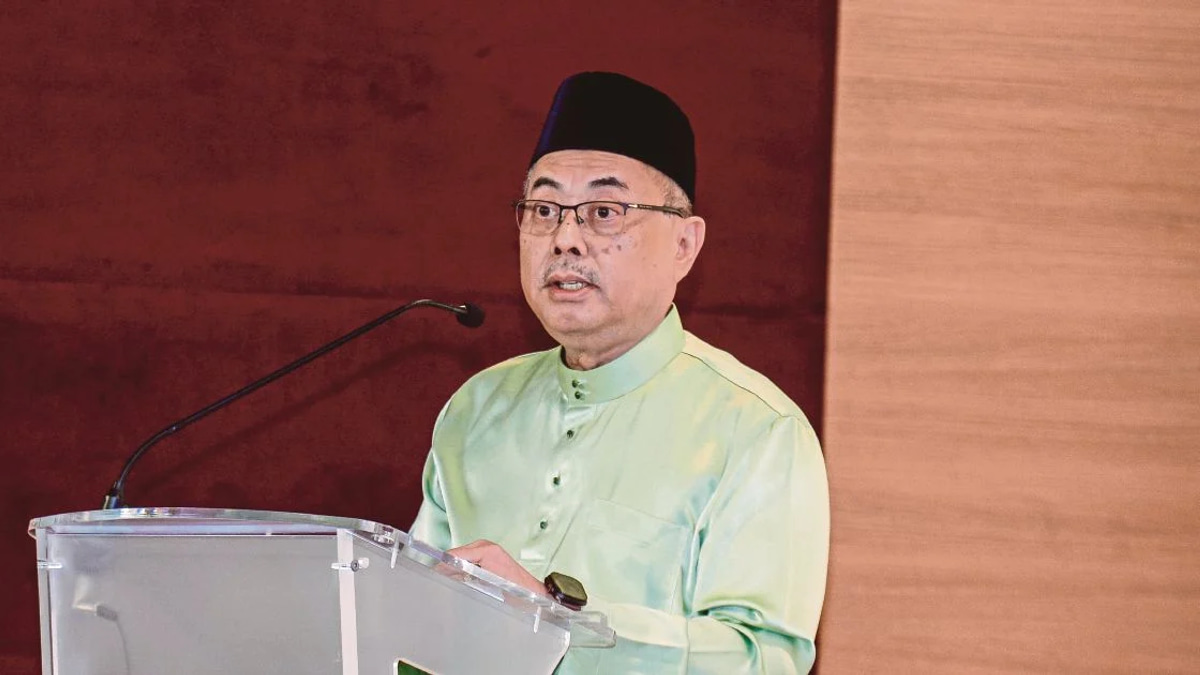
UPKO President Datuk Ewon Benedick, who holds the position of Sabah Deputy Chief Minister, articulated the party's strategic rationale for joining GRS. He emphasized that the coalition represents the authentic political vehicle for Sabah-based organisations, arguing that only indigenous state parties possess the organic understanding necessary to advance the territory's particular interests and developmental trajectory. This framing reflects a broader philosophy within Sabah's political discourse: that state-level formations, grounded in local constituencies and historical experience, should maintain primacy in determining the state's governance direction. Ewon's pronouncement carries particular weight given his ministerial standing, signalling that UPKO's leadership sees tangible opportunity within the expanded coalition structure.
Ewon extended formal gratitude to Hajiji in his dual capacity as GRS chairman and Supreme Council representative, acknowledging the coalition's receptiveness to UPKO's application. This ceremonial recognition underscores the hierarchical nature of coalition politics in Sabah, where the chief minister's approval carries decisive weight in determining membership composition. The Sabah Deputy Chief Minister's public appreciation also serves to legitimise the coalition's expansion narrative, presenting growth as organic and consensual rather than coercive or opportunistic. Such protocol matters significantly in Malaysian state politics, where symbolic recognition of leadership authority influences grassroots perceptions of coalition stability.
Central to UPKO's positioning is the invocation of the Malaysia Agreement 1963 (MA63), the foundational constitutional arrangement that established Sabah's entry into the Malaysian federation alongside Sarawak. Ewon contended that only locally-constituted Sabah parties genuinely comprehend the implications and requirements flowing from MA63, particularly regarding state autonomy, resource management, and developmental priority. This rhetorical strategy taps into enduring Sabah sensitivities around federalism and state rights, presenting GRS as the custodian of MA63 principles against potential encroachment from Peninsular-based formations. For Malaysian readers outside Sabah, this emphasis reveals how state-specific constitutional narratives shape coalition building and political legitimacy calculations within East Malaysia's two territories.
The coalition has articulated an overarching vision encapsulated in the phrase "Sabah First, Sabah Prosper, Sabah United," a framework designed to subsume diverse party interests beneath a singular state-centric identity. UPKO's accession signals endorsement of this integrative vision, effectively positioning the party as contributor to rather than competitor within the existing power structure. This unifying language serves multiple constituencies simultaneously: it reassures traditional GRS supporters that expansion strengthens rather than dilutes coalition coherence, while offering UPKO members a narrative of purposeful participation in state-building rather than marginal affiliation. The slogan's emphasis on unity particularly resonates in Sabah's ethnically diverse landscape, where appeals to territorial solidarity can transcend communal or sectional grievances.
With UPKO's entry, GRS now encompasses six component parties: the original foundation parties—Parti Gagasan Rakyat Sabah, Parti Bersatu Sabah, Parti Liberal Demokratik, Parti Harapan Rakyat Sabah, and Parti Cinta Sabah—plus the newly incorporated UPKO. This roster reflects the incremental coalition-building characteristic of Sabah politics, where the inclusion of regionally-rooted formations strengthens the governing coalition's territorial reach and legitimacy claims. The expansion through selective recruitment suggests confidence in the coalition's viability and appeal, particularly where smaller or struggling parties seek institutional security and resource access through larger formations. For analysts monitoring Sabah's political trajectory, coalition expansion serves as a barometer of incumbent confidence and organisational health.
UPKO's membership carries implications for Sabah's competitive political landscape, as the party's accession removes a potential challenger from independent operation or alternative coalition arrangements. The move consolidates GRS dominance by integrating parties that might otherwise contest state and federal elections as competing entities. This absorption reflects broader Malaysian coalition dynamics, wherein smaller formations increasingly opt for security through merger rather than pursuing standalone viability. For UPKO members, the arrangement offers ministerial access, campaign infrastructure, and the legitimacy conferred by majority status, while extracting the price of subordination to coalition discipline and decision-making hierarchies.
The timing of UPKO's formal entry into GRS carries electoral significance given Malaysia's five-year parliamentary cycle and Sabah state assembly term structures. While no state election is imminent, political organisations constantly position themselves for upcoming electoral contests. UPKO's integration ahead of any campaign consolidates the coalition's preparation and suggests confidence in sustained dominance. This pre-emptive coalition building differs from crisis-driven reorganisations elsewhere in Malaysia, instead reflecting calculated strategic investment in coalition depth and resilience.
Ewon's public articulation of UPKO's commitment, particularly his emphasis on collective effort and shared vision, indicates the coalition's intention to present itself as harmonious and forward-focused rather than fractious or reactive. The Deputy Chief Minister's specific invocation of Hajiji's leadership role and the coalition's dedication to state development serves to legitimise existing hierarchies while framing UPKO's membership as voluntary alignment with proven governance. Such public positioning matters substantially for coalition cohesion, as parties entering established formations require narrative framing that justifies their prior independence and validates their new subordinate status. Successfully managed coalition expansion enhances majority stability, whereas poorly presented integrations risk creating festering grievances among newly absorbed memberships.
Looking forward, UPKO's entry signals GRS's confidence in its ability to govern effectively and inclusively across diverse constituencies and party ideologies. The coalition's openness to expanding membership suggests organisational flexibility and confidence that additional parties enhance rather than complicate governance. However, coalition expansion invariably creates pressure points as diverse party interests, leadership ambitions, and resource demands compete within expanded decision-making frameworks. Whether GRS successfully absorbs UPKO while maintaining coherence depends substantially on the coalition's institutional mechanisms for managing intra-coalition disputes and allocating political goods equitably.
For the broader Malaysian political system, Sabah's coalition dynamics offer instructive contrast to Peninsular formations. East Malaysian political arrangements, less dependent on federal-level factional disputes and more anchored to territorial autonomy concerns, have historically displayed greater stability through long-serving chief ministers and institutionalised coalition structures. UPKO's integration appears consistent with this trajectory, suggesting Sabah's political class continues prioritising state-level unity over federal fragmentation dynamics. This regional political differentiation reinforces East Malaysia's distinctive position within Malaysian federalism, where state-first orientations remain politically paramount despite pressures toward greater federal integration.
%22%2F%3E%3C%2Fpattern%3E%3C%2Fdefs%3E%3Crect%20width%3D%22100%25%22%20height%3D%22100%25%22%20fill%3D%22url(%23ph4s0lhg)%22%2F%3E%3Crect%20width%3D%22100%25%22%20height%3D%22100%25%22%20fill%3D%22url(%23ph4s0lhp)%22%2F%3E%3Ctext%20x%3D%2250%25%22%20y%3D%2250%25%22%20text-anchor%3D%22middle%22%20dominant-baseline%3D%22central%22%20fill%3D%22rgba(255%2C255%2C255%2C0.95)%22%20font-family%3D%22Georgia%2C%20'Times%20New%20Roman'%2C%20serif%22%20font-weight%3D%22700%22%20font-size%3D%22194%22%20letter-spacing%3D%22-0.02em%22%3ETeacher%3C%2Ftext%3E%3C%2Fsvg%3E)
%22%2F%3E%3C%2Fpattern%3E%3C%2Fdefs%3E%3Crect%20width%3D%22100%25%22%20height%3D%22100%25%22%20fill%3D%22url(%23ph2zazsg)%22%2F%3E%3Crect%20width%3D%22100%25%22%20height%3D%22100%25%22%20fill%3D%22url(%23ph2zazsp)%22%2F%3E%3Ctext%20x%3D%2250%25%22%20y%3D%2250%25%22%20text-anchor%3D%22middle%22%20dominant-baseline%3D%22central%22%20fill%3D%22rgba(255%2C255%2C255%2C0.95)%22%20font-family%3D%22Georgia%2C%20'Times%20New%20Roman'%2C%20serif%22%20font-weight%3D%22700%22%20font-size%3D%22136%22%20letter-spacing%3D%22-0.02em%22%3EProsecuti%E2%80%A6%3C%2Ftext%3E%3C%2Fsvg%3E)