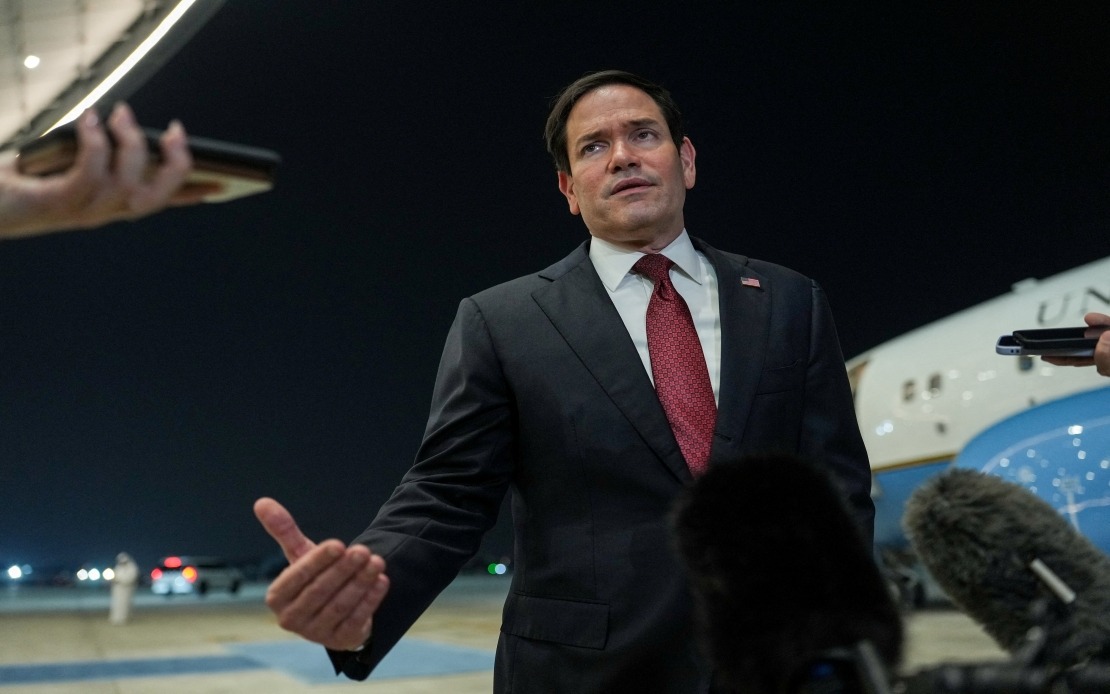
United States Secretary of State Marco Rubio clarified on Tuesday that while discussions around potential reconstruction efforts in Iran remain preliminary, direct American government investment in such initiatives will not materialise. Speaking to reporters in Washington, Rubio emphasised that any financial contributions toward rebuilding would come from other sources, particularly Gulf states that have been mentioned as potential investors in the framework.
The remarks come as diplomatic momentum builds between Washington and Tehran following their Sunday talks in Burgenstock, Switzerland, where both nations were represented by senior delegations. The US team was led by presidential envoy J.D. Vance, while Iran's parliamentary speaker Mohammad Bagher Ghalibaf headed the Iranian contingent. Qatar and Pakistan served as mediators in the negotiations, reflecting their historical roles as bridge-builders in regional disputes.
Rubio's statement addresses speculation that has circulated regarding a substantial reconstruction package, particularly following reports last week of a purported $300 billion fund. President Donald Trump himself dismissed these reports as premature and inaccurate, underscoring the administration's cautious approach to any financial commitments. The secretary of state's comments suggest the US position remains firm: any economic opportunities extended to Iran will depend on broader security considerations rather than immediate reconstruction pledges.
The diplomatic engagement between Washington and Tehran represents a significant shift in their adversarial relationship. Last week, both countries remotely signed a memorandum establishing an end to military hostilities that had escalated from February 28 onwards. This framework represents the most substantial agreement between the two nations in recent years, signalling potential movement toward normalisation despite decades of tensions.
The memorandum includes concrete timelines addressing longstanding friction points between the nations. The United States has committed to lifting its naval blockade, while Iran has agreed to restore normal shipping operations through the Strait of Hormuz—a critical waterway handling approximately one-third of global seaborne traded oil. Such arrangements carry profound implications for regional stability and international energy markets, making them of significant concern to Malaysia and other Southeast Asian nations dependent on uninterrupted maritime trade.
Crucially, Iran has also committed to refraining from acquiring nuclear weapons capability, an issue that has dominated bilateral and international discussions for two decades. Rather than resolving this matter immediately, the parties have established a 60-day negotiating window to develop a comprehensive nuclear agreement. This phased approach reflects the complexity of the nuclear issue and the need for detailed verification mechanisms that would address concerns from both nations and their respective allies.
Rubio's distinction between government funding and potential private sector investment signals Washington's preference for market-driven economic engagement rather than direct state involvement in Iran's reconstruction. This approach aligns with the broader Trump administration philosophy favouring private enterprise over government spending. However, it also reflects Washington's desire to maintain diplomatic leverage, linking any substantial economic benefits to continued Iranian compliance with security agreements and nuclear undertakings.
For Southeast Asian observers, the unfolding Iran-US negotiations carry multiple dimensions worth monitoring. Regional energy security depends partly on stability in the Persian Gulf and the freedom of navigation through the Strait of Hormuz. Additionally, any reconstruction programme in Iran could create business opportunities for Malaysian and other regional companies, provided sanctions regimes are appropriately modified. The telecommunications, construction, and manufacturing sectors may particularly benefit from increased Iranian market access if political conditions permit.
The involvement of Qatar and Pakistan as mediators underscores how regional powers continue shaping outcomes in West Asian geopolitics. Malaysia's own diplomatic efforts in fostering dialogue between different nations suggest possibilities for greater regional involvement should tensions continue easing. However, the current trajectory remains uncertain, with security concerns and nuclear weapons programmes still requiring substantial negotiation.
Rubio's conditional framing—that economic opportunities depend on progress on multiple security fronts—indicates the administration views reconstruction as a potential incentive rather than an immediate commitment. This leverage-based diplomacy suggests Washington intends to maintain pressure on Iranian compliance throughout the coming months. The 60-day nuclear negotiation window will serve as a critical test of whether both nations can sustain their recent breakthrough momentum or whether technical disagreements will derail the emerging détente.
The financial architecture for any Iran reconstruction will likely emerge gradually as negotiations advance. Rather than a single grand fund, multiple bilateral arrangements between Tehran and interested parties—whether Gulf states, European nations, or private investors—may develop incrementally. Malaysia and other ASEAN members should position themselves to understand these evolving arrangements, particularly regarding sanctions modifications and commercial opportunities that might emerge alongside diplomatic progress.
For now, Rubio's statement represents the Trump administration's clear signal that while the US supports diplomatic engagement and may facilitate negotiations, it will not subsidise Iranian reconstruction through direct government funding. This position preserves American flexibility while encouraging other interested parties to consider their own participation, creating a distributed responsibility model for post-conflict economic revitalisation that depends substantially on Iranian compliance with international security commitments.