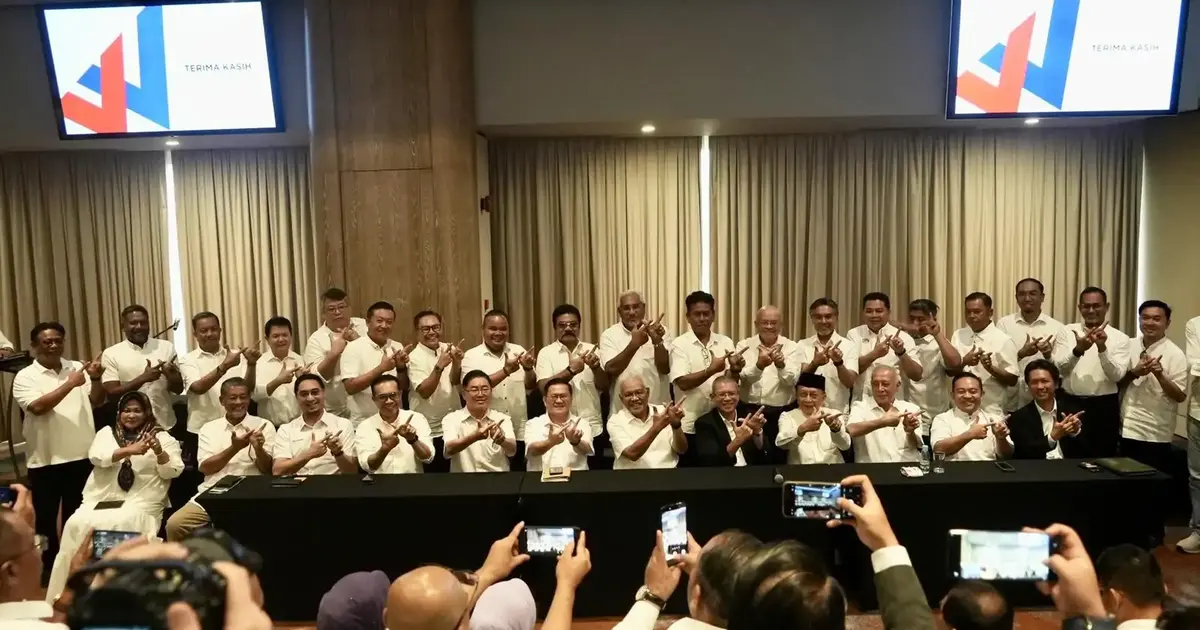
Perikatan Nasional's election director Sanusi has clarified that the decision to admit Wawasan into the opposition coalition followed established democratic procedures, with the ruling made through a majority vote at the Supreme Council level. This confirmation comes as the three-coalition bloc navigates internal tensions over expanding its membership ahead of upcoming electoral contests. The statement underscores how PN, despite its reputation as a more loosely bound political structure compared to the ruling Barisan Nasional, operates through formal institutional channels when making significant strategic decisions.
While acknowledging that Bersatu, one of PN's core component parties, had formally objected to Wawasan's inclusion, Sanusi stressed that the coalition's democratic processes allowed the broader membership to override individual party reservations. This distinction between party-level concerns and coalition-level decisions reflects the complex architecture of Malaysian coalition politics, where multiple organisations must negotiate shared interests whilst maintaining their separate political identities. The episode illustrates both the flexibility and the potential friction points within PN's governance structure.
Bersatu's resistance to Wawasan's entry appears rooted in strategic calculations about seat allocation and the distribution of electoral opportunities within PN's structure. The party, which has emerged as a significant force within the opposition coalition since its formation, likely fears that incorporating additional partners could dilute its negotiating position when determining candidate placements for federal and state elections. Such concerns are not unusual in Malaysian coalition politics, where parties jealously guard their territorial strongholds and electoral prospects, making negotiations over new memberships inherently contentious.
Wawasan's admission into PN represents a broader attempt by the opposition coalition to consolidate political forces and present a more unified challenge to the governing coalition. By expanding its membership, PN seeks to project strength and inclusivity, potentially attracting voters who perceive the coalition as a dynamic and growing political force. However, each new entrant inevitably reshapes internal power dynamics and complicates already delicate negotiations over resources, campaign strategies, and policy positions that coalition partners must harmonise.
For Malaysian readers and political observers, this episode highlights a fundamental tension within opposition politics: the desire to build broader coalitions capable of competing nationally must be balanced against the self-preservation instincts of existing coalition members. Bersatu's position reflects legitimate concerns about institutional stability and fair representation, even as the majority vote demonstrates that PN's decision-making mechanisms can produce binding outcomes when consensus proves elusive. This is instructive for understanding how Malaysian political coalitions function beyond the rhetorical claims of unity that party leaders typically emphasise in public statements.
The Supreme Council's majority vote mechanism provides PN with a structure for resolving disputes when component parties cannot agree, though such decisions inevitably leave disappointed parties nursing grievances. Bersatu's documentation of its objection, despite the unfavourable outcome, allows the party to maintain a public record of its position, potentially useful for future negotiations or if the Wawasan arrangement produces negative electoral consequences. This strategic behaviour is common in Malaysian coalition politics, where parties manage internal dissatisfaction whilst maintaining public displays of unity.
Wawasan's entry into the coalition also reflects broader patterns in Malaysian politics where new organisations or previously independent political actors seek alignment with established coalitions to enhance their electoral viability and policy influence. The mechanics of how such entities gain acceptance reveal much about power distribution within coalitions and the relative influence of individual component parties. Sanusi's confirmation that proper procedures were followed suggests PN leadership is keen to establish legitimacy for the decision and discourage further internal contestation.
The timing of this admission warrants consideration within the context of Malaysia's electoral calendar and strategic positioning. Opposition coalitions typically seek to strengthen their composition ahead of major electoral contests, and Wawasan's integration may be calculated to address perceived gaps in PN's appeal or geographical reach. Understanding the specific contributions Wawasan brings—whether organisational capacity, voter demographics, or geographic influence—helps explain why the majority of Supreme Council members deemed the admission strategically worthwhile despite Bersatu's objections.
For Southeast Asian observers, this Malaysian case study illustrates how opposition coalitions in competitive political systems manage growth and internal disputes through formal institutional mechanisms. The balance between inclusive expansion and preservation of existing members' interests remains perpetually challenging, and no perfect resolution exists. PN's approach through majority voting demonstrates one method, though it inevitably generates tensions that must be managed through ongoing negotiation and relationship-building among coalition partners who must ultimately work together in elections and governance.