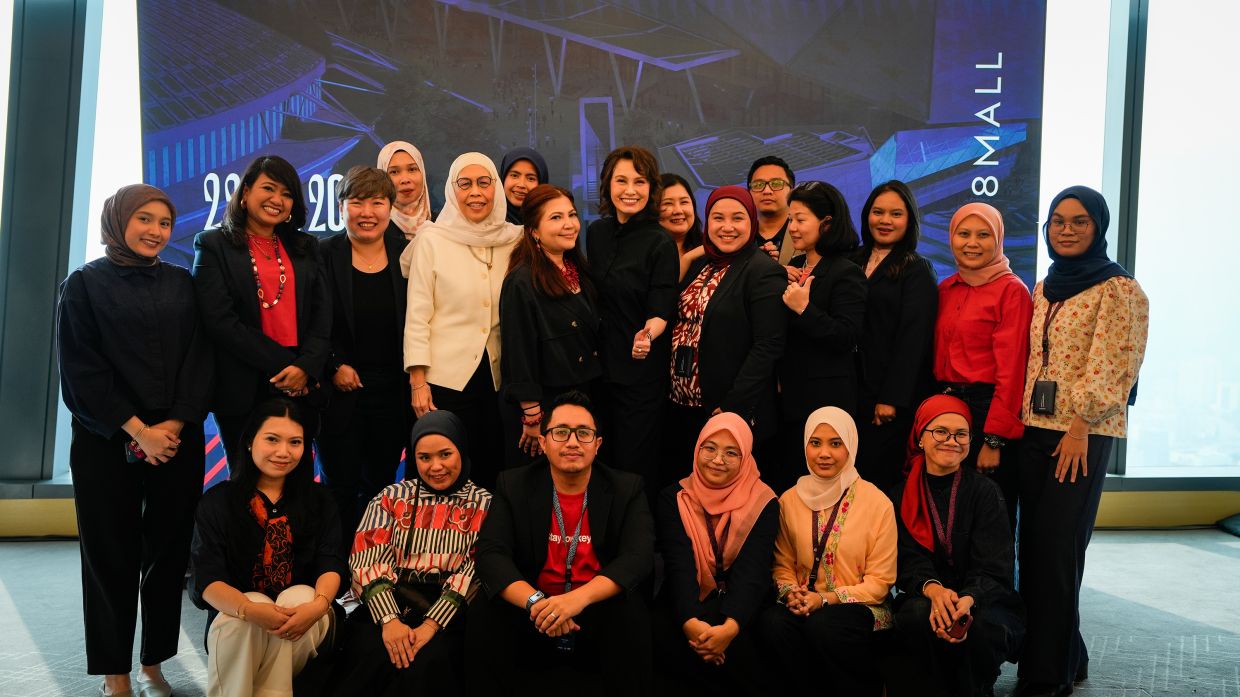
118 Mall has convened its retail community for the first time, assembling more than 200 store partners at Park Hyatt Kuala Lumpur to preview the seven-storey shopping destination set to commence operations in November 2026. The inaugural Retailers' Get-Together represents a crucial milestone in the project's development, allowing participating merchants to engage directly with the mall's leadership and gain insight into operational frameworks and commercial opportunities ahead of the formal opening.
The gathering drew a diverse array of retailers spanning multiple categories, including established local names such as Village Grocer and Malaysian Artisan District alongside international fashion powerhouses adidas, ALDO, Converse, Guess, and Lacoste. Dining and lifestyle operators including Makanism Foodhall, CHAGEE Signature, and Benjamin Barker participated, along with electronics retailer Best Denki and speciality merchants such as BookXcess and Babyshop. This eclectic mix of tenants signals the mall's ambition to cater to both affluent shoppers seeking premium brands and everyday consumers seeking value and convenience.
According to Datuk Ir. Ts. Izwan Ibrahim, chief executive officer of PNB Merdeka Ventures Sdn Bhd, the entity overseeing the project, 118 Mall has been strategically positioned as an integral component of a much larger mixed-use ecosystem rather than a standalone retail property. The broader Merdeka 118 precinct incorporates hospitality facilities, tourism attractions, heritage components, and commercial office space, creating a multifunctional urban destination that extends beyond traditional shopping mall parameters. This integrated approach represents a shift away from conventional retail centres, which typically rely heavily on foot traffic generated by shopping alone.
The distinctive positioning of 118 Mall within this larger urban framework carries significant implications for retailers considering tenancy. Rather than depending primarily on local community shopping patterns or designated weekend leisure traffic, the mall anticipates drawing visitors from multiple demographic segments simultaneously. Hotel guests staying at the luxury hospitality component of Merdeka 118, corporate professionals occupying office towers, international tourists visiting heritage attractions, and local residents all converge within the same precinct, generating diverse consumer behaviour patterns and spending motivations throughout the week. This heterogeneous visitor base fundamentally alters retail merchandising strategies and tenant mix optimisation.
Sue Wang, 118 Mall's head of retail, disclosed that the facility will accommodate more than 300 individual retail outlets, with a dedicated section showcasing Malaysian Artisan District brands alongside international retailers. The prominence given to local artisan offerings within a major shopping destination reflects broader industry trends across Southeast Asia toward celebrating domestic design and craftsmanship, particularly among affluent consumers seeking authentic cultural experiences. The inclusion of M.A.D alongside global brands suggests a deliberate curatorial approach rather than a purely commercial tenant selection process.
The mall's revenue projections during the critical opening year underpin retail partner confidence levels. Management anticipates welcoming approximately 22 million visitors during the inaugural year of operations, a substantial volume that would position 118 Mall among Asia's highest-traffic retail destinations. For context, this projection suggests daily visitor volumes approaching 60,000 on average, though seasonal and day-of-week variations would likely prove substantial. The feasibility of achieving such visitor numbers hinges upon the successful activation of the broader Merdeka 118 precinct and seamless integration between retail, hospitality, and tourism components.
During the retailers' gathering, management briefed tenants on forthcoming marketing strategies and brand activation opportunities that would extend beyond conventional retail operations. Digital display infrastructure and dedicated event spaces within the mall would facilitate retailer-led promotional campaigns, product launches, and experiential marketing initiatives. This collaborative approach to marketing and promotion differs markedly from traditional landlord-tenant relationships, positioning 118 Mall management as active partners in driving retailer success rather than passive real estate operators. The provision of sophisticated marketing infrastructure acknowledges that foot traffic volume alone proves insufficient without effective merchandising and brand engagement strategies.
The timing of this inaugural retailers' gathering, held approximately eighteen months before scheduled opening, aligns with industry best practices for major shopping destination launches. Early engagement with confirmed tenants allows management to refine operational procedures, address merchant concerns, and build community among participating retailers. Additionally, merchants gain sufficient lead time to plan inventory procurement, staff recruitment, store design execution, and pre-opening marketing activities. For international brands expanding regional presence, such advance notification enables supply chain coordination across multiple markets.
The Merdeka 118 precinct itself represents a significant urban development initiative in Kuala Lumpur's business district. The integration of retail with hospitality, tourism, and commercial components reflects contemporary mixed-use development philosophy prevalent throughout Southeast Asia's major cities. Similar projects in Bangkok, Singapore, and Jakarta have demonstrated the commercial viability of such integrated approaches, though success depends critically upon achieving balanced tenant mix, operational coordination between diverse functional components, and sustained marketing effort. The scale of 118 Mall within this ecosystem—described as seven storeys housing over 300 outlets—positions it as a substantial regional retail operator.
For Malaysian consumers, the November 2026 opening of 118 Mall represents expanded retail choice and commercial activity within Kuala Lumpur's evolving commercial landscape. The inclusion of established local merchants alongside international brands suggests pricing and product range diversity that would appeal across income segments. For investors and property stakeholders, 118 Mall and the broader Merdeka 118 precinct demonstrate continued confidence in urban retail's viability despite ongoing e-commerce expansion. The magnitude of retail partner participation and the calibre of confirmed tenants suggest that traditional shopping centres maintain significant commercial relevance when thoughtfully designed and strategically positioned within larger urban ecosystems.
The event's success in assembling over 200 retail partners reflects broader confidence in the project's execution and commercial prospects. Retail operators typically commit to major new properties only after evaluating developer track records, financial stability, and market positioning. The participation of premium international brands such as adidas and Lacoste alongside diverse local merchants indicates that retailers across multiple market segments view 118 Mall as a viable investment opportunity. This consensus among industry participants serves as an informal validation of the project's fundamentals, though ultimate success will ultimately depend on execution across design, operations, marketing, and tenant support dimensions throughout the opening year and beyond.

