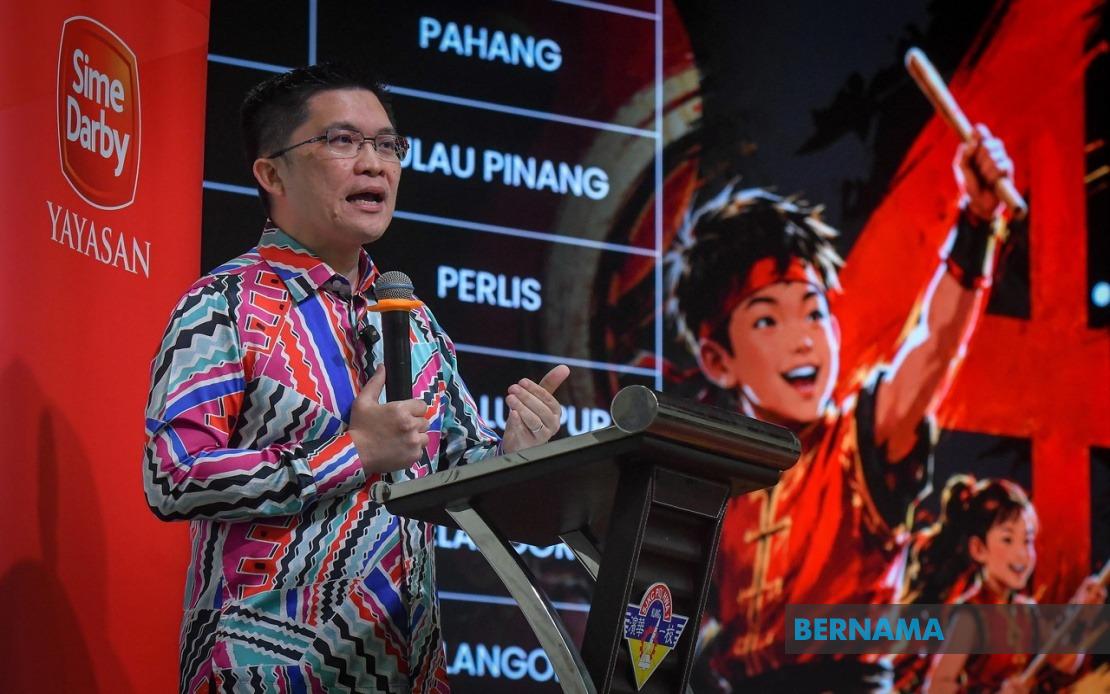
Sixteen primary school teams will participate in the inaugural National 24 Festival Drums Primary School Invitational Championship, marking a significant milestone for the promotion of Malaysia's distinctive cultural art form. The competition is scheduled for August 8 at Indera Mulia Stadium in Ipoh, Perak, and represents a concerted effort by the Education Ministry to elevate co-curricular activities whilst safeguarding national heritage through institutional support.
Deputy Education Minister Wong Kah Woh announced the championship during a press conference at SJKC Pin Hwa 1 in Shah Alam, emphasising that the event embodies the ministry's broader strategic vision. The championship is being jointly organised by the Education Ministry and the Malaysia 24 Festival Drums Association, demonstrating the collaborative approach taken towards sustaining indigenous performing arts in Malaysia's education system.
The 24 Festival Drums originated in Malaysia during 1988, emerging from Johor as a unique performing art form that combines percussion, movement, and cultural expression. This Malaysian creation has since gained recognition far beyond the nation's borders, expanding to international audiences including performers in China. The art form achieved formal acknowledgement within Malaysia when it was designated as a National Intangible Heritage in 2009, cementing its status as a protected and valued cultural asset.
Wong highlighted that the ministry's commitment to this performing art extends beyond ceremonial recognition. The Education Ministry has implemented multiple initiatives designed to promote and develop the 24 Festival Drums across schools, with the inaugural primary school championship representing a key component of this larger strategy. By institutionalising competitive platforms for young performers, the ministry aims to inspire sustained interest and participation among the next generation of Malaysian cultural practitioners.
The championship's accolade will bear the name of Tan Hooi Song Trophy, honouring the late co-founder of the 24 Festival Drums movement. This naming decision carries symbolic weight, acknowledging Tan's pivotal role in establishing and nurturing the art form during its formative years. Wong emphasised that recognising such cultural pioneers extends beyond personal tribute; it reinforces societal appreciation for the dedication required to create and establish cultural expressions that resonate both domestically and internationally.
Tan Hooi Song's contributions to the 24 Festival Drums movement proved foundational to its development as a distinctive Malaysian cultural heritage. By attaching his name to the championship trophy, the Education Ministry signals to participating students and school communities the human commitment and artistic vision underlying cultural creation. This approach transforms the competition into something more than a sporting event—it becomes an educational moment that connects young performers to the historical figures who shaped their cultural landscape.
The decision to host the championship in Ipoh reflects the growing geographic distribution of 24 Festival Drums programmes across Malaysia. By rotating major events to different regions, the ministry encourages broader participation from provincial schools and demonstrates that cultural development is not centralised to urban hubs. This strategy proves particularly important in a nation as geographically dispersed as Malaysia, where equitable access to cultural platforms strengthens national identity across diverse communities.
From a Southeast Asian perspective, Malaysia's formal institutional support for the 24 Festival Drums carries regional implications. As other nations increasingly seek to preserve and promote their own cultural heritage through education systems, Malaysia's model offers a template for successfully integrating contemporary yet authentically rooted performing arts into school curricula. The export of this art form to countries like China demonstrates how regional cultural expressions can achieve international currency without requiring wholesale Westernisation or dilution of local identity.
The participation of 16 primary school teams underscores growing institutional commitment to co-curricular development in Malaysian education. Rather than relegating cultural and performing arts to peripheral status, the Education Ministry's championship structure elevates these activities to competitive importance comparable to academic or athletic pursuits. This elevation acknowledges that cultural competence and artistic expression constitute essential components of holistic student development, particularly in building connections to national heritage.
The championship also reflects contemporary educational philosophy emphasising the interconnection between cultural learning and broader student outcomes. Research increasingly demonstrates that participation in performing arts strengthens cognitive development, improves discipline, and enhances collaborative skills—benefits that extend well beyond the performance itself. By sanctioning the 24 Festival Drums championship, the Education Ministry positions cultural engagement as integral to educational excellence rather than supplementary activity.
Looking forward, the success of this inaugural championship will likely influence the ministry's expansion plans for similar cultural competitions. As Malaysia continues negotiating its identity within an increasingly globalised world, institutional support for homegrown cultural forms provides counterbalance to external cultural pressures. The 24 Festival Drums, in particular, represents a modern Malaysian creation—neither colonial legacy nor direct import—making it symbolically powerful in discussions of authentic national identity.
The August championship also creates opportunities for schools to develop sustained 24 Festival Drums programmes beyond the competition itself. Schools that field teams typically develop dedicated rehearsal schedules, recruit interested students, and invest in training and equipment. This institutional infrastructure, once established, tends to persist beyond individual competitive events, creating lasting cultural capacity within educational institutions. The ripple effects of a single championship thus extend considerably beyond the Ipoh stadium event.
Ultimately, the inaugural National 24 Festival Drums Primary School Invitational Championship represents more than an administrative event. It constitutes a deliberate governmental statement about the value placed on Malaysian cultural heritage in the contemporary era. By mobilising the Education Ministry's resources and prestige to support this performing art, Malaysian leadership signals to young people and international observers alike that cultural preservation and innovation remain central to national development priorities.

