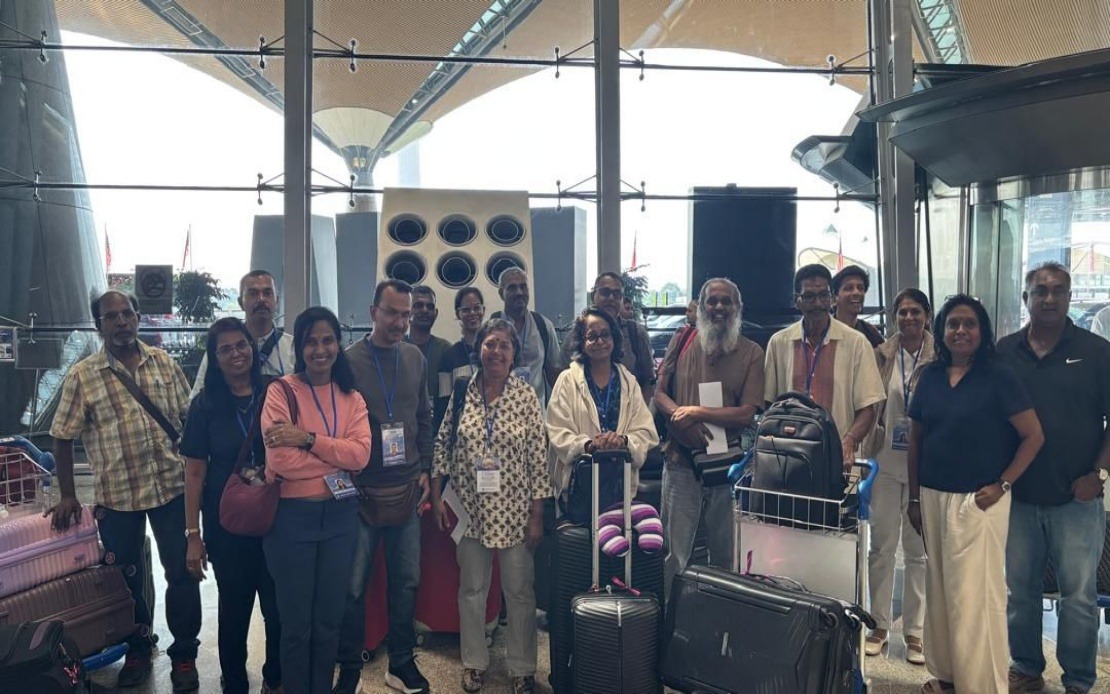
Seventeen Malaysians undertaking a spiritual pilgrimage to Mount Kailash in Tibet have become unreachable following catastrophic flash floods that swept through Nepal's borderlands on August 26, leaving families anxiously waiting for updates on their welfare. The pilgrims, organised through Nepal-based Fishtail Tours & Travels, lost all contact with the outside world shortly after 8 am Nepal time as they approached the Nepal-Tibet Immigration Checkpoint. The loss of communication has triggered immediate diplomatic intervention, with Prime Minister Datuk Seri Anwar Ibrahim directing all relevant government agencies to locate the missing Malaysians and establish their safety with urgency.
Among those unable to reach their loved ones is R. Logadashini, whose four family members form part of the stranded group. Her father S. Raman, aged 59, her mother M. Neelavany, 54, her uncle S. Murukan, 60, and her aunt G. Padmahwathi, 58, were all travelling as part of the pilgrimage scheduled to continue until September 5. The family's final WhatsApp communication arrived at approximately 8.40 am Malaysian time, after which all efforts to establish further contact with the tour operator and the Malaysian Embassy in Kathmandu proved unsuccessful. The sudden severing of all communication lines has intensified family concerns, particularly given the scale of the natural disaster unfolding in the region.
The Malaysian Ministry of Foreign Affairs has confirmed that a total of 55 Malaysians reported in the vicinity have become unreachable in the aftermath of the floods, though official confirmation of any casualties has not yet been received. The Malaysian Embassy in Kathmandu has been mobilised to work alongside Nepalese authorities and international search and rescue teams to trace the missing pilgrims and determine their current location and condition. Additionally, diplomatic staff at the Malaysian Embassy in New Delhi have been enlisted to support these efforts, recognising the scale of the emergency unfolding at the Nepal-Tibet frontier.
The disaster struck when intense rainfall combined with a sudden glacial collapse in Nepal's Rasuwa and Nuwakot districts, creating destructive flash floods that swept through the mountain passes. These floods obliterated communication infrastructure and rendered key highways impassable, effectively isolating the affected region from the capital, Kathmandu, and complicating rescue operations substantially. The area affected falls directly on the popular pilgrimage route to Mount Kailash and the trekking path leading towards Everest, making it a critical corridor during the peak mountaineering season when numerous international groups traverse the region.
For Malaysian families already accustomed to the inherent risks of high-altitude pilgrimage and mountaineering expeditions, the sudden loss of contact represents a distressing scenario that triggers immediate concern about safety and survival in one of Asia's most challenging terrains. The Nepal-Tibet border crossing, particularly during monsoon season when rainfall is intense and unpredictable, poses significant environmental hazards. The isolation caused by landslides and washouts means that even if the group has survived the initial flooding, rescue and assistance may prove difficult to coordinate until roads are restored and communication systems are reestablished.
However, reassurance has come from a separate Malaysian pilgrimage group led by renowned mountaineer Datuk N. Mohanadas, whose expedition has been confirmed safe and unharmed by the disaster. This group consists of 56 individuals comprising 39 Malaysians, four Singaporeans, and three Canadians, who were following a different route that was not affected by the flash floods. Mohanadas reported that despite being aware of the severe weather conditions and casualties occurring at the border crossing, his contingent has successfully initiated its sacred pilgrimage around Mount Kailash and continues without incident. The safety of Mohanadas's group, which was also in the vicinity at the time of the floods, suggests that location and timing determined exposure to the disaster rather than the presence of all Malaysian pilgrims in the region being universally affected.
The incident underscores the persistent dangers inherent in high-altitude spiritual journeys and trekking expeditions in the Himalayan region, where sudden weather changes and geological instability can rapidly transform routine travel into survival situations. Mount Kailash pilgrimages, deeply significant in Buddhist and Hindu traditions, attract thousands of devotees annually, including substantial numbers from Malaysia where such spiritual journeys hold considerable religious and cultural importance. The pilgrims typically undertake the journey during the brief window of stable weather in late summer and early autumn, yet even this carefully timed season can present unforeseen hazards.
The coordination of rescue efforts across international borders introduces additional complexity, requiring cooperation between Malaysian diplomatic representatives, Nepalese government agencies, and potentially Chinese authorities given that the pilgrims were destined for Tibetan territory. Communication breakdowns caused by infrastructural damage mean that search teams must rely on satellite technology, helicopter reconnaissance, and ground teams moving through affected areas to locate the missing group. The delay in establishing contact creates uncertainty about whether the group sheltered in place awaiting rescue or has become separated or injured.
This unfolding emergency highlights the importance of robust travel arrangements and crisis response protocols for Malaysian pilgrims undertaking journeys in remote international regions. Tour operators face scrutiny regarding their preparedness for extreme weather contingencies and their ability to maintain communication links with clients during challenging conditions. The incident will likely prompt reviews of travel advisories and safety guidelines for similar expeditions in Himalayan regions, particularly as climate change potentially increases the frequency and severity of extreme weather phenomena in mountain environments.
The families of the missing 17 have expressed frustration at the limited information flow from both the tour operator and official channels, though they acknowledge the unprecedented nature of the disaster and the significant challenge of coordinating responses across difficult terrain and international jurisdictions. Malaysia's diplomatic missions are expected to provide regular updates as the search and assessment operations proceed, with priority focus on establishing basic communication and confirming the group's location. For the broader Malaysian community engaged in pilgrimage tourism and mountaineering, this crisis serves as a sobering reminder of the fragility of human endeavour in extreme natural environments and the critical importance of comprehensive preparation and contingency planning.

