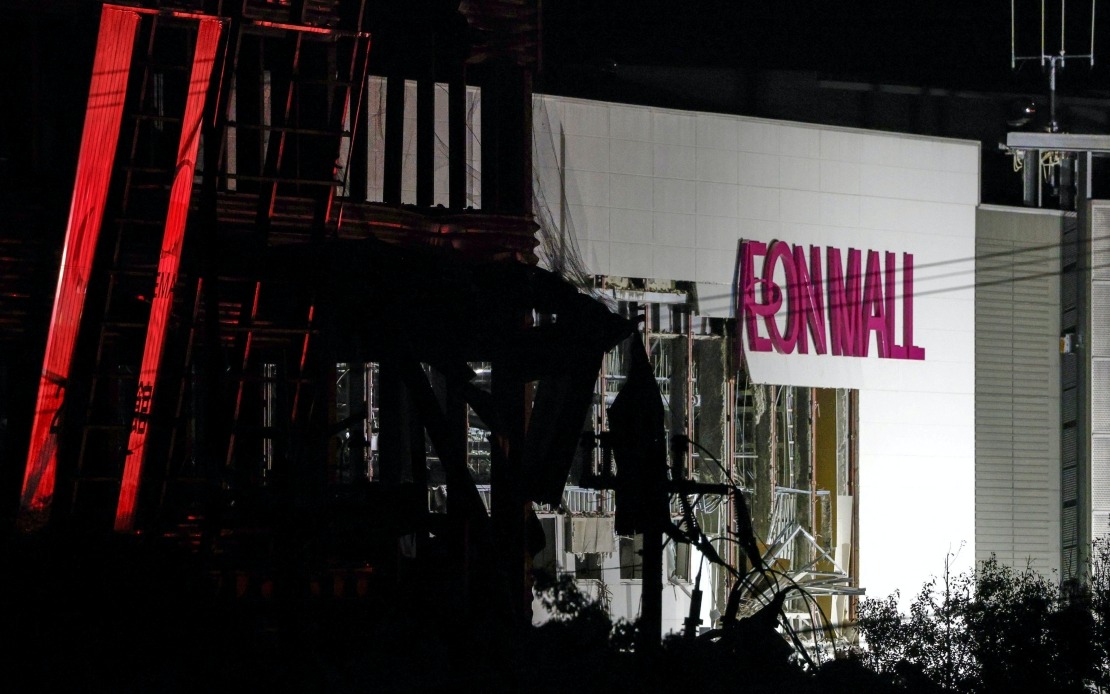
A major shopping complex in southwestern Japan descended into chaos on Tuesday afternoon when an explosion tore through Aeon Mall Kumamoto in Kashima Town, leaving between 20 and 30 employees unaccounted for in the aftermath. The incident unfolded just hours after a powerful earthquake had struck the Kumamoto Prefecture region, compounding rescue and recovery challenges for local authorities already stretched by the seismic disaster.
The National Police Agency confirmed that multiple individuals believed to be staff members of the mall have become unreachable since the explosion, which occurred at approximately 6 pm local time. Police and firefighting crews immediately mobilized search operations to determine whether any of the missing employees remain trapped within the severely damaged structure, treating the missing persons case as a matter of urgent priority as darkness fell across the prefecture.
While most shoppers had managed to evacuate to safety in outdoor areas before or immediately after the explosion struck, the exact status of customers among the missing remains unclear. Authorities have been unable to confirm whether all patrons successfully fled the premises or if some civilians are among those unaccounted for, creating uncertainty in the overall scope of the emergency response required.
The explosion represents only one dimension of a catastrophic sequence of events that began earlier in the afternoon. A magnitude-7.1 earthquake had rattled the southwestern Japanese prefecture at 4:27 pm local time, setting the stage for widespread damage and disruption across the region. In addition to the shopping mall incident, authorities reported that fewer than ten other individuals had become unaccounted for elsewhere in Kumamoto Prefecture as a direct result of the powerful tremor.
Broadcasters including TBS reported that multiple fatalities were feared in connection with the mall explosion, with police officials indicating their expectation of significant loss of life. A spokesperson for Kumamoto Prefectural Police stated that authorities anticipated "many fatalities" would ultimately be confirmed, though determining a precise death toll remained impossible during the initial chaotic phase of the emergency response. The cautious language reflected the unpredictable nature of search and rescue operations in partially collapsed or severely damaged structures.
The sequence of natural disaster followed by structural failure at a major commercial venue raises critical questions about building resilience and emergency preparedness in Japan's earthquake-prone southwestern regions. The Kumamoto area has experienced significant seismic activity in recent years, and the apparent vulnerability of a major shopping complex to secondary damage from explosion following earthquake shaking will likely prompt reviews of safety protocols and structural engineering standards.
For Malaysian readers and regional observers, the incident underscores how rapidly disasters can escalate when multiple hazards compound one another. The simultaneous occurrence of earthquake damage and a subsequent explosion at a crowded commercial location demonstrates the vulnerability of modern retail environments and the cascading risks that can emerge when primary disaster impacts trigger secondary failures in infrastructure or utilities. Southeast Asian nations similarly exposed to seismic and geological hazards may find instructive lessons in Japan's response coordination challenges.
The Aeon Mall chain operates numerous facilities throughout Southeast Asia, including several locations across Malaysia, making this incident particularly relevant to regional retail safety consciousness. The scale of the Kumamoto facility and the number of employees typically present during operating hours illustrates how rapidly a manageable evacuation scenario can become a complex mass casualty incident when infrastructure fails unexpectedly.
Rescue teams faced the dual challenge of locating trapped individuals while managing ongoing structural hazards in a building that had sustained both earthquake damage and explosion damage. The darkness following the evening incident added significant complications to search operations, as did the uncertainty regarding the precise location of individuals within the sprawling mall complex. Coordination between national police, local fire services, and other emergency responders became critical to maximizing the chances of locating survivors.
The incident also highlights how earthquake early warning systems, while valuable, cannot prevent all secondary disasters from unfolding. Even with Japan's sophisticated seismic monitoring and warning infrastructure, the lag between initial shaking and any subsequent structural or utility failures can create windows of vulnerability during which ordinary commercial operations might unwittingly trigger catastrophic secondary events such as explosions from ruptured gas lines or other infrastructure damage.
As details emerged throughout the evening, the humanitarian dimensions of the disaster became increasingly apparent. Families and friends of the missing workers faced an agonizing wait for information about their loved ones' fates, while rescue personnel worked against time in uncertain conditions. The psychological impact on survivors who escaped the mall, both customers and employees who watched colleagues become separated from them during evacuation, would likely persist long after physical damage had been repaired.

