The National Service Training Programme (PLKN) 3.0 will achieve a significant milestone when 200 of its newest alumni join the National Day parade in Putrajaya on August 31, representing the first occasion that trainees from this revamped initiative will march before the nation's highest-ranking officials and citizens. The selected participants will undergo intensive preparation at the parade venue, beginning the day after the announcement, to ensure their performance meets the standards expected for Malaysia's most prominent civic ceremony.
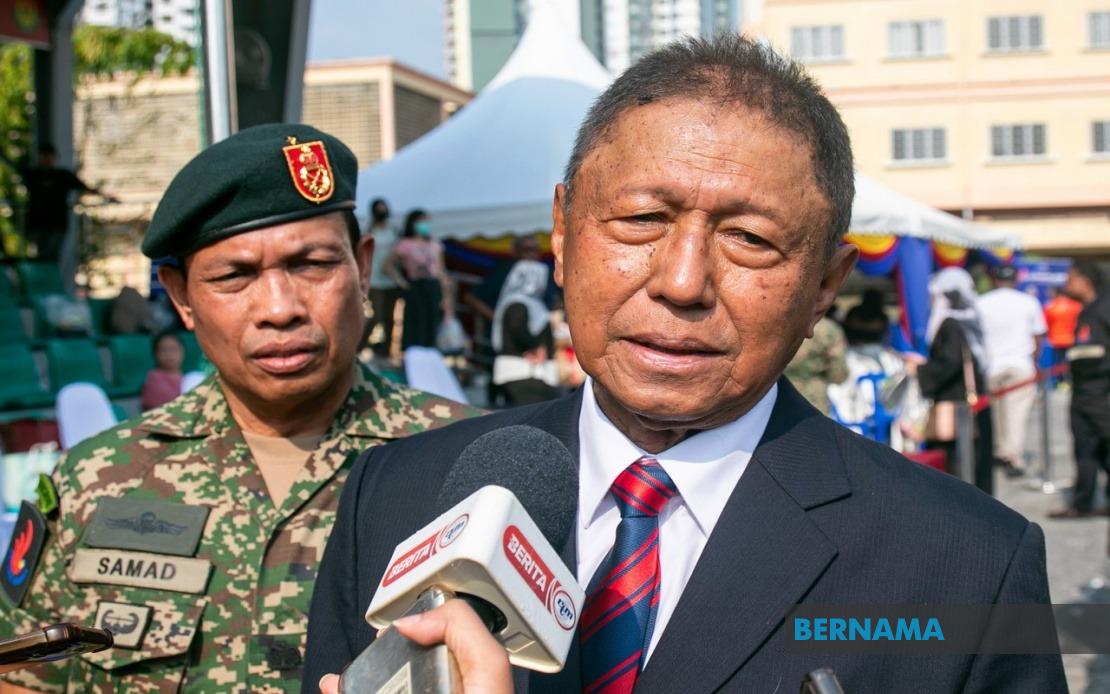
General (Rtd) Tan Sri Dr Abdul Aziz Zainal, chairman of the National Service Training Council (MLKN), emphasised the symbolic importance of this participation during a media address held at the 515 Territorial Army Camp in Kuala Lumpur. He underscored that the presence of PLKN 3.0 trainees marching before the Yang di-Pertuan Agong, Prime Minister, and Cabinet members represents a critical step in gaining public recognition and validation for the programme's objectives. The initiative seeks to position these young people as national heroes and ambassadors of the training ethos that underpins their development.
The timing of this announcement followed a passing-out ceremony for PLKN 3.0 Series 3/2026, which saw 795 trainees successfully graduate from the nine-week training regime that commenced on July 11. This cohort was distributed across three established training centres: Camp 504 AW in Bukit Keteri, Perlis, which trained 106 female participants; Camp 505 AW in Pekan, Pahang, which accommodated 442 male trainees; and Camp 515 AW in Kuala Lumpur, which housed 247 female participants. The geographic spread of these facilities reflects the government's effort to ensure equitable access to the programme across different regions of Peninsular Malaysia.
Among the graduates, three individuals emerged as the standout performers at their respective camps. An'nur Najiha Muhammad, an 18-year-old from Ipoh in Perak, demonstrated exceptional performance at Camp 504 AW, while Muhammad Firdaus Muhammad Said, aged 18 from Kuantan in Pahang, excelled at Camp 505 AW. Cheyenne Alessandra Michael, likewise 18 years old and based in Kuala Lumpur, achieved top honours at Camp 515 AW. These award recipients represent the calibre of leadership and commitment that the PLKN framework aims to cultivate among Malaysia's youth.
The programme's trajectory points toward substantial expansion in coming phases. Abdul Aziz announced that PLKN 3.0 Series 4/2026 will significantly increase its training capacity through a multi-pronged approach involving additional training centres and partnerships with existing security institutions. The addition of Malaysian Volunteer Corps Department (RELA) training facilities alongside the existing military camps will enable the programme to accommodate more than 1,000 trainees in the next series, representing a dramatic scaling-up of current operations. This expansion addresses longstanding concerns about the limited availability of places in the reinvigorated national service scheme.
The infrastructure for this expansion has already been mapped out, with five new camps designated for the forthcoming series. Camp 503 in Hutan Melintang, Perak; Camp 506 in Sungai Durian, Kelantan; and Camp 513 in Bukit Pinang, Kedah will join the existing facilities. Additionally, two Public Training Institute (ILA) centres, located in Sungai Petani in Kedah and Tuaran in Sabah, have been designated as supplementary training locations. This network reflects an ambition to ensure that eligible young Malaysians across both Peninsular Malaysia and East Malaysia have realistic opportunities to participate in the programme.
The rationale for expanding the training network encompasses both practical and ideological dimensions. By distributing facilities across multiple states and leveraging existing institutional infrastructure, the government seeks to lower logistical barriers to participation while fostering a sense of national cohesion through shared experience. The collaboration with RELA also signifies an integrated approach to youth development and civil defence preparedness, merging the objectives of patriotic education with practical security training.
Cheyenne Alessandra Michael's personal account of her experience illuminates the transformative potential that the MLKN perceives in the programme. Having voluntarily enrolled with aspirations toward a military career, she described the 45-day training period as a catalyst for deepened patriotic consciousness. Her daily interactions with Territorial Army soldiers stationed at the training facility proved particularly formative, providing her with tangible exposure to military professionalism and sacrifice. This proximity to serving personnel, she reflected, fundamentally altered her understanding of Malaysia's independence struggle and the ongoing commitment required to preserve national stability.
Michael's observations extend beyond personal development to encompass generational responsibility. She articulated how the training experience cultivated gratitude for the sacrifices made by previous generations in securing Malaysia's independence, while simultaneously instilling awareness of the contemporary duties incumbent upon young citizens. This dual consciousness—honouring the past while embracing future obligations—aligns with the PLKN's stated mission to nurture committed, informed citizens capable of contributing to national resilience.
The strategic decision to feature PLKN 3.0 graduates prominently in the National Day parade serves multiple communicative purposes for the Malaysian government. It positions the revamped programme as integral to national identity and continuity, embedding it within the ceremonial landscape that marks Malaysia's annual reckoning with its founding ideals and contemporary aspirations. For programme participants, the visibility conferred by marching before the nation's leadership and citizenry validates their commitment and may encourage broader social acceptance of national service frameworks.
From a regional perspective, Malaysia's investment in structured youth training and national service reflects broader Southeast Asian patterns of state-building and civic integration. Nations throughout the region have employed similar mechanisms to cultivate patriotic consciousness and martial preparedness among younger generations, adapting these models to their specific cultural, constitutional, and geopolitical contexts. Malaysia's approach, emphasising voluntary participation and integration with existing security infrastructure, represents one distinct interpretation of how national service can function in contemporary multiethnic democracies.
Looking ahead, the trajectory established by PLKN 3.0's expansion suggests that national service is likely to remain a prominent feature of Malaysian policy discourse for the foreseeable future. The programme's increasing capacity and geographic reach will eventually expose a significant portion of Malaysia's eligible youth population to structured training emphasising patriotic values and civic responsibility. Whether this scaling-up generates the intended outcomes regarding social cohesion, national identity, and preparedness will require ongoing evaluation as successive cohorts complete their training and re-integrate into their communities.
The participation of PLKN 3.0 alumni in the National Day parade thus represents far more than a ceremonial gesture. It symbolises the government's commitment to embedding national service within Malaysia's institutional and symbolic infrastructure, while simultaneously serving as a public validation of the programme's legitimacy and necessity. As the initiative expands to accommodate larger numbers of participants across an increasingly dispersed network of training facilities, the visibility and perceived importance of PLKN 3.0 will likely grow correspondingly, shaping how successive generations of Malaysians understand their relationship to the nation-state and their personal obligations toward its maintenance and prosperity.

